


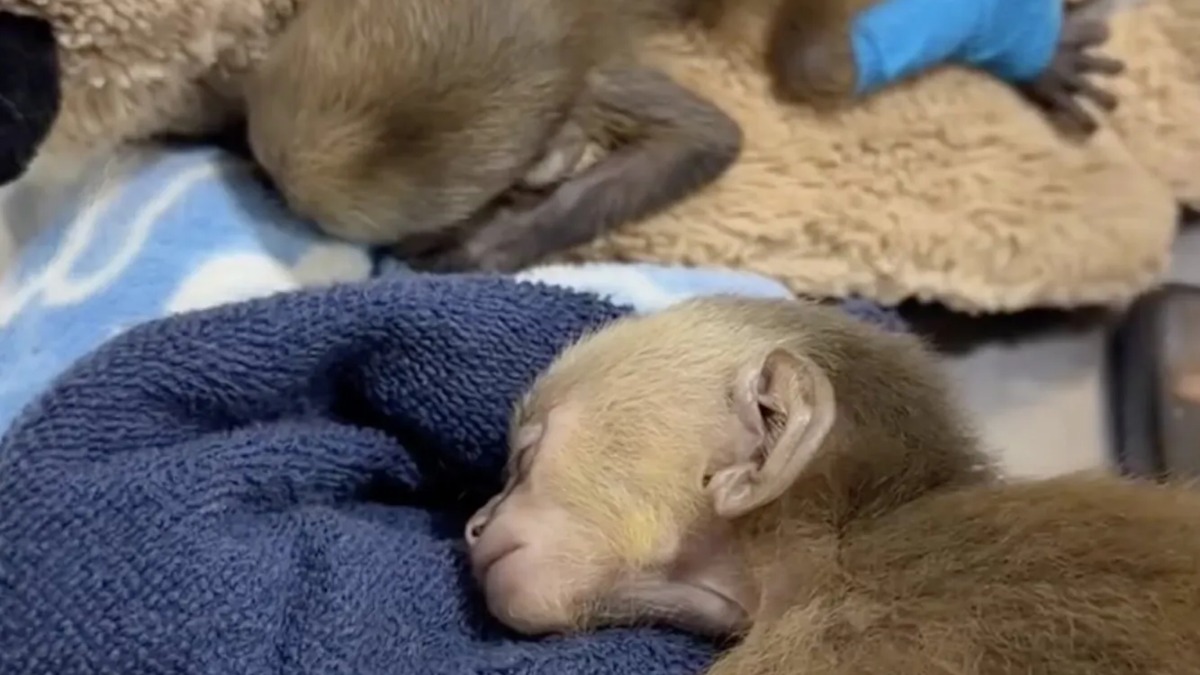

Two people were recently caught at the Rafael Núñez International Airport in Cartagena, Colombia, attempting a truly bizarre and horrific smuggling operation. The duo tried to transport three live monkeys across international borders by strapping them directly to their own bodies.
The Cartagena Metropolitan Police confirmed the incident in a post on X on Wednesday, May 13. The suspects, a 27-year-old woman and a 26-year-old man, are both natives of La Jagua de Ibirico, Colombia. They were intercepted while attempting to smuggle the primates into the Dominican Republic by hiding them in their “private parts.”
The haul included two white-faced capuchins and one howler monkey. While the capuchins managed to survive the harrowing experience, the howler monkey did not, having seemingly suffocated during transport. The pair now faces charges for the illegal exploitation of natural resources and wildlife trafficking.
Why would you want to smuggle anything in your “private parts”
Gelver Yecid Peña Araque, a brigadier general with the Cartagena police, described the act as “inhumane.” He went on to say, “This practice is evidence of absolute cruelty and a flagrant violation of animal rights.”
Referring to the tragic loss of the howler monkey, he added, “The animal died in conditions that we can only describe as inhumane.” It’s hard to disagree with his assessment. Seeing footage of these animals, including one capuchin grabbing a stuffed toy for comfort, really highlights how vulnerable and innocent they are in the face of such greed.
This incident is unfortunately part of a much larger, global issue involving the illegal wildlife trade. In a piece published in the Sanctuary Nature Foundation, conservation filmmaker Trishala Ashok reflected on the disturbing reality of these smuggling operations.
Her research into the “hidden routes” of wildlife crime has uncovered some truly sickening methods used by traffickers to bypass security. She noted that smugglers often view animals as mere objects, stuffing tortoises into pastry boxes or hiding tiny tamarins in backpacks.
One particularly haunting anecdote from Ashok’s work involves an incident at the Bengaluru International Airport, where she witnessed the aftermath of an abandoned suitcase filled with wildlife contraband. Upon opening the bags, authorities discovered three dead capuchins and several juvenile macaques that had perished in their own filth without access to food or water.
The stench and the sight of these animals, which should have been thriving in the wild, left a lasting impact on those who had to process the scene. It’s a grim reminder that for every animal that survives these trips, countless others suffer and die in the shadows of the black market.
The methods traffickers use are as creative as they are cruel. Ashok highlighted the “kuruvi” system, where criminal gangs exploit people from low-income backgrounds to act as human couriers.
They promise them international travel and money in exchange for carrying contraband. These “human pigeons” are often unaware of the full scope of the operation, yet they become the front line for an industry that threatens biodiversity and public health alike.
The global nature of this trade means that it isn’t just a problem for one country or one airport. As experts have noted, the wildlife trade transcends mere criminal activity and poses risks to us all, including the potential for disease outbreaks.
Whether it is a suitcase full of individually packed ants, monkeys hidden in clothing, a turtle stuffed down a man’s pants, or reptiles taped inside cotton bags, the common thread is a blatant disregard for life. The story of the two smugglers in Cartagena is just one chapter in a much larger, ongoing battle to protect the world’s wildlife from those who would exploit it for profit.









Published: May 18, 2026 10:00 am