


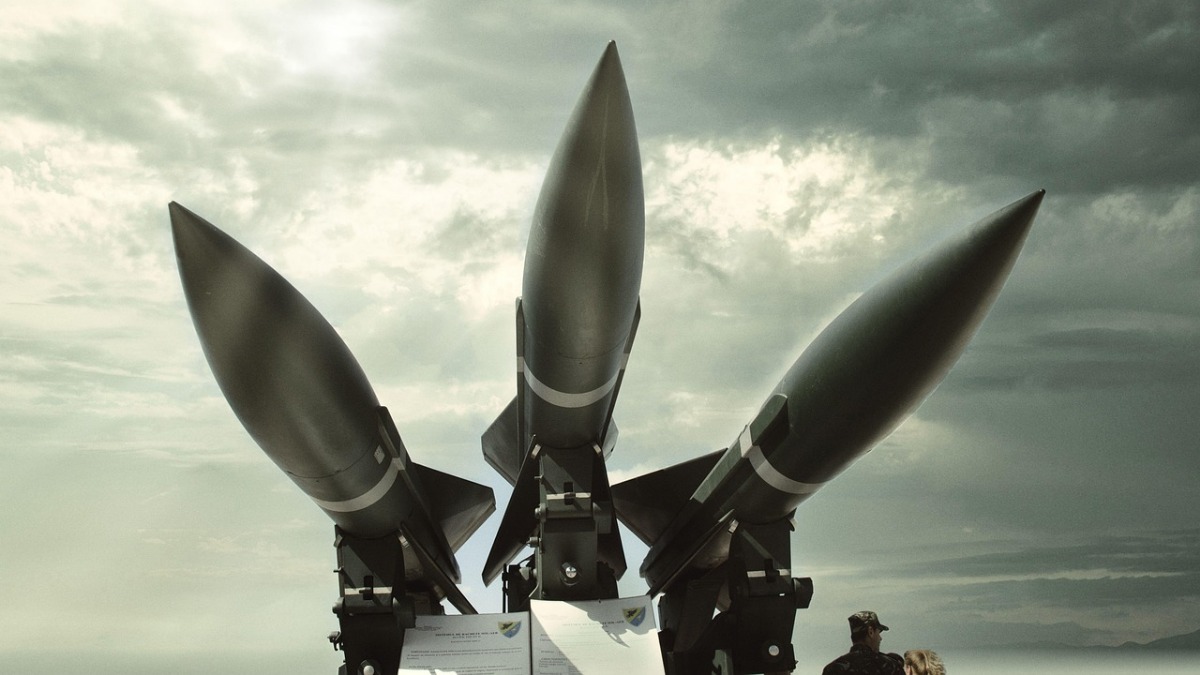

Iran is now positioned to fire significantly more long-range missiles at Israel and other Middle Eastern nations. According to CNN, it is because they have been persistent in their efforts to dig out their buried arsenals. Their ongoing effort and rapid success highlight the limitations in the current bombing strategy employed by the United States and Israel.
For several weeks, military strikes successfully restricted Iran’s access to underground missile sites by destroying crucial roads and burying tunnel entrances. However, recent satellite imagery reveals that Iran is using relatively simple equipment, like bulldozers and dump trucks, to undo those efforts. This suggests that Tehran’s missile capabilities can’t be easily destroyed by targeting the entrances to these tunnels alone.
CNN found that Iran has already managed to unblock 50 out of the 69 tunnel entrances that were struck by the US and Israel across 18 different underground facilities. Beyond just clearing rubble, they have also repaired and repaved roads that were cratered to prevent missile launchers from moving through the area.
Iran’s success aligns with earlier assessments by experts
Reuters reported back in March that the US could only determine with certainty that about a third of Iran’s missile arsenal had been destroyed. While another third was likely damaged or buried, the assessment highlighted that Tehran still held a significant inventory and possessed the potential to recover those assets once the fighting slowed down.
The technological gap here is a massive part of the problem. As Timur Kadyshev, a senior researcher at the Institute for Peace Research and Security Policy at the University of Hamburg, pointed out to CNN, “You have to use very sophisticated, very expensive weapons to do this kind of damage, and the recovery is very low tech – it’s just bulldozers.”
Sam Lair, a research associate at the James Martin Center for Nonproliferation Studies, noted that the US military has been effective at delivering tactical successes. This has included suppressing the Iranian missile force. However, he points out that suppression is just the beginning.
“If that isn’t accompanied by a set of reasonable strategic war aims and an achievable theory of victory, it can end up being a strategic failure.” Lair also emphasized that Iran is still in a position to “continue launching missiles so long as they have launchers and crews, even if production has halted,” noting that “There’s nothing to prevent the launchers from being armed with the ample stockpile of missiles that the Iranians still have.”
It is also worth noting that the bombing has had a limited impact on Iran’s nuclear ambitions. Reuters reported in May that US intelligence assessments indicate the time Iran would need to build a nuclear weapon has remained unchanged from last year, despite months of war. While the recent campaign focused heavily on conventional military targets, the lack of progress on the nuclear front reflects the difficulty of reaching deeply buried, hardened sites.
Meanwhile, according to PBS, the United States is facing its own set of challenges regarding inventory. The first month of the offensive caused missile stockpiles to get used quickly, which is only the beginning of the problem. An analysis from the Center for Strategic and International Studies highlighted that American military contractors need at least three years to replenish stockpiles of key weapons systems, such as Tomahawk cruise missiles and Patriot interceptors.
PBS noted that these depleted inventories create a window of vulnerability, especially as the military weighs its capabilities against other global threats. This has resulted in weapon sales being delayed, as confirmed recently during a Senate hearing. Acting Navy Secretary Hung Cao stated that it was “just to make sure we have everything we need.”
Pentagon spokesman Sean Parnell did not respond to specific questions from CNN about the latest findings, instead repeating that “America’s military is the most powerful in the world and has everything it needs to execute at the time and place of the President’s choosing.”
President Donald Trump has previously listed the degradation of Iranian missile capabilities as a key objective of the war. Yet, as Iran recovers its missiles and restores functionality to its bases, analysts are concerned that the ongoing threat is being underestimated.
Per CNN, intelligence assessments suggest that Iran has restarted their military production, starting with drone production. It looks like a clear sign that they are rebuilding their military capabilities. One US official told CNN, “The Iranians have exceeded all timelines the (intelligence community) had for reconstitution.”
It is these signs of reported progress is making experts question the effectiveness of the current war strategy.









Published: Jun 3, 2026 05:17 am