


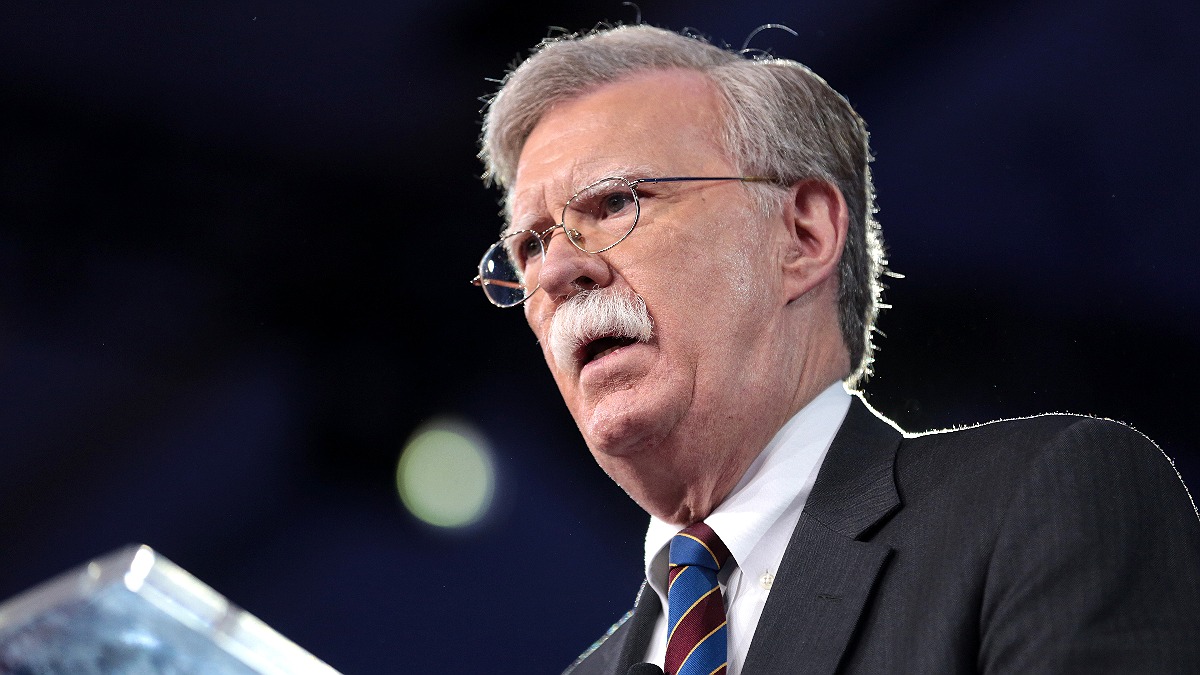

Former national security adviser John Bolton has warned that Donald Trump’s handling of the ongoing war against Iran could set off a nuclear arms race across the Middle East. Bolton made his remarks in an opinion piece in The Wall Street Journal, titled “A Bad Iran Deal Could Spark a Nuclear Arms Race.”
“Whatever deal President Trump makes with Iran, his often-contradictory decisions during the conflict have laid the groundwork for more nuclear proliferation in the Middle East,” Bolton wrote in the piece.
Bolton also wrote that “if the race for nuclear weapons widens and accelerates, the region will become more unstable, heightening risks for the entire world.”
Bolton argues that Gulf Arab states are losing confidence in U.S. security guarantees
In his op-ed, Bolton argued that Trump failed to consult most U.S. allies before striking Iran, not NATO, not Gulf Arab oil-producing monarchies, and not Indo-Pacific allies that are heavily reliant on Middle Eastern energy supplies. He said this failure “will haunt Washington for decades,” but that its most immediate effects are being felt among the Gulf Arab states.
Bolton also pointed to what he described as the failure of “Project Freedom,” a U.S. effort to open the Strait of Hormuz. According to him, the operation lasted less than two days, which he said damaged American credibility. He wrote that the U.S. is now only assisting ships exiting the strait, rather than securing it fully.
Bolton wrote that Gulf Arab states were caught off guard when Iran attacked them during the conflict, and that their earlier efforts to protect themselves from such strikes had failed. The United Arab Emirates launched significant retaliatory attacks on Iran, he noted, while Saudi Arabia did so to a lesser extent.
But Arab leaders, he argued, came away with doubts about whether U.S. deterrence and military capabilities were as strong as they had believed. He has separately raised concerns about a dangerous Iran power vacuum and the risk of widespread bloodshed, arguing that the administration lacks a clear plan for what comes next.
“If America’s conventional deterrent is deemed unreliable, fears about the extended nuclear deterrent are even greater,” he wrote. He noted that Gulf Arab states and other regional countries have long considered whether to develop nuclear capabilities as a hedge against what he called a “fickle Washington.” He pointed to Saudi Arabia’s repeated statements since at least 2018 that it would pursue nuclear weapons if Iran did, and said Turkey and Egypt have had similar considerations.
He noted that concerns about the U.S. nuclear umbrella are not limited to the Middle East. He wrote that European allies are increasingly worried, citing Trump’s past criticism of NATO and what he described reduced U.S. participation in alliance activities. He added that low-key conversations about acquiring nuclear weapons in South Korea and Japan have been increasingly spilling into public view.
In his op-ed, Bolton argued that the best way to prevent a Middle Eastern nuclear arms race is to restore confidence in Washington’s resolve and reliability. He said this would require, at minimum, that the U.S. take action to reopen the Strait of Hormuz to oil and gas shipments from Gulf Arab states while maintaining its blockade on Iranian exports. He suggested that military force would likely be needed to protect commerce in the Gulf and the strait against what he described as Iranian mines, anti-ship missiles, and drone and fast-boat attacks.
“Tehran is counting on Mr. Trump’s reluctance to resume military activity, which is exactly what worries Israel and many Gulf Arabs,” he wrote. He added that if Iran is left able to dominate the strait, the Gulf Arabs’ economic future would be endangered, along with regional peace and security.
Meanwhile, Trump said Friday in an interview with NBC’s Kristen Welker that Iran had not agreed to end the war because they were “strong” and “proud,” but stated that they had “no choice” but to come to a deal, per The Hill. “They’re strong, they’re proud, there are things they never thought they’d be doing that they’re going to have to do,” Trump said.
On Sunday, Iran fired missiles at Israel, an incident Trump has been briefed about, according to a U.S. official who spoke to The Hill’s broadcast partner NewsNation. Bolton’s latest warnings come amid what’s been widely reported as a deeply strained relationship between him and Trump, with the president having previously called his former adviser a “lowlife.”









Published: Jun 9, 2026 06:25 am