


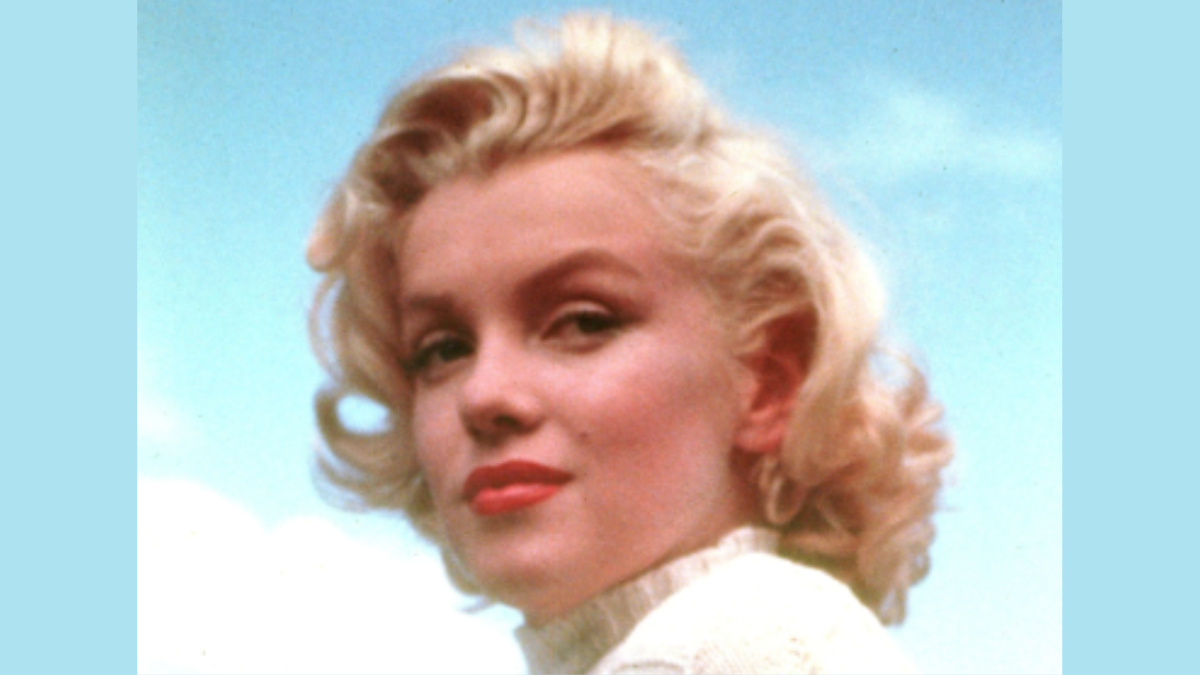

Over the years, there have been numerous conspiracy theories surrounding the death of Marilyn Monroe on August 4, 1962. There was even an ultimately inconclusive reopened investigation into the matter by the District Attorney’s Office in 1982. Now, cold case expert Paul Holes is revisiting the case, and he believes there are still inconsistencies worth examining.
Holes has suggested that, for some reason, the LAPD did not follow “standard procedure” in Monroe’s case. According to Fox News, he believes authorities moved too quickly in classifying her death as a suicide. He said, “You always go to the conservative side and investigate it as a homicide until we prove it’s not a homicide. Today, that’s the way things should be done.”
Very Few Photos of the Scene
For Holes, the lack of sufficient documentation from the scene is “the first red flag” suggesting there may be more beneath the surface. Reportedly, very few photographs exist, and only one clearly shows Monroe.
In that image, Monroe is seen lying in her bed with her eyes closed. Holes raised concerns that the sheets appeared too neat and the room too orderly. He said, “The pill bottles on this tiny little nightstand next to her head were all perfectly arranged, with all the labels facing in the right direction, including the most notable pill bottle, this Nembutal.”
Holes also noted that Monroe had filled a prescription of 50 pills of barbiturates just two days before her death. At the scene, the pill bottle was reportedly found empty on the nightstand with the lid still on. He found this suspicious, again pointing to what he described as an unusually tidy scene, which includes the bottle neatly facing forward – small but significant “inconsistencies” that tell a different story as per the investigator.
Another detail that raised questions for Holes was that Monroe’s other Nembutal bottle was also empty, yet no capsules were found in her stomach. He said, “It suggests that when you start looking at how well-resourced and experienced the LAPD is, why did they drop the ball in Marilyn Monroe’s case? Seems like there’s possibly some influence to cause them to look the other way and just write this thing off and make the assumption it’s suicide.”
Monroe’s Dependence on Prescription Drugs
According to multiple reports and biographers at the time, Monroe was believed to have been dependent on prescription drugs while managing conditions such as insomnia and anxiety.
Ultimately, the exact circumstances of Monroe’s death remain debated. A reopened investigation by the District Attorney’s Office roughly 20 years later concluded there was insufficient evidence to support criminal involvement.
If anyone is equipped to revisit such a high-profile cold case, it is Holes. After two decades investigating the Golden State Killer, he is now examining every detail he can find on Monroe for his special Celebrity Crime Scene: Marilyn Monroe.
It is currently streaming on Hulu, and Holes will also be exploring lesser-known aspects of Monroe’s connections to politics, such as whether federal authorities believed that President John F. Kennedy and Attorney General Robert F. Kennedy may have shared any national security secrets with her. Holes says he hopes the special will help viewers reach their own conclusions, rather than presenting a story that has been spoon-fed as either truth or myth over the years.



Published: Jun 23, 2026 07:26 am