


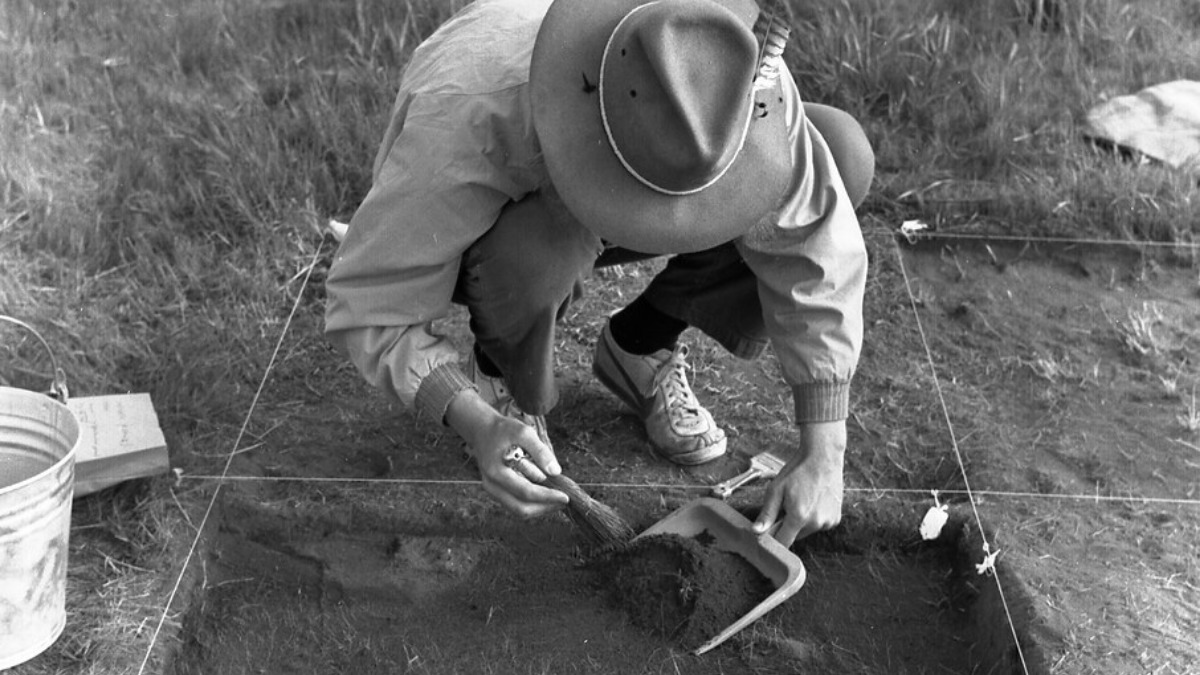

Archaeologists in Peru recently made an incredible discovery that challenges our modern food storage solutions. They uncovered two freeze-dried potatoes, known as chuño, that date back roughly 500 years to the time of the Inca Empire. This find is a massive deal because it predates the founding of the United States by centuries, yet the potatoes remain in what researchers are calling “excellent” condition.
The discovery took place at the Tambo Viejo site in the Acarí Valley of southwestern Peru. According to Fox News, the findings were published in the Journal of Field Archaeology, and the preservation is so good that the potatoes still retain their shape and color, looking strikingly similar to produce you might pick up today. Lidio Valdez, an archaeology professor at the University of Calgary who led the excavation, noted that the preservation was impressive.
Valdez told Fox News Digital that the two freeze-dried potatoes are remarkably similar, though he noted, “The only difference is the samples found are small, and it seems that over time and due to the aridity of the region, their original size was reduced.” He added, “There is no way one can tell their old age from samples.”
Chuño was the Incan response to perishability
Valdez told the outlet that potatoes have a high water content, which means they don’t survive long in most environments. “Place a potato somewhere in your kitchen just for a month and see what will happen,” he said. “In places with rain and moisture, potatoes will rot quickly. Therefore, freeze-drying was [and] is an effective way to preserve and store them for long periods of time.”
Phys.org reported that the Inca dealt with this problem by freezing the potatoes in the extreme mountain winter-night frosts and then thawing them in the intense daytime sun of the Andes to create chuño. They were then trampled and dried to make black chuño.
White chuño was made from naturally toxic or bitter potatoes that require soaking for several weeks before the freezing and drying process. This resulted in a lightweight, durable food source that could be stored for years.
The site noted that this discovery is particularly rare because it is one of the only instances of such a find in more than a century. The potatoes were found inside a ceramic jar set into the floor of an administrative center, stored alongside a broken piece of Inca pottery and a damaged spindle whorl.
These everyday objects were reportedly vital in helping researchers confirm the timeline. Valdez noted that these items helped prove “that the freeze-dried potatoes are of Inka times,” which places them in the 15th and 16th centuries.
Fox reported that the significance of this find goes beyond just the food itself. Per Valdez, it provides physical proof that the Inca were transporting goods across their vast empire. Because chuño can only be produced at high elevations in the cold mountains, finding it on the coast means the state had to organize logistics to move these supplies over long distances.
Valdez explained, “Because the Inca state carried out countless projects throughout the realm, the tasks involved thousands of workers, who had to be fed by the state. Thus, state officials likely mobilized volumes of chuño from the warehouses, transporting them in llama caravans.”
Valdez told Fox that he was actually hoping to learn more about the Inca recording system, known as khipus, while excavating at Tambo Viejo. Instead, he stumbled upon this evidence of food preservation. He described the site as “such a great Inca site,” noting that it has been excavated on and off since 2018.
Valdez told Fox, “Those who built the empire … palaces, roads and everything else we admire, [like] Machu Picchu … lived off the chuño. It appears that in Inca times, large volumes of potatoes were cultivated and freeze-dried, then stored in state-controlled warehouses.”
Phys.org noted that potatoes were the “bread of the people” during the height of the Inca Empire. Even after the empire fell, chuño reportedly remained a staple. They noted that historical accounts from Spanish chronicler Cieza de León suggest that many Spaniards actually became wealthy by selling chuño in the mines, allowing them to return to Spain quite prosperous.
As for what comes next, Valdez noted, “It would be ‘cool’ to know the origin of these potatoes.” Potatoes are still a common part of our diet, enough that even a woman who had never had baked potatoes was hooked when a co-worker introduced her to Wendy’s version. The only question I have is whether these 500-year-old potatoes might be edible. After all, they recently found signs of microbial life in Ötzi the Iceman, and he is a 5,300-year-old mummy.







Published: Jun 30, 2026 03:01 pm