


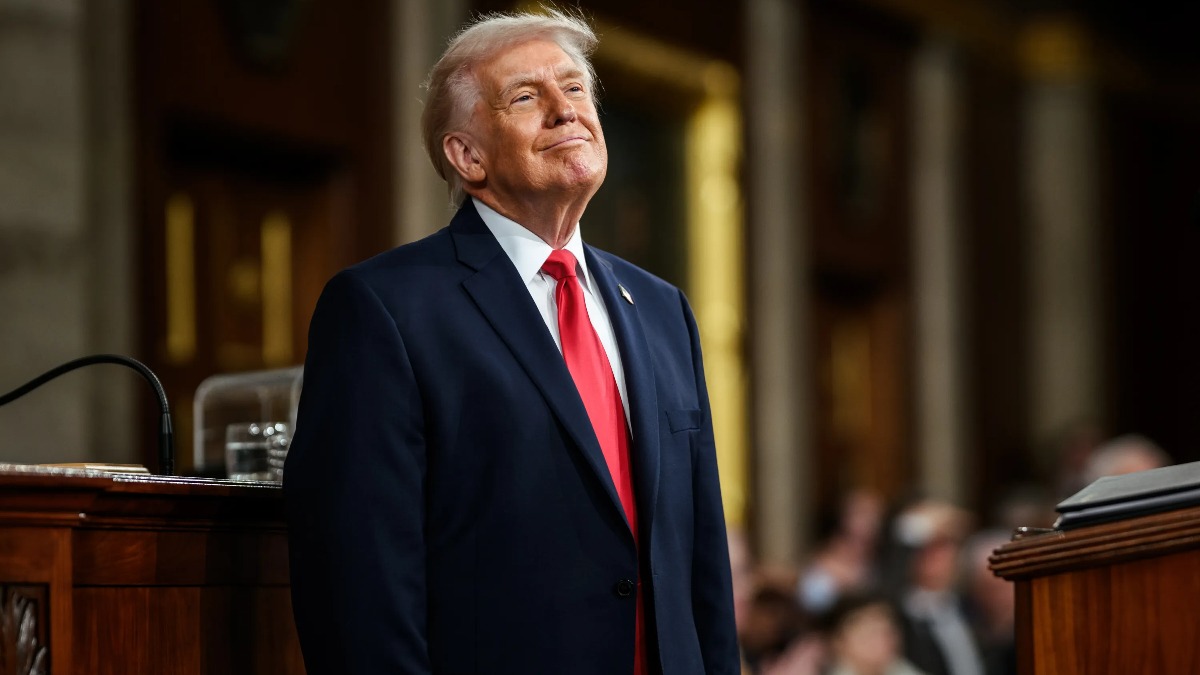

A major shift in Washington’s approach to the Middle East is reshaping long-standing security arrangements. Questions now center on how international allies and regional powers will handle the fallout from a massive military exit from a long-standing strategic stronghold.
According to a newly released announcement first reported by the Associated Press, the Donald Trump administration has declared that the United States no longer needs a military presence in Iraq. The move marks one of the White House’s biggest foreign policy decisions this year and arrives as the administration continues to dominate headlines over issues ranging from the newly unsealed Epstein files to a series of other high-profile political battles. If carried through as planned, it will bring to an end a 23-year U.S. military presence that began with the 2003 invasion of Iraq.
The development follows an official declaration from President Donald Trump, standing alongside Iraqi Prime Minister Ali al-Zaidi at the White House, stating that U.S. forces will be completely out of Iraq by the end of September. The announcement is also consistent with a White House that has often favored abrupt policy shifts, including last year’s funding standoff with major universities. Following the announcement, the Pentagon confirmed that it is moving forward to finalize a 2024 transition agreement to conclude the coalition’s anti-ISIS mission.
A New Geopolitical Reality for the Middle East
Trump had previously promoted regional stabilization and the containment of adversaries as core justifications for maintaining an overseas presence. But the administration is now arguing that the military mission is no longer necessary, pointing instead to a new era of corporate and economic cooperation.
During a recent statement, the president emphasized that the relationship with Iraq is transitioning from a military reliance to a commercial alliance, stating, “The relationship is a whole big relationship where we don’t need the military there. We’re there to help them. We’re there to protect them if need be. But we don’t think that’s going to be necessary.”
According to Trump, American oil companies are entering partnerships with Iraq at levels never seen before, shifting the dynamic toward mutual corporate growth: “What we do have is the oil companies are all going in now and they’re doing partnerships with Iraq… at levels that have never been seen before.”
Furthermore, the administration asserts that regional threats have drastically decreased. Pointing to neighboring Iran, Trump added, “Iran has been very much destabilized and really their military power is just a tiny fraction of what it was just four months ago. So they’re not going to have that problem. I think it’s really in a sense, given them freedom to do what they have to do.”
The complete withdrawal is due to be finalized by the late September deadline, leaving regional forces to manage internal security independently. The withdrawal, therefore, represents more than a routine troop movement. It underscores how quickly the administration is willing to reshape long-standing foreign policy while leaving regional governments and U.S. allies to assess what the next phase of security cooperation could look like.






Published: Jul 15, 2026 04:54 pm