


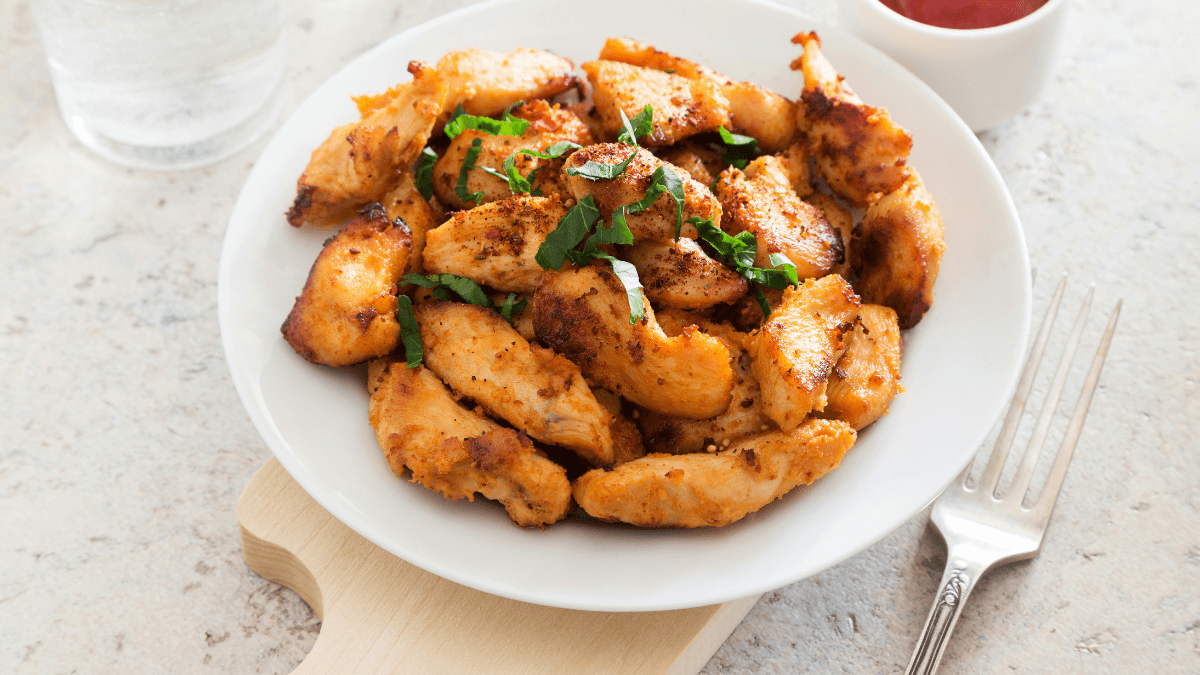

A woman posted a video on TikTok calling out General Tso’s chicken for allegedly being underweight. According to the packaging, each box contains three one-cup servings, with each cup weighing 170g. However, she claims the actual contents fell far short of what the label promised.
In the video, which has since been reshared on X, the woman measures the contents of the box and claims it contained only about half of the advertised amount. She then weighs the chicken and says that even by that metric, the product was half-lighter than what was listed on the packaging. She asks, “Where are the other three? How is that legal? How is that allowed?” before adding, “The math is not mathing.”
Some doubted her measurements
One user took issue with how she measured the chicken but still agreed with her broader point. The user wrote, “Pretty sure she wasn’t factoring the sauce packets into the 170g serving size. Her point that these corporations are increasingly shameless and greedy isn’t wrong though—but she’s trying to prove it by measuring volume rather than the weight of their slop ingredients.”
pretty sure she wasn’t factoring the sauce packets into the 170g serving size.
— historically black (@djmcrib) July 30, 2026
her point that these corporations are increasingly shameless and greedy isn’t wrong tho – but she’s trying to prove it by measuring volume rather than the weight of their slop ingredients.
Another suggested people should simply make the dish themselves at home. The user wrote, “We get it, prepackaged food is a rip off. People know they don’t have to buy this crap right? You can just buy chicken breasts, cut them into small chunks and make your own version of General Tso’s chicken with the same ingredients. Making rice to go along with it is easy af too.”
We get it, prepackaged food is a rip off. People know they don't have to buy this crap right? You can just buy chicken breasts, cut them into small chunks and make your own version of General Tso's chicken with the same ingredients. Making rice to go along with it is easy af too.
— Stephen (@sworland11) July 29, 2026
Whether she was right about the measurements depends on her methodology. But she was correct about one thing: mislabeling the weight of consumer goods is illegal in the U.S. If customers discover such a discrepancy, they are advised to contact their state’s Office of Weights and Measures.
Retailers like Walmart have previously found themselves at the center of similar allegations and ultimately settled three lawsuits over inaccurate weights. One of the lawsuits claimed, “At the register, when the customer checks out, Walmart’s point-of-sale (POS) system deceptively, systemically, and artificially increases the weight of the product at checkout, resulting in the customer paying an inflated price.”
Walmart denied the allegations but ultimately agreed to a $45 million settlement. According to Takeout, one way to avoid situations like this is by supporting a local butcher. The outlet argues that prepackaged food will almost always cost more than buying fresh ingredients.
Retailers always have to worry about selling products that contain less than what their packaging claims. Doing so opens them up to lawsuits, regulatory complaints, and reputational damage. But according to the original X post, some corporations may decide that the extra profit margins are worth the risk.
You can report any discrepancies
The commentary page @WallStreetApes said in the video, “So the fact that they’ve studied that and realized that shoppers won’t notice a 15% weight variation just means that they are intentionally shorting us in products. But it’s not 15%. You know, there are 25-50% differences and we’re just supposed to accept it.”
For consumers, the takeaway is simple: if you suspect a product is underweight, double-check it yourself and report any discrepancies to your state’s Office of Weights and Measures.






Published: Jul 30, 2026 12:32 pm