


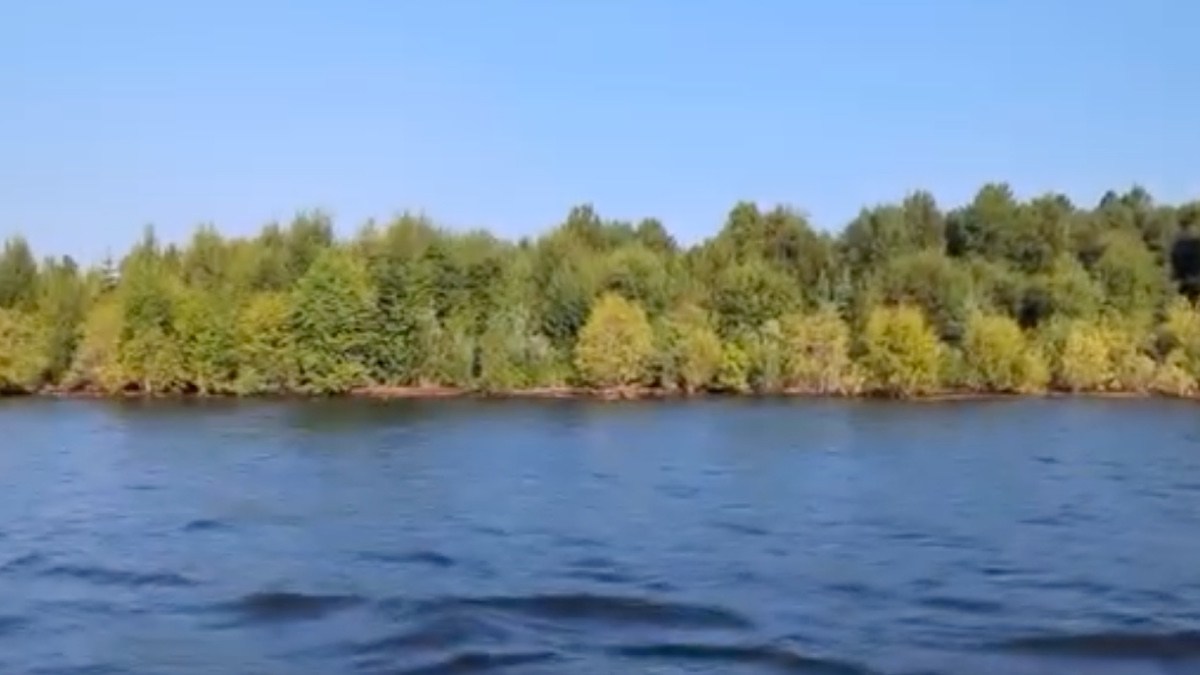

A forested island appeared to be floating across a British Columbia reservoir this summer, then vanished from view. After satellite images confirmed the unusual landmass was real, officials located it again nearly 30 kilometers (about 18.6 miles) away. Now, scientists and BC Hydro have a theory about how an entire patch of trees ended up drifting across one of Canada’s largest reservoirs.
According to the BBC, the strange discovery happened on Williston Reservoir in northern British Columbia, north of Mackenzie and behind the W.A.C. Bennett Dam. The enormous reservoir covers about 1,700 square kilometers (about 656 square miles) and ranks among the world’s largest reservoirs. BC Hydro operates the dam and reservoir.
A local boater first spotted the tree-covered mass in late July or early August. The boater then sent photographs and video to British Columbia resident Rocky Avery. Avery subsequently shared the footage on Facebook. The video shows what appears to be a large collection of trees and vegetation moving on the water.
Avery shared the footage because a fishing derby was approaching.
Meanwhile, BC Hydro could not confirm the sighting at first. Spokesperson Bob Gammer told CBC News that the limited number of reports made the object difficult to locate, particularly as officials also had to consider the possibility that the images had been generated or altered using AI.
Satellite imagery, however, eventually settled that question. According to imagery from the European Space Agency’s Sentinel-2 satellite, the floating formation was visible on July 21, about 100 kilometers (about 62 miles) west of the W.A.C. Bennett Dam and west of Finlay Bay. BC Hydro estimated it measured approximately the size of two NFL football fields. But then the island disappeared.
When BC Hydro checked newer satellite images, officials could no longer see the formation in the area where they had previously documented it. Gammer told CBC News that the disappearance did not necessarily mean the mass had sunk. He said it could have moved into a sheltered area along the reservoir’s shoreline.
This unusual discovery is one of several recent strange lake-related viral stories. In Georgia, a man tragically drowned after his hat blew off while boating in a lake. Locals report the lake is haunted.
On Aug. 31, Avery reported that the floating formation had been found again.
Then, in late August, Avery spotted the island, this time near the Ospika River, which flows into Williston Reservoir. BC Hydro confirmed through satellite imagery that the island had moved roughly 19 miles from its previous known location and had reached the shoreline.
Rather than a newly formed geological island, BC Hydro believes the formation could represent a large floating mass of woody debris, soil and vegetation that accumulated along the reservoir’s shoreline over several years. BC Hydro’s own environmental monitoring reports document floating islands at Williston Reservoir as masses of organic matter. Those reports also note that shrubs can become established on the floating material as it develops.
Gammer offered a possible explanation for why one of those formations could have broken free this year. Williston Reservoir reached its highest water level in 14 years, according to BC Hydro.
The utility released water through the W.A.C. Bennett Dam spillways in June and July after the reservoir reached full capacity. Gammer told CBC News that high water could lift material lodged along a sheltered shoreline and allow it to float free.
That theory also fits BC Hydro’s earlier research. A 2017 BC Hydro report includes a photograph and description of a floating island habitat at Williston Reservoir, including woody debris and floating island material that had detached from its original location.
Scientists have documented similar floating landforms elsewhere, but the Williston formation stands out because of its size and the mature trees growing on it. ScienceAlert described it as more accurately resembling a floating raft than a conventional island, with vegetation growing on buoyant material such as driftwood.
For now, BC Hydro has not identified the shoreline location where the mass formed or broke free. Officials have also warned boaters to remain cautious around floating debris in the reservoir.
In other strange aquatic sightings, six “space balls” recently washed up on an Australian beach. Authorities urged residents not to touch them.









Published: Sep 3, 2026 07:50 am