


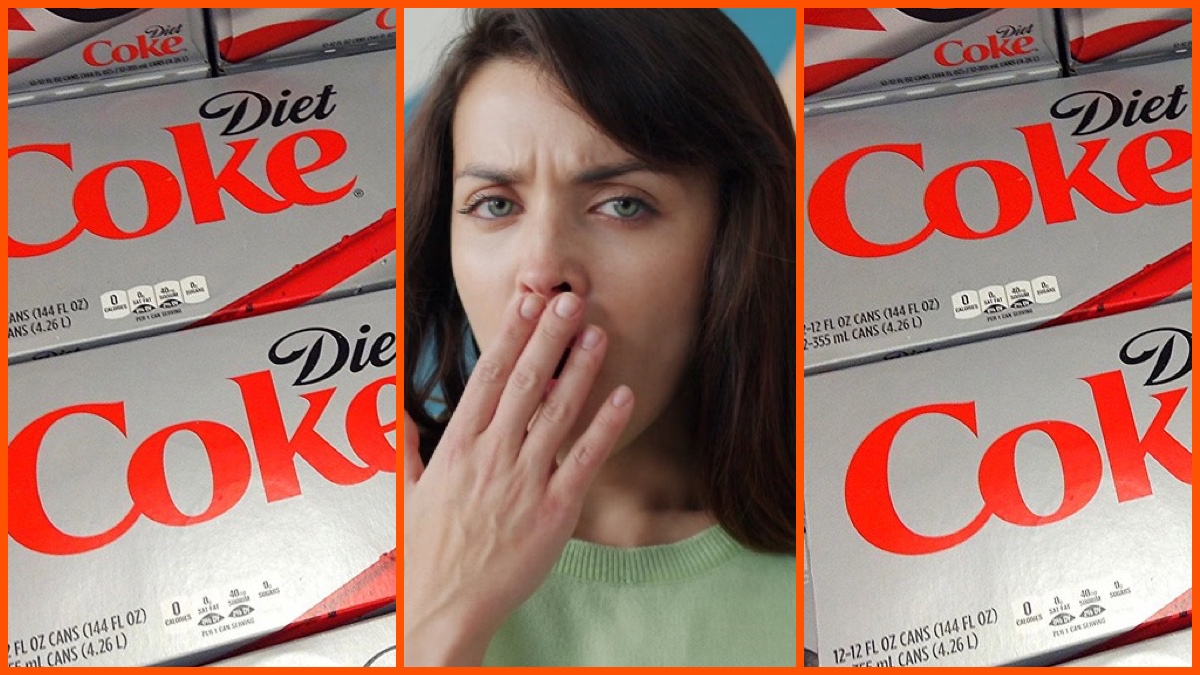

Massachusetts doctors used Diet Coke to help treat a rare stomach condition that developed while a 63-year-old woman was taking semaglutide, according to a Live Science report referencing a case published in The New England Journal of Medicine. Semaglutide is a GLP-1 medication similar to Ozempic, commonly prescribed for Type 2 diabetes and weight management,
The woman had taken semaglutide for about a year and lost roughly 40 pounds. The month before she sought emergency care, her weight loss accelerated. At the same time, she developed persistent nausea, vomiting, reduced appetite, and burning pain in her upper abdomen and right side that radiated toward her back. She tried over-the-counter acid reflux medications without relief.
Doctors then performed imaging studies that revealed abnormalities, including a dilated bile duct and material inside her stomach. An upper endoscopy later identified the culprit: a gastric bezoar, sometimes caused by undigested plant material.
The semaglutide likely contributed to the gastric bezoar
Serious complications such as bezoars are uncommon, but GLP-1 receptor agonists, including semaglutide, work in part by slowing the movement of food from the stomach into the intestines. That effect helps people feel full longer and contributes to weight loss. The published case report concluded that semaglutide likely contributed to the gastric bezoar by slowing the woman’s stomach emptying.
Instead of immediately using an invasive procedure to break apart the stomach mass, the medical team stopped the woman’s semaglutide and prescribed an unexpected treatment. She drank about 1.5 liters of Diet Coke over two days. Doctors selected a reduced amount because she had diabetes and disliked carbonated beverages.
The approach may sound unconventional, but doctors have documented cola therapy for certain gastric phytobezoars for years. This is a type of gastric bezoar caused by undigested plant fibers. Medical literature shows that the beverage’s acidity and carbonation can dissolve or soften these fibrous masses. This allows them to pass naturally, sparing patients from invasive surgery.
Though exceedingly rare, the Massachusetts case is not the first report linking semaglutide to bezoars. A separate 2025 case report described a 65-year-old woman who developed a phytobezoar that caused a small bowel obstruction while taking semaglutide for weight loss.
Unlike the Massachusetts patient, she required surgery after nonoperative treatment failed. The authors likewise suggested that the drug’s effects on the stomach and intestines likely contributed to the complication.
In the Massachusetts patient’s case, the treatment worked quickly. Her symptoms resolved by the following day, and a repeat endoscopy confirmed that the bezoar had disappeared.
Doctors slowly reintroduced solid foods, prescribed medication for acid reflux, and discharged her from the hospital. According to the published case, she experienced no further abdominal symptoms. She stopped taking semaglutide and later regained some weight.







Published: Jul 13, 2026 01:00 pm