


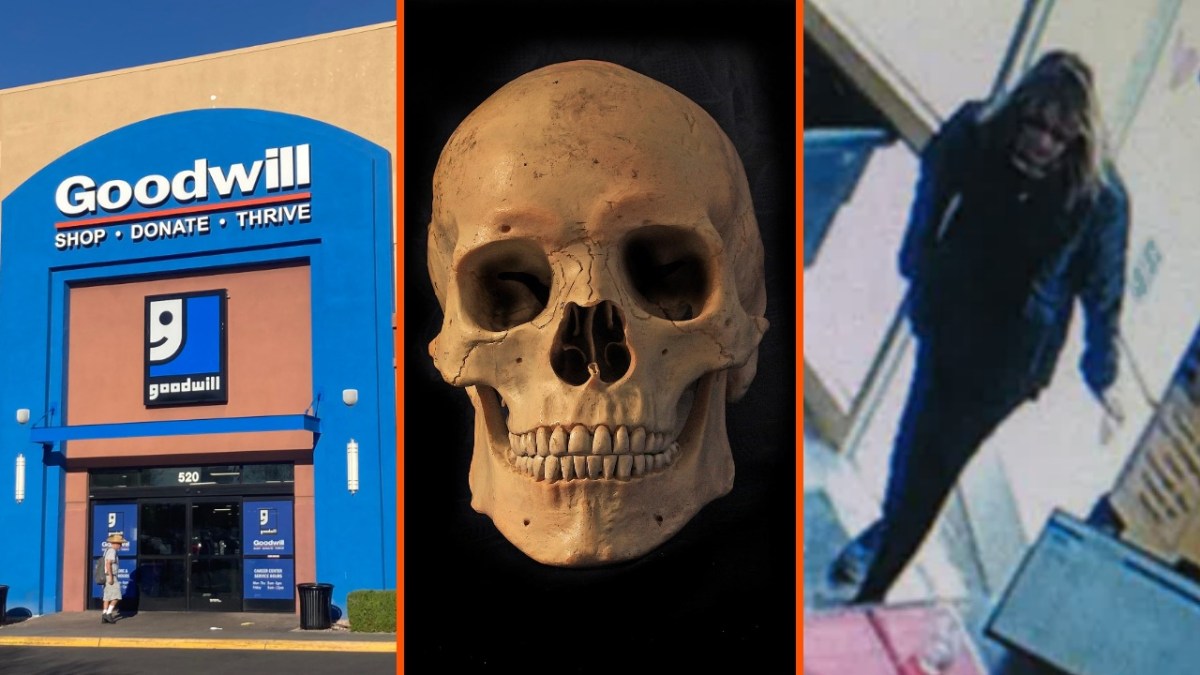

The FBI has officially taken custody of a human skull discovered at a Goodwill donation center in Chelsea, Michigan. For the past few months, local authorities and experts have been analyzing the discarded body part to determine if it was a medical teaching tool or something more significant. Almost six months later, they had an answer, resulting in the police calling in the FBI.
According to CBS News, the skull was transferred to the FBI on August 18, and it is now headed to the FBI crime lab in Quantico, Virginia. There, investigators will conduct advanced testing, including DNA analysis, to uncover the identity of the individual.
According to the outlet, the skull was examined by the Washtenaw County Medical Examiner and the University of Michigan Anthropology Department. They confirmed that the skull was not a medical or teaching specimen. Experts determined that the remains came from a Black woman between 20 and 49 years old at the time of her death. Chelsea Chief of police Kazyak noted that they have not yet been able to determine exactly when the woman passed away.
There is still no clarity on where the skull came from
According to WXYZ, a press release from Chelsea police noted, “The skull is well-preserved, skeletonized, dry, and there are traces of adherent soil on it.” They further noted, “There are no signs of trauma to the skull, and no indications that it was used as a medical or teaching specimen.”
Earlier reports from CBS, dating back to when the skull was first found in February, mentioned that police reported that they did not find any “visible damage” or “uncharacteristic holes” in the skull at that time. According to the outlet, the initial discovery occurred on January 26, 2026, when staff at the Goodwill Donation Center located in the 1100 block of South Main Street reported receiving a “suspicious item.”
According to CBS, the police report noted that the item appeared to be a human skull. It had been wrapped in a shirt. When the skull was first found, police believed that it had been brought to Goodwill accidentally. Interestingly, earlier this year, a Florida thrift store also found a skull in its donations pile and is currently investigating it.
Chelsea police reportedly said in a statement, “One of the items appears to have been accidentally included in the donations. Chelsea PD would like to speak with her to confirm her decision.” CBS noted that when the police turned the skull over for analysis, the authorities believed that it would take 90 days to complete.
Since the discovery, CBS noted that the police have followed up with more than 20 tips from the public. Thus far, they have been unable to identify the woman who dropped off the skull and are still looking for leads. It is a surprising find for the thrift store, when many customers usually report finding other surprises, like an ancient Roman coin.
According to Clutch, owning a human skull and selling remains in the United States is legal in most states, including Michigan. The caveat is that it shouldn’t be stolen, taken from a marked grave, or belong to a Native American person. Additionally, the outlet noted that only a few states, like Louisiana, Georgia, and Tennessee, explicitly restrict possession, sale, or interstate transport.
Clutch noted that, as a result, no one currently owns the skull, and it is simply in the FBI’s custody. If the woman can be identified after further DNA testing and national database matching, then, upon locating her next of kin, the remains would be released to them under Michigan’s disposition-of-remains statute.
Legally, it will get much more uncertain if she isn’t identified, per Clutch. They noted that Wake Forest Law professor Tanya Marsh stated that courts generally decline to treat a body or individual parts as something that can be owned, bought, or sold. The law is limited to who has the legal authority to decide how the remains can be disposed of.
Clutch noted that there are osteological dealers who sell remains. This, they noted, can happen because a law doesn’t exist to explicitly define or ban it, except in the case of Native American remains. However, those businesses are careful about documentation. Since Goodwill doesn’t have a system outside clothing and other human possessions, it can take time for this kind of donation to get noticed.
Their analysis is that while the mystery remains, nothing, yet, seems to have broken any law.





Published: Sep 27, 2026 03:18 pm