


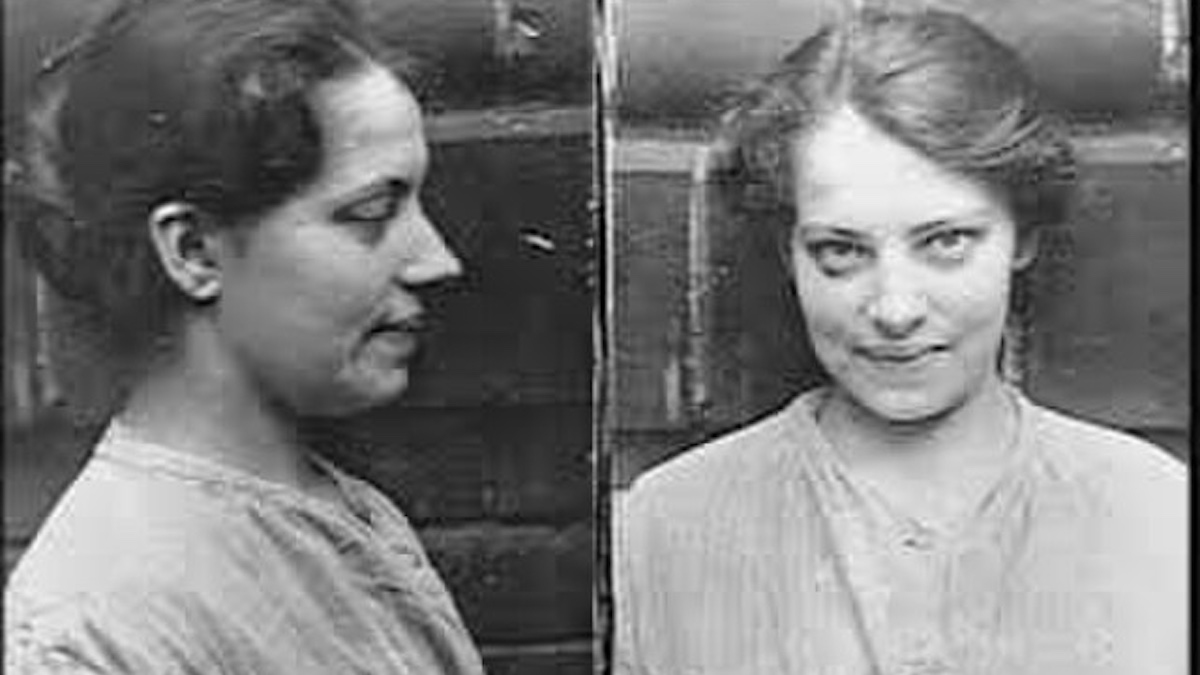

The legend of the “lost princess” from Russia haunted Europe and America for most of the 20th century. So, when a woman known as Anna Anderson emerged from a Berlin asylum in 1920 claiming to be Grand Duchess Anastasia Romanov—the “lost princess” or the youngest daughter of Russia’s last tsar—her story seemed too miraculous to ignore.
According to Anderson, who eventually made her way to America, she had survived the massacre that killed her family in 1918 and wandered through Europe in secret before reappearing to reclaim her identity.
Her tale would enthrall the public for decades, and it would take a preserved piece of her intestine, tested long after her death, to finally solve the mystery.
The Romanov assassination
In 1918, the Romanovs—Nicholas II, Empress Alexandra, their four daughters, including Anastasia, and their son Alexei—were imprisoned by Bolshevik forces at the Ipatiev House in Yekaterinburg.
As civil war raged across Russia, guards awoke the family, telling them they were evacuating. Instead, the guards lined them up in the cellar, read them a brief death sentence, and then shot them. When gunfire failed to kill everyone instantly, bayonets and rifle butts finished the job. The bodies were stripped, burned, and buried in secret pits outside the city.
The Soviets only announced Nicholas’s death at first; the authorities claimed the rest of the family were in “a secure location.” There was no public record of the other executions, and the site of the burial was kept secret for decades.
All the while, people who had loved or pitied the fallen monarchy found it easier to believe that at least one Romanov child had escaped.
Anderson spent time in a mental hospital
Anderson’s story began after she was pulled from a Berlin canal following an apparent suicide attempt. Known only as Fräulein Unbekannt (“Miss Unknown”), she was placed in a mental hospital. There, other Russian émigrés noticed her aristocratic mannerisms and striking resemblance to Anastasia. By 1922, she publicly claimed to be the grand duchess, the sole survivor of the Romanov execution in Yekaterinburg.
Her supporters included members of European nobility who were desperate to believe that at least one of the Romanovs had survived. Anderson herself encouraged the speculation with detailed memories of palace life. But many of the tsar’s relatives dismissed her immediately, noting inconsistencies in her story and poor command of the Russian language.
Even so, the possibility of Anastasia’s survival became a cultural phenomenon, spawning books, films, and even a Broadway musical inspired by her supposed escape.
In 1968, Anderson moved to the United States, settling in Charlottesville, Virginia, with her husband, historian Jack Manahan. Locals dubbed them “the eccentric royal couple,” and news coverage at the time described Anderson as alternately charming and paranoid.
The DNA test
When Anderson died in 1984, her body was cremated. But a final twist came a decade later, when scientists discovered that tissue from an intestinal biopsy Anderson underwent in the 1970s had been preserved in paraffin wax. Using the emerging science of mitochondrial DNA testing, forensic experts compared the sample to genetic material from Prince Philip, a relative of the Romanovs.
The result was unequivocal: the DNA did not match the Romanov family. Instead, it matched that of a missing Polish factory worker named Franziska Schanzkowska. Forensic scientist Peter Gill, who led the tests, later said the odds Anderson was Anastasia were “practically zero.”
At the same time, excavations near Yekaterinburg uncovered the remains of the Romanov family, including those of a young woman whose age and stature matched the missing girl. DNA testing confirmed her identity and definitively solved the mystery that had persisted for nearly seventy years. In the end, science proved that the woman was not a duchess at all, but Franziska Schanzkowska, a troubled Polish factory worker who stepped into one of history’s most enduring legends.








Published: Oct 30, 2025 12:21 pm