


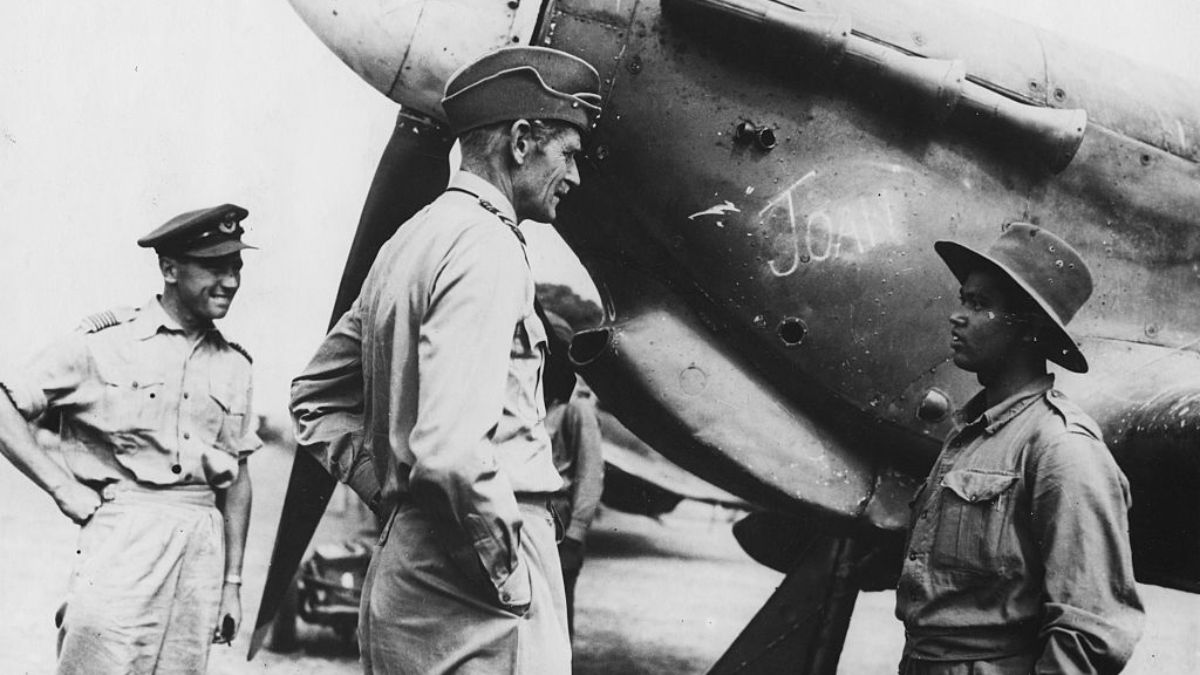

In February 1945, around 1,000 Japanese soldiers were trapped on Ramree Island off the coast of Burma during World War II. British and Indian forces had surrounded them during a fight to take control of the island. The British wanted to use it as an airbase. The Japanese soldiers had to make a tough choice. They could either give up to the enemy or try to escape. They chose to escape by going through 16 kilometers of mangrove swamps to reach other Japanese soldiers on the other side of the island.
The swamps were home to saltwater crocodiles. These huge animals can grow more than 20 feet long and weigh over 2,000 pounds, as per Wikipedia. They are known for being dangerous and attacking people. The Japanese soldiers knew about the crocodiles but thought it was their only way out. As they walked through the thick mud, they faced many dangers. There were crocodiles, tropical diseases, mosquitoes, scorpions, snakes, and they had no clean water or food.
British troops followed the Japanese soldiers in boats. Bruce Stanley Wright was a Royal Canadian officer who was there. He later wrote about what the British soldiers heard that night. “The scattered rifle shots in the pitch black swamp punctured by the screams of wounded men crushed in the jaws of huge reptiles, and the blurred worrying sound of spinning crocodiles made a cacophony of hell that has rarely been duplicated on earth,” Wright said. Out of 1,000 Japanese soldiers who went into the swamps, only about 20 came out alive and were caught by British forces.
The real story is more complicated than it first appears
For many years, this event was listed in the Guinness Book of World Records as the biggest crocodile attack ever. The story became famous around the world. People said that hundreds or even 900 Japanese soldiers were killed by crocodiles. But modern scientists and history experts started asking questions about these numbers. In 1998, a scientist named Steven Platt who studies reptiles looked into what really happened. He found that far fewer soldiers were killed by crocodiles than people thought.
New research shows that about 500 of the 1,000 Japanese soldiers actually got out of the swamps alive, not just 20. Most of the deaths were caused by normal war problems. Soldiers were shot by British forces, got sick from diseases, drowned in the water, killed themselves, or died from having no water or food. Platt’s research found that only 10 to 15 soldiers were actually killed by crocodiles, not hundreds.
A historian named Frank McLynn said the crocodile story does not make sense when you think about nature. If thousands of crocodiles were there to kill so many soldiers, how did the swamp have enough food to keep all those crocodiles alive before and after the battle? People from Burma who lived there during the war were asked about it years later. They said most Japanese soldiers died from being in the swamp too long, getting sick, and having no clean water. They did not see huge numbers of crocodile attacks.
British military papers show that early on February 18, 1945, hundreds of Japanese soldiers tried to swim across water to get back to the mainland. The official British report said that except for a few good swimmers, most probably did not make it across. This means many soldiers died from drowning, not from crocodiles. It is clear that some Japanese soldiers were killed by crocodiles when they tried to escape, but the real number is much lower than the scary stories people heard.
The fight on Ramree Island was part of the bigger World War II battles in Asia, where both sides dealt with awful conditions and huge losses. It is sad that saltwater crocodiles completely disappeared from Ramree Island and the rest of Rakhine state in the second half of the 1900s.








Published: Oct 17, 2025 08:15 am