


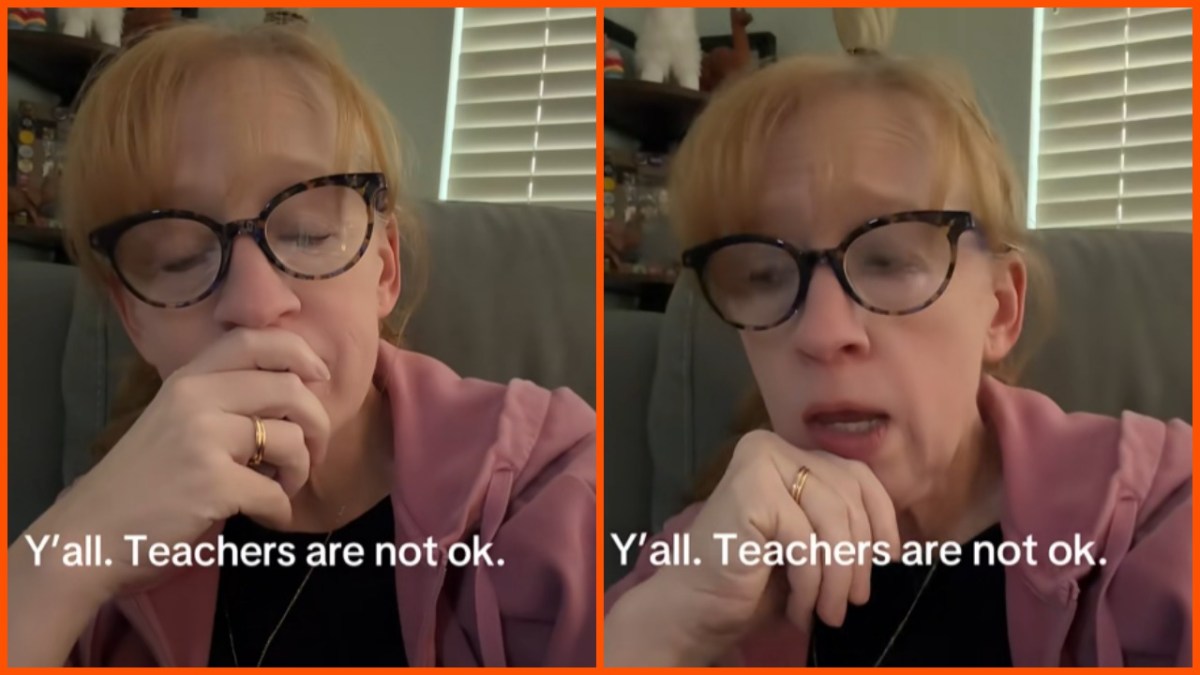

No child left behind, but at what cost? A California teacher named Sarah (@sarahannewrites) claimed her 10th-grade students struggled to find Chapter 2 in a book. In a video captioned “Y’all. Teachers are not okay,” Sarah was left stunned as she described three students approaching her, “shoving” their books at her, and complaining they couldn’t find Chapter 2.
“How am I supposed to find Chapter 2?” they reportedly asked. Sarah said she was left speechless and later added in her caption, “What comes after learned helplessness on the scale? Because that’s where we are at.”
In a follow-up video, Sarah also alleged that school administrators were reluctant to let students fail because schools were evaluated by passing rates, claiming that even when students failed a class, they could simply enroll in an online credit recovery course to make it up. She expressed concern that some students might use AI tools to complete the coursework instead of doing the assignments themselves. Frustrated, Sarah concluded, “We can’t win.”
Teachers are absorbing the effects of the current educational crisis
Many viewers online expressed shock at Sarah’s alleged experience, with some voicing frustration that students are struggling with basic tasks. “This is the residue of no child left behind,” one person wrote, blaming education policies for the situation. Another teacher shared a similar experience, commenting, “I set a deadline and locked an assignment on google classroom and a SENIOR ran out of the class and told the counselor I was ruining her mental health…like I don’t even know if the general public knows how wild it is right now in education.”
The supposed incident may not be isolated. Across the U.S., educators like Sarah have reported what they describe as a steep decline in student performance, a trend that many believe accelerated after the COVID-19 pandemic. Data from the National Assessment of Educational Progress (NAEP), also called “the Nation’s Report Card,” suggests that reading scores for American teenagers have dropped to some of their lowest levels in decades.
A recent NAEP report highlights a troubling trend: high schoolers are posting historic lows in reading, math, and science. Seniors report feeling slightly less confident in their abilities than in 2019, with the percentage of students expressing “high” confidence in their reading skills dropping from 73% in 2019 to 71% in 2024. The report indicates that nearly half of high school seniors now score below basic levels in math and reading. About 35% are at or above proficient in reading, while 32% fall below “basic” proficiency. This means that even basic arithmetic, like counting change, is now a challenge for many high schoolers.
Some viewers said they were concerned about how students who struggle with basic tasks will handle adult responsibilities. “Imagine them as adults… This country is in trouble,” one person remarked. USA Reads estimates that one in four young adults in the U.S. is functionally illiterate, despite more than half earning high school diplomas. NAEP data shows the percentage of 16- to 24-year-olds reading at the lowest literacy levels rose from 16% in 2017 to 25% in 2023. Sarah’s account reflects broader concerns about whether students are developing the fundamental skills expected at their grade levels, while teachers like her are left to navigate an escalating educational crisis.







Published: Nov 10, 2026 01:45 pm