


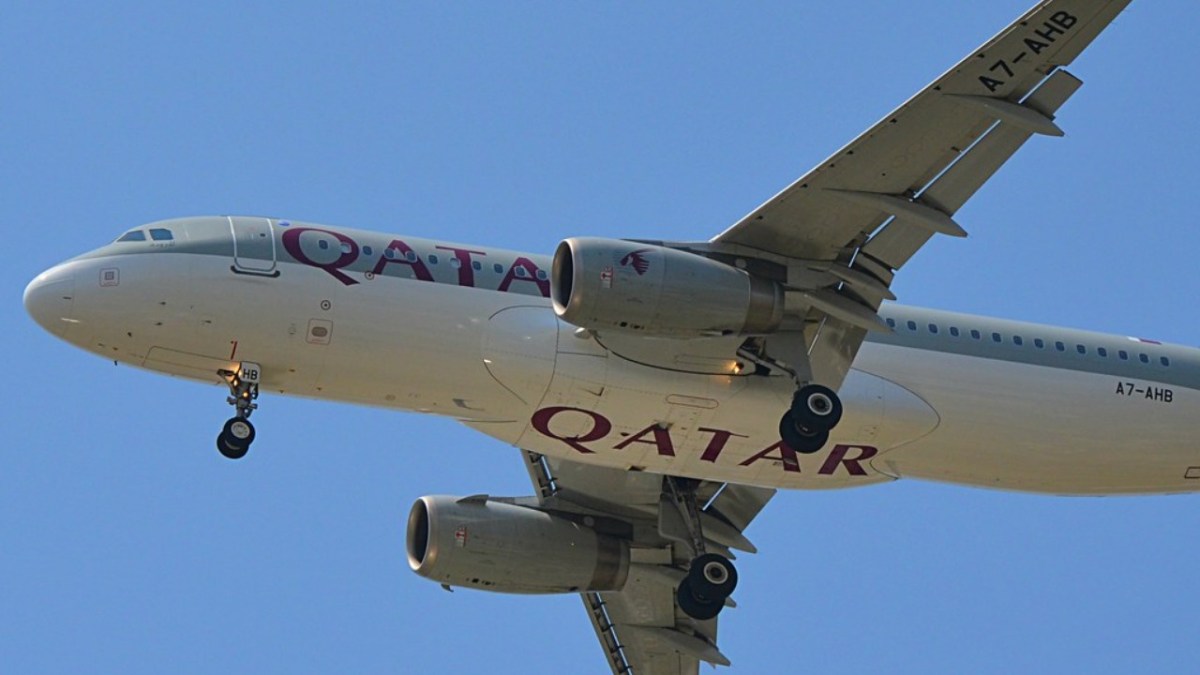

It’s not unusual for your seating arrangement on a flight to change prior or during the trip, but when Mitchell Ring was asked to slide one seat along his row en route to Qatar, he couldn’t imagine what the experience would entail.
Ring and his wife, Jennifer Colin, had booked the trip as a Venice getaway. He then rode out roughly four more hours, the tail end of a 14-hour leg, next to the blanket-covered body of a passengers the crew had tried and failed to resuscitate. (via CNN) Ring’s description of the incident and the airline’s version don’t exactly line up.
Ring doesn’t fault the rescue attempt, of course. He told A Current Affair that “staff were there in no time” and did “a wonderful job trying to revive her.” But the trouble began after that. Crew members tried to wheel the woman forward to business class, but the aisle proved too tight. Ring and Colin had a four-seat row to themselves, and that empty space became their temporary fix for the situation.
“They just said to me, ‘Can you move over, please?’ And I just said, ‘Yes, no problem,’ and then they placed the lady in the chair that I was in,” Ring said on the program.
Colin moved to another row once a nearby passenger made room for her. Ring stayed put, though. “There were a few spare seats I could see around us. I can’t believe they told us to stay… it wasn’t nice,” he added.
Touching down in Doha, it took a while for the police and ambulance officers to come in and take care of the situation. Colin, who is a nervous flier, expected more professional treatment, though the airline maintains it did everything according to protocol and wasn’t neglectful in any way.
What the rules say and how common these incidents are
The International Air Transport Association’s death-on-board guidelines, issued in January 2018, frame its steps as a suggested protocol rather than a binding rule. They say the body should go to a seat away from other travelers if one is open. It also reminds crews how hard the moment can be on anyone traveling with the deceased and on those watching.
Its final step speaks directly to the Doha arrival, though, and says everyone else should leave the aircraft first and the body should stay aboard until local authorities take charge. Qatar Airways’ response failed to address the couple’s claim that they were kept in their seats, both during the flight and after landing.
These on-board incidents happen more often than you think. A U.S. case in August 2026 drew a far shorter airline response aboard the Southwest Flight 958, a Dallas-Los Angeles run. On August 7, a 22-year-old man received CPR and was declared dead once the plane reached LAX. (via NBC Los Angeles)
A new federal rule published in September 2026 deals with delay records. Starting October 19, 2026, the 13 U.S. airlines that report delay data to the Department of Transportation can no longer list the time spent cleaning a plane after a passenger’s death as a delay they caused.









Published: Sep 27, 2026 09:36 am