


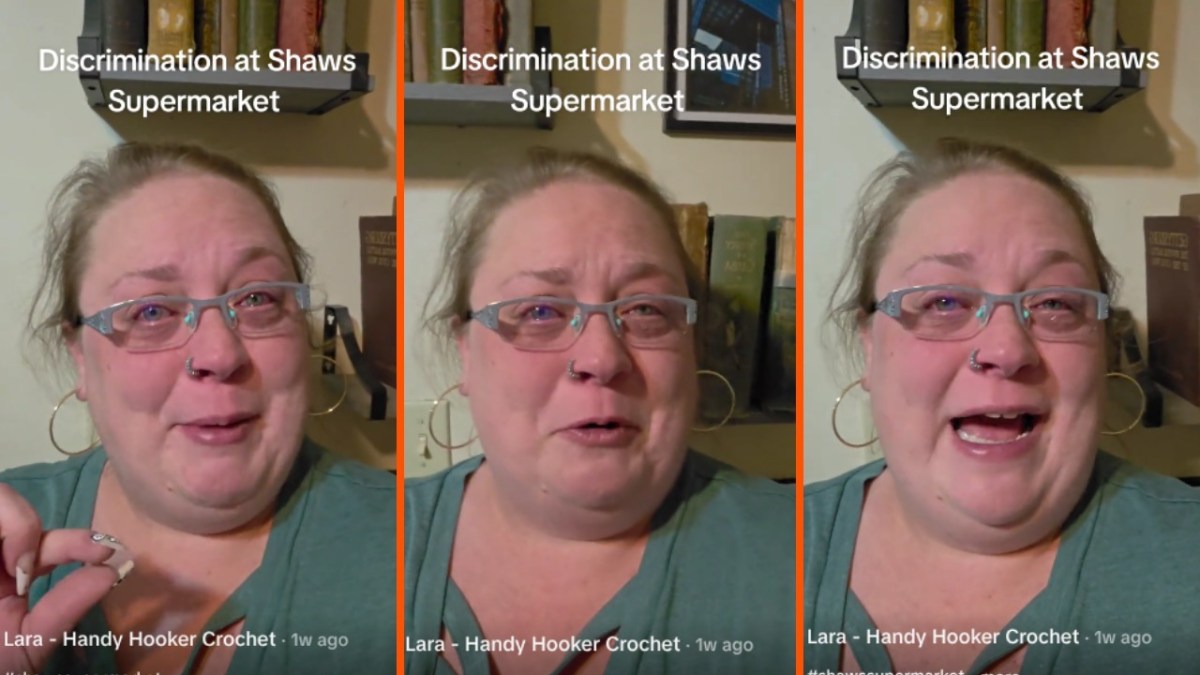

A longtime DoorDash driver with a physical disability has sparked an online discussion around workplace accessibility and bias in customer service after sharing a video of what she describes as an uncomfortable confrontation with a supermarket manager in New Hampshire.
In the emotional TikTok video, the creator (Lara, who goes by @larahandyhookercrochet on TikTok) claims she’s been a DoorDash driver for 8.5 years while living with a serious spinal injury that required surgical hardware. She says she has a state disability designation on her driver’s license and vehicle tag.
According to Lara, she does the vast majority of her deliveries on her own but occasionally asks a store employee to help her load some of the heavier grocery items into the trunk. She claims she first checks with the customer at the other end to ensure they’re happy to help with the unloading.
She says the manager publicly shamed her
However, Lara alleges that during a routine pickup at a Shaw’s supermarket in Hooksett, a store manager approached her and confronted her in front of other staff and customers. According to her account, the manager told her she shouldn’t always be asking for help every time she came in and that staff wouldn’t be able to keep doing that.
Lara claims she pointed out that she didn’t normally make such a request and asked whether the manager would treat a traditional shopper the same way. According to her, the manager allegedly responded: “Yeah, but you’re not just a normal customer. You’re DoorDashing. And you can’t do your job.“
Lara says she was visibly shaken by the alleged public confrontation and pushed back against what she perceived as the manager’s suggestion that needing some physical accommodation meant she was incapable of doing well in the gig economy. She also says she had been a keen weightlifter before her back injury.
In her video, Lara calls on Shaw’s corporate leadership to investigate the alleged incident and hold the manager accountable. She claims it’s already difficult enough to ask for help without being publicly shamed for trying to work while living with a disability.
While Lara’s account has drawn attention to the challenges disabled gig workers may face, the details of the alleged confrontation have not been independently verified. Her story also raises broader questions about the legal and logistical grey areas surrounding disability accommodations for gig workers across the country.
People with disabilities are overrepresented in self-employment
Title III of the ADA generally requires places of public accommodation to provide equal access and make reasonable modifications for people with disabilities. However, how those protections apply in situations involving third-party delivery workers may depend on the circumstances.
The U.S. Bureau of Labor Statistics has reported that people with disabilities are disproportionately represented in self-employment. If Lara’s account reflects a broader issue, it could highlight the importance of retail businesses engaging with gig workers respectfully while navigating accessibility concerns and policies.




Published: Nov 18, 2026 01:15 pm