


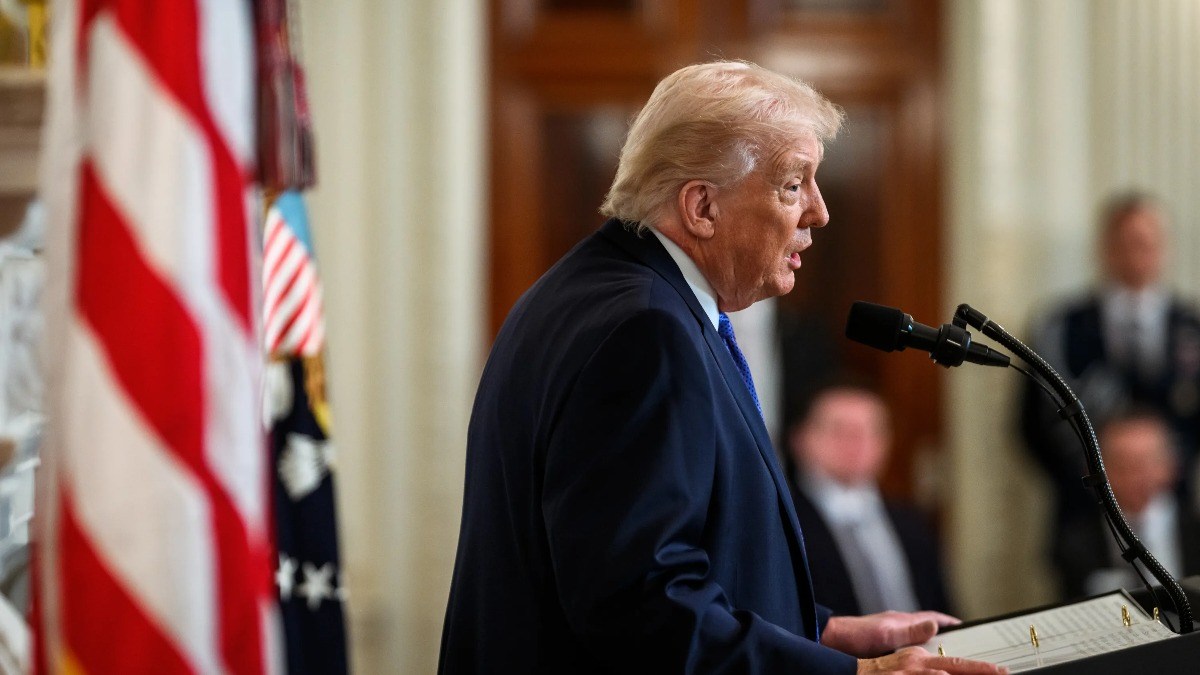

President Trump was headed to the Republican Party’s midterm convention in Dallas on Wednesday when CNN reporters caught up with him. The questions weren’t about Texas. They were about what’s happening at the pump, a subject that has dogged the administration for months as the fight with Iran drags into its seventh month without a clear end in sight.
Trump didn’t dodge it. Asked directly about when gas prices might actually come down, he told reporters, “I think it’s going to take a little bit longer than the midterm.” It’s a notable shift from an administration that has repeatedly said oil costs would fall sharply once the fighting was over, and Trump didn’t stop there.
He argued that Iran is deliberately stretching the war out to hurt him at the ballot box in November, saying, “They’re desperate to try and affect the election so that we can get a nice weak group of people in there and leave them alone and let them have their nuclear weapon.”
The pump is telling a different story
The timing isn’t great for that admission. Gas prices jumped 7.3 cents on Wednesday, the sharpest single-day increase since May, pushing the national average to $4.22 a gallon, according to AAA data. Diesel has climbed even higher, with the average hitting a record $5.94 a gallon.
The pressure comes as the global benchmark oil price has pushed back above $100 a barrel, with stepped-up fighting in Iran further threatening crude flows through the Strait of Hormuz — a squeeze drivers have already started feeling at the pump well before Wednesday’s spike.
This isn’t the first time the administration’s timeline has slipped. Treasury Secretary Scott Bessent had predicted gas prices could get back near $3 a gallon by Labor Day, while the administration initially expected the war to last just four to six weeks.
That’s a long way from the president’s earlier promise that prices would eventually fall well below two dollars a gallon once the war was won. Instead, Iran proved capable of effectively halting traffic through the Strait of Hormuz, blowing past those early expectations. Now, roughly six months into the fight, the administration is still looking for ways to reopen the waterway.
Trump’s assessment of Iran hasn’t changed much despite the war lasting far longer than expected. He maintained that Iran is near collapse and would seek an end to the conflict immediately after the election. “They can’t hold out any longer,” he said, even as the fighting has stepped up in recent days.
Pressed on the potential political fallout from high gas prices, Trump brushed the concerns aside and reframed the stakes entirely. “I think it’s very easy to explain to America, all you have to do is say: ‘Will you let Iran have a nuclear weapon?’ And the answer is no,” he said, insisting that Americans remain supportive of the broader offensive against Iran.







Published: Sep 10, 2026 08:04 am