


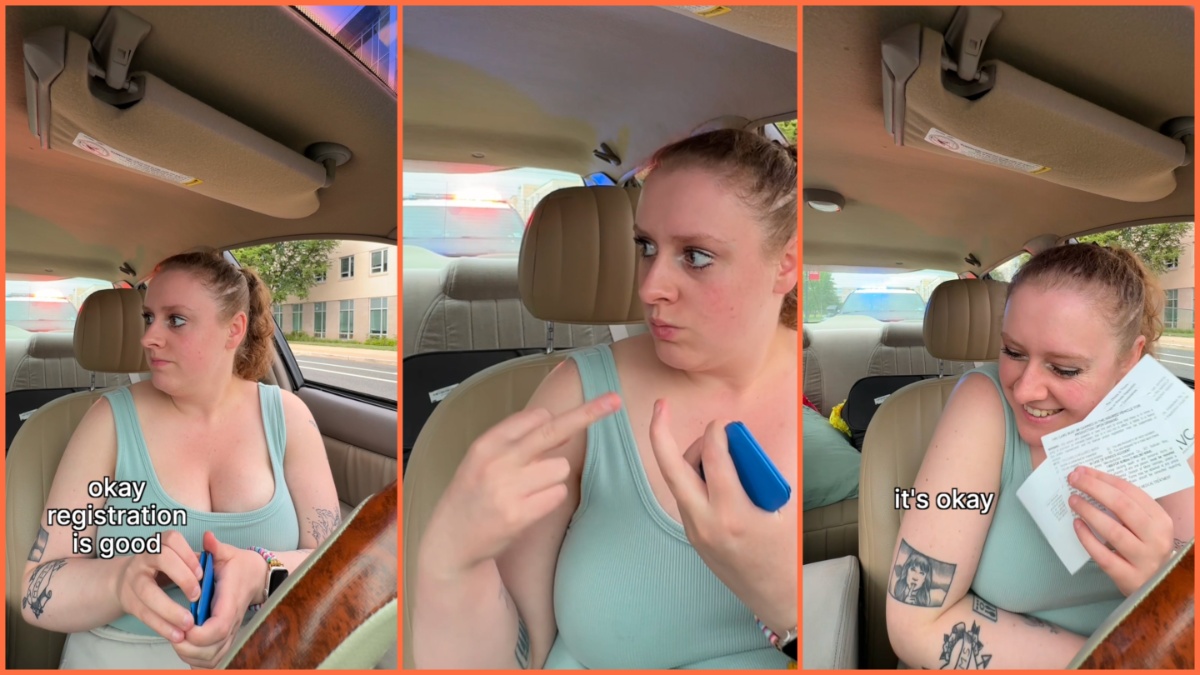

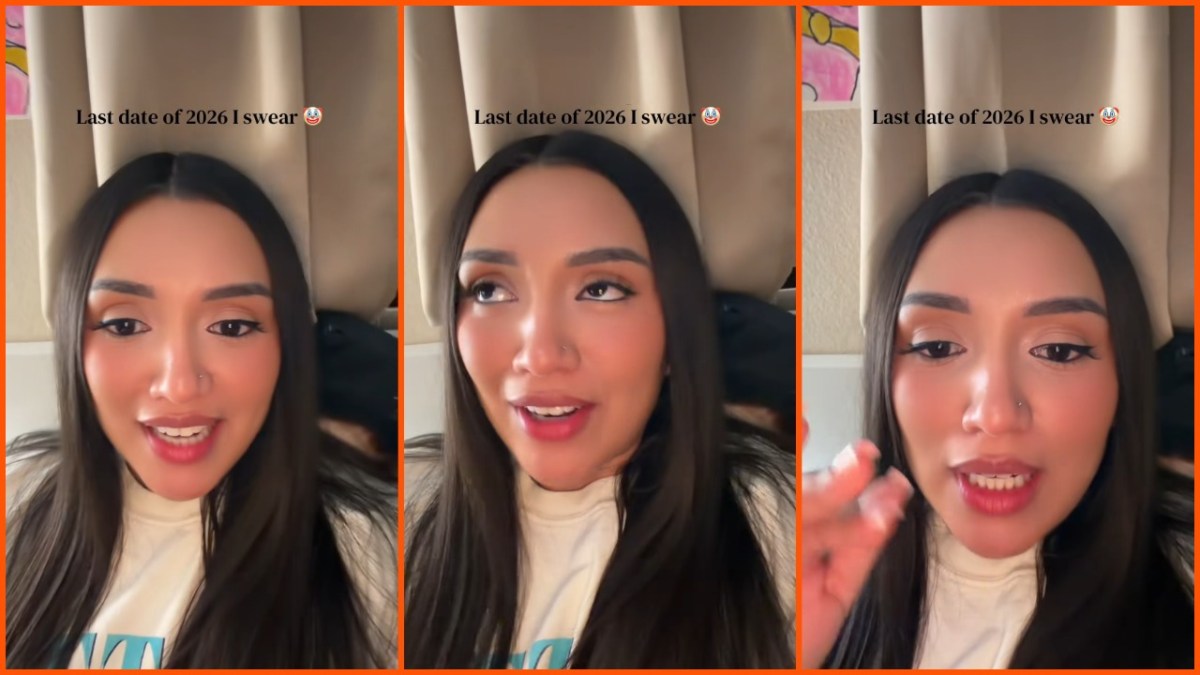
The first sound in today’s viral TikTok video is an expletive, which arrives as a woman is shown sitting in her car, having been pulled over by a police officer.
The title also reads: “My WORST nightmare came true today…” and it involves TikToker and musician Maya Wagner, who suffers from Tourette syndrome.
The exchange opens the way most of them do in this scenario, with an officer greeting her and asking for license and registration. Wagner hands them over, then says that she has Tourette’s. “Thank you for letting me know,” the officer responds, immediately putting her at ease.
“Is there anything wrong with your license?” The officer asks, and she says no. The officer lets her off with a warning, and asks that she pay attention to the stop sign. Twice, Wagner tics an obscene gesture at the officer standing at her window, but she responds with a “it’s okay” and wishes her a good day before going away.
Since being uploaded two days ago, the TikTok has garnered near 1 million likes and thousands of comments.
While the police officer being so understanding is wholesome, people can’t help but laugh at the moment when the gesture appears. “Her letting you off with a warning and you immediately giving her the finger is sending me,” wrote one user.
“All I see is a tutorial,” joked another.
“I wanna have Tourette syndrome,” one comment read.
On a more somber note, one person added: “That is really scary! I’m so glad you got an officer like her!”
What the condition actually looks like
Tourette syndrome is a motor disorder that causes sudden and unwanted movements. Per the CDC, involuntary profanity is not a standard feature, but the Tourette Association of America claims it shows up in around 10% of people afflicted with the disorder.
While the encounter may read as unexpected, police officers actually train for scenarios such as this. The association actually publishes a law enforcement toolkit containing a section on high-risk encounters, and this was precisely one. It says that request for documents is a point at which the driver is most likely to jerk or vocalize without warning, so officers are advised to talk the moment down rather than treat it as resistance.
Setting matters too, because anxiety amplifies tics and a driver pulled over by police may present far more symptoms In that moment than on an ordinary afternoon.
Some states let drivers flag this before the officer walks up. Texas, for instance, prints a communication impediment marker on the license. Michigan keeps it hidden on the driver’s record, visible only when an officer runs the file. New Jersey pairs a license notation with a companion card drivers must carry. While none of them name Tourette syndrome in specific, the laws are broad enough to cover it.



Published: Aug 10, 2026 02:22 pm