


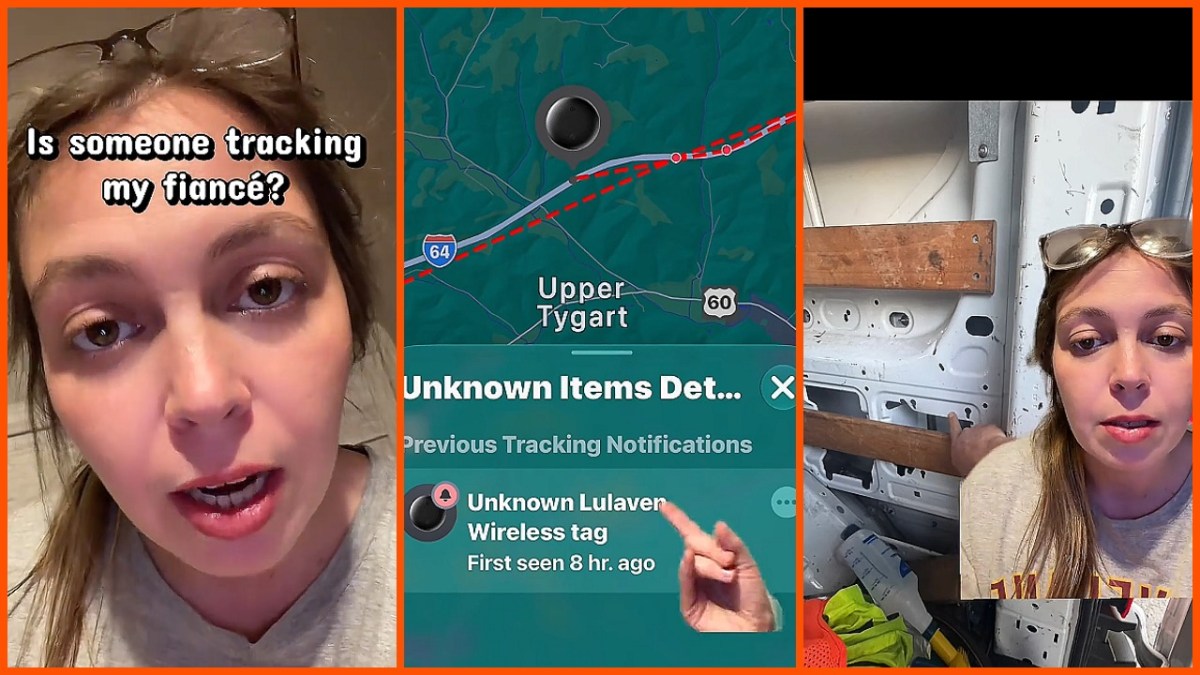

A woman was left seriously concerned after her fiancé allegedly discovered an unfamiliar tracking device hidden inside his work van shortly after the couple moved into a new home. The device wasn’t an Apple AirTag, but reportedly a wireless tracker that triggered an alert on his phone identifying it as an unknown device nearby, according to a TikTok video posted by the user. ‘Is this real life?’ she questioned.
While he initially thought the discovery might have been a prank, the situation became even more unsettling when he received a strange text message asking whether he was home. The woman shared screenshots of the apparent alert and photographs of the device her fiancé apparently found inside the vehicle. The notification seemingly identified it as an unknown “Lulavine” device, which the woman claimed was actually a wireless tag tracker.
According to the screenshot, the device had first been detected eight hours before her fiancé received the notification. Although his phone seemingly didn’t provide information about who owned it, he could activate a sound that helped him locate the tracker.
He apparently got a strange text
After reportedly stopping his van and getting out to investigate, he followed the sound to the back of the vehicle. He allegedly found the small tracking device tucked near the rear door. The woman pointed out that it looked “practically brand new,” with very little dirt or wear, making her suspect someone had apparently recently placed it there.
The couple found the discovery particularly disturbing because apparently they had moved into their new home just two days earlier. The vehicle was also privately owned by the fiancé, rather than being a company van, and he was reportedly its only driver. This left them wondering who could have accessed it and why someone would allegedly want to track his location.
Things became even stranger when someone reportedly “messaged him at 2:49 and said, ‘Are you home?'” The woman claimed the message came from a textPlus number and might have been unrelated, but its timing seemingly made it difficult for them not to question whether the two incidents were connected.
There were other details that added to their concerns. The tracker notification’s first-seen time reportedly appeared to place the device’s initial detection around 4 a.m. to 6 a.m., the time “that would have put him at our house super early this morning.” The user added that his van apparently “said door ajar, and that his back door was open, and he had to shut it,” raising the possibility that someone had accessed the vehicle without his knowledge.
The couple claimed they had already contacted people they knew to determine whether someone had planted the device as a joke. However, they still didn’t know who was responsible or what the person’s intentions might have been. The woman professed that they planned to take further steps to investigate the tracker and figure out how it ended up inside the van.
The discovery also raised broader concerns about how easily small tracking devices can be used to monitor someone’s movements without their knowledge. While Bluetooth trackers can help people locate misplaced belongings, unauthorized tracking can create serious privacy and safety concerns, particularly when someone deliberately hides a device in another person’s vehicle.
The Safety Net Project, which provides technology-safety resources for people experiencing abuse, warns that hidden trackers can be used to monitor someone’s movements through their vehicle or personal belongings. Its guidance recommends documenting suspicious devices with photographs and screenshots, checking vehicles for other unfamiliar tracking equipment, and considering contacting law enforcement if unauthorized tracking is suspected.
In May 2024, Apple and Google introduced support for unwanted tracking alerts across iOS and Android devices, allowing users to receive notifications when an unfamiliar, compatible Bluetooth tracker appears to be moving with them. The feature was designed to help people identify devices that might be following their movements without their consent (per Apple).








Published: Nov 24, 2026 02:30 pm