


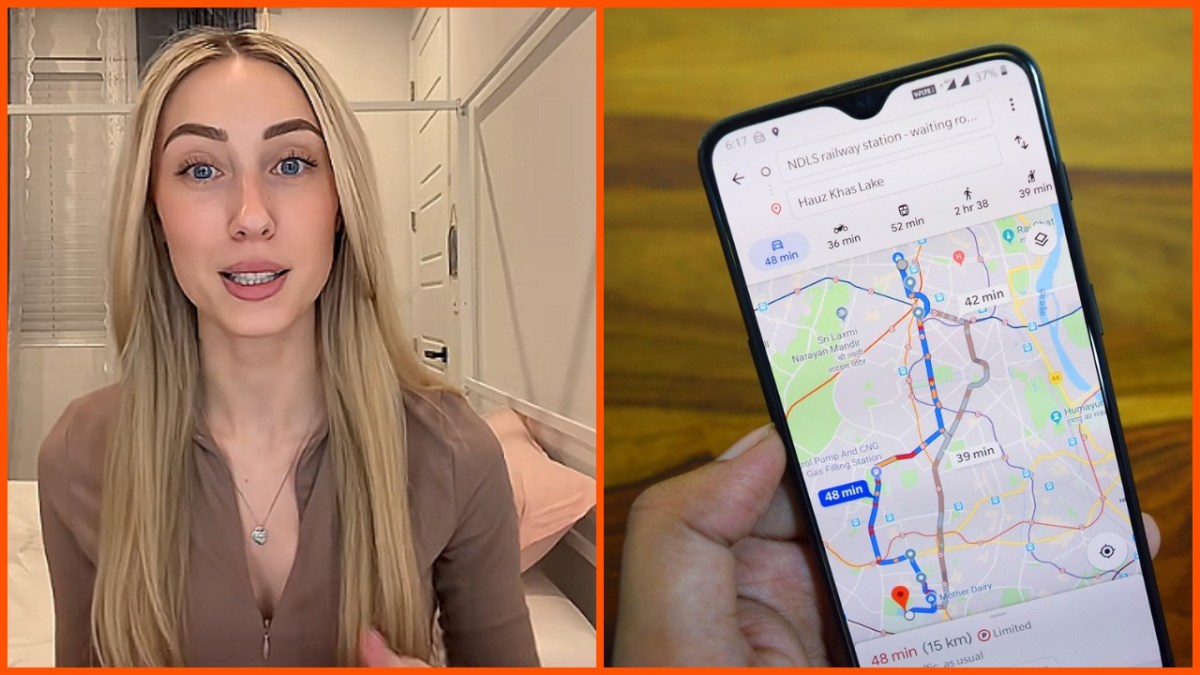

A woman is warning social media users to think twice before posting their whereabouts in “real time” after a stranger allegedly tracked down a location she had posted about and began messaging her as though they were about to meet. The woman shared her unsettling experience in a TikTok video, claiming that she had deliberately posted an old photo of herself at a coffee shop to make it appear she was there, even though she was actually sitting at home. “You don’t think people are watching your stuff? People are watching your stuff,” she asserted.
She said she had taken the picture days earlier but decided to upload it to her story anyway. Shortly afterward, a man she had never spoken to, whose profile reportedly had no picture, posts, or followers, began messaging her to ask where the coffee shop was. When she ignored him, he allegedly continued sending messages, claiming, “I found the place. I’m gonna pull up.”
The situation became even more alarming when the stranger reportedly sent another message saying he had arrived and asking whether she was inside. He eventually claimed he was inside the coffee shop and asked, “I’m inside. Where are you?” The woman said the messages made her realize how dangerous it could have been if she had actually been at the location when she posted the picture.
Posting in real time can turn out to be scary
The woman reported that the interaction was particularly frightening because the stranger seemed to assume she would be willing to meet him, despite having never interacted with him before. She warned that if she had actually been alone at the coffee shop, his messages could have turned into a potentially “terrifying” face-to-face encounter.
Her experience highlights a privacy risk associated with sharing location information online, even when a post seems harmless. Photos can reveal recognizable storefronts, street signs, landmarks, or other details that allow strangers to figure out where someone is. Posting while still at a location can make that information especially useful to someone who intends to approach the person.
Although sharing a coffee photo might seem like an ordinary social media update, publicly revealing where someone is at a particular moment can potentially make it easier for unwanted individuals to track down their location. The woman encouraged her followers to wait until they have left a location before posting pictures or videos from their outings.
Experts also warn against sharing real-time location updates on social media. RAINN advises users to disable geolocation or wait until they have left a location before tagging it in a post, as revealing their whereabouts could create safety risks. The organization also recommends limiting location-related information to people users know and trust.
A 2022 report from the U.S. Department of Justice found that an estimated 3.4 million Americans aged 16 or older experienced stalking in 2019. Among victims of stalking involving technology, 54.6% received unwanted messages through the internet or social media, while nearly 32% had their activities monitored through social media.
It also noted that 48.8% of traditional stalking victims experienced offenders showing up at or driving by places they had no reason to be. Therefore, it highlights how unwanted online attention can sometimes extend into someone’s physical surroundings.




Published: Nov 19, 2026 09:30 am