


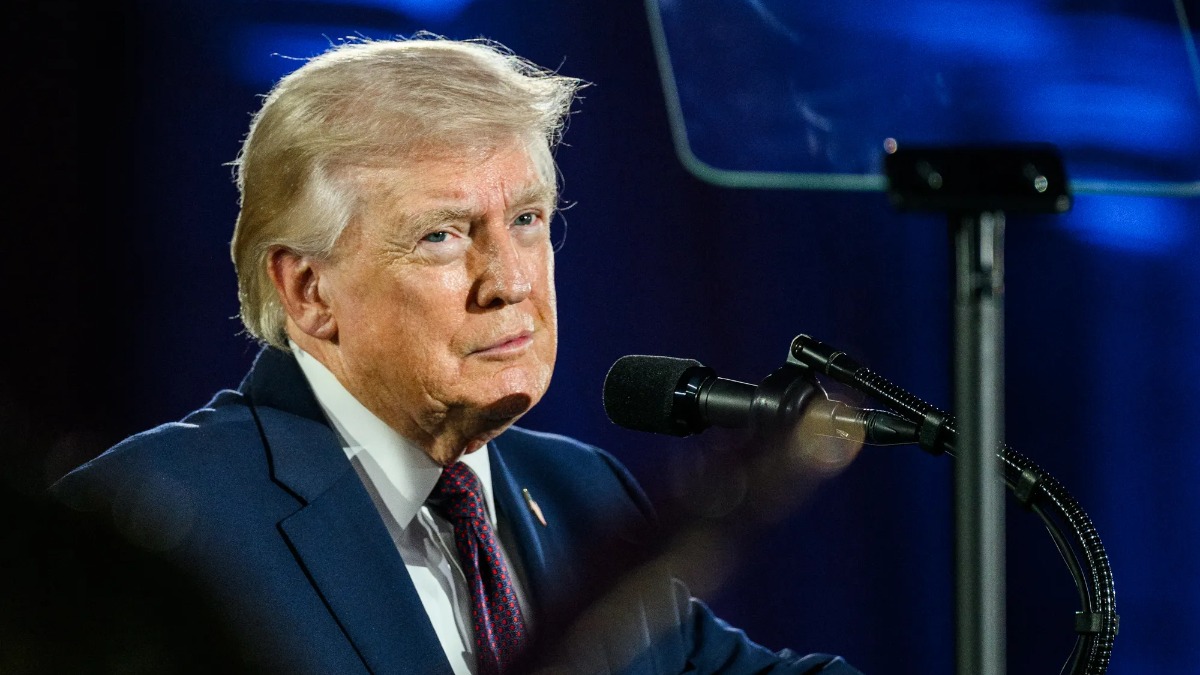

The ceasefire between the United States and Iran is facing its biggest test yet. Despite a serious exchange of fire in the Strait of Hormuz, US President Donald Trump has said the ceasefire is still in place. Both sides are pointing fingers at each other over who started the clash. The trouble began when US naval destroyers were passing through the Strait of Hormuz.
According to US Central Command (Centcom), Iranian forces launched missiles, drones, and small boats at three US warships in what it called an “unprovoked attack.” Centcom said it “eliminated inbound threats and targeted Iranian military facilities responsible for attacking US forces, including missile and drone launch sites; command and control locations; and intelligence, surveillance and reconnaissance nodes.”
But Iran’s top military command claimed that the US targeted an Iranian oil tanker and another vessel near the strait, and also carried out “aerial attacks” on coastal areas, including Bandar Khamir, Sirik, and Qeshm Island. Iranian state media reported “explosions” in the strait and described it as an “exchange of fire” with the “enemy,” while explosions were also heard in Tehran, reports BBC.
The ceasefire remains fragile as both sides trade threats while peace talks inch forward
President Trump took to Truth Social to share his version of events, saying Iran “trifled with us today.” He described the destruction of multiple small boats and warned: “Just like we knocked them out again today, we’ll knock them out a lot harder, and a lot more violently, in the future, if they don’t get their Deal signed, FAST!” Critics have pointed out that Trump’s stance on controlling the world’s oil supply has played a major role in how these tensions have developed.
This clash happened just one day after Iran’s foreign ministry said it was considering a US proposal to end the war. While the White House believes it may be close to agreeing on a 14-point memorandum of understanding, officials in Tehran have been far more cautious.
Iranian parliament spokesperson Ebrahim Rezaei wrote on X that Iran “has its finger on the trigger,” and warned it would “deliver a harsh and regret-inducing response” if the US did not “surrender and grant necessary conditions.”
The economic impact of the tensions is already showing, with stocks falling and oil prices rising on Friday after news of the clashes broke. The UN’s International Maritime Organisation noted that around 1,500 ships and their crews are currently trapped in the Gulf due to an Iranian blockade in the Strait of Hormuz.
Shipping data firm Lloyd’s List Intelligence also reported that Iran has set up a new government agency to approve the transit and collect tolls from ships using the waterway. It is also worth noting that Trump’s earlier position on the Strait of Hormuz has shifted dramatically, as he once told allies the waterway was not his problem before later pushing them to help resolve it.
On the diplomatic front, a US official said Lebanon and Israel are set to hold a new round of talks on May 14 and 15 in Washington regarding a possible peace deal, according to The Guardian. US Secretary of State Marco Rubio also recently met with Pope Leo at the Vatican to discuss “efforts to achieve a durable peace in the Middle East.”
For now, the core issue remains the fragile ceasefire and the high-stakes negotiations between Washington and Tehran, with the world watching closely to see whether a deal can be reached or whether the region moves toward further instability.







Published: May 8, 2026 10:40 am