


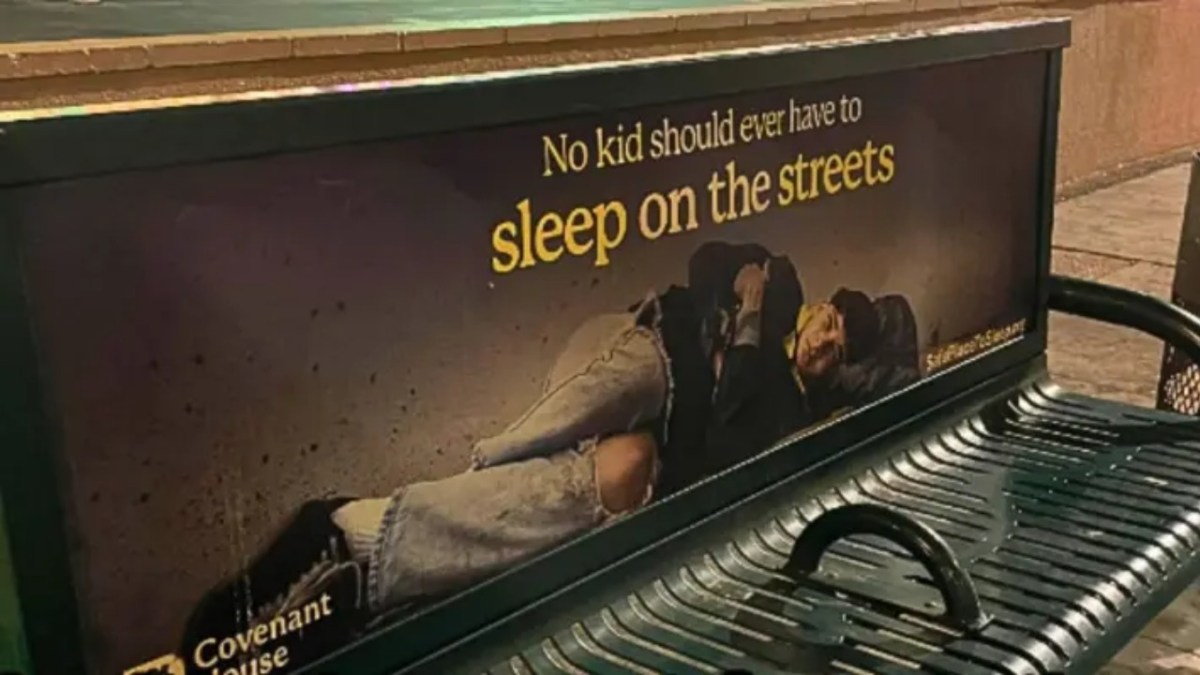

A TikTok user recently shared a photo that has sparked a massive debate about how we design our cities and who those spaces are actually for. As reported by Daily Dot, the post from user @free_your_mind. features a green public bench equipped with metal armrests that serve as dividers between the seating sections. What makes this particular bench controversial is its placement directly beneath an advertisement for Covenant House that states, “No kid should ever have to sleep on the streets.”
As of the time of publication, the post has racked up nearly 96,000 likes, with viewers pointing out the clear tension between the message of helping unhoused youth and the physical design of the bench itself. The metal dividers are a classic example of what is often called hostile architecture or defensive design. These features are built into the environment specifically to discourage certain behaviors, like lying down, or to restrict how people can use public spaces over longer periods.
Common examples that you might have seen around your own city include spikes on flat surfaces or benches that are sectioned off so that nobody can comfortably rest on them. When you see a message about the tragedy of homelessness placed right above an object that is clearly designed to prevent someone from sleeping, it creates an uncomfortable contrast. Many people in the comments section expressed that this design makes them doubt whether public spaces are actually being created with the needs of the most vulnerable people in mind.
This juxtaposition is exactly why the image has gained so much traction online
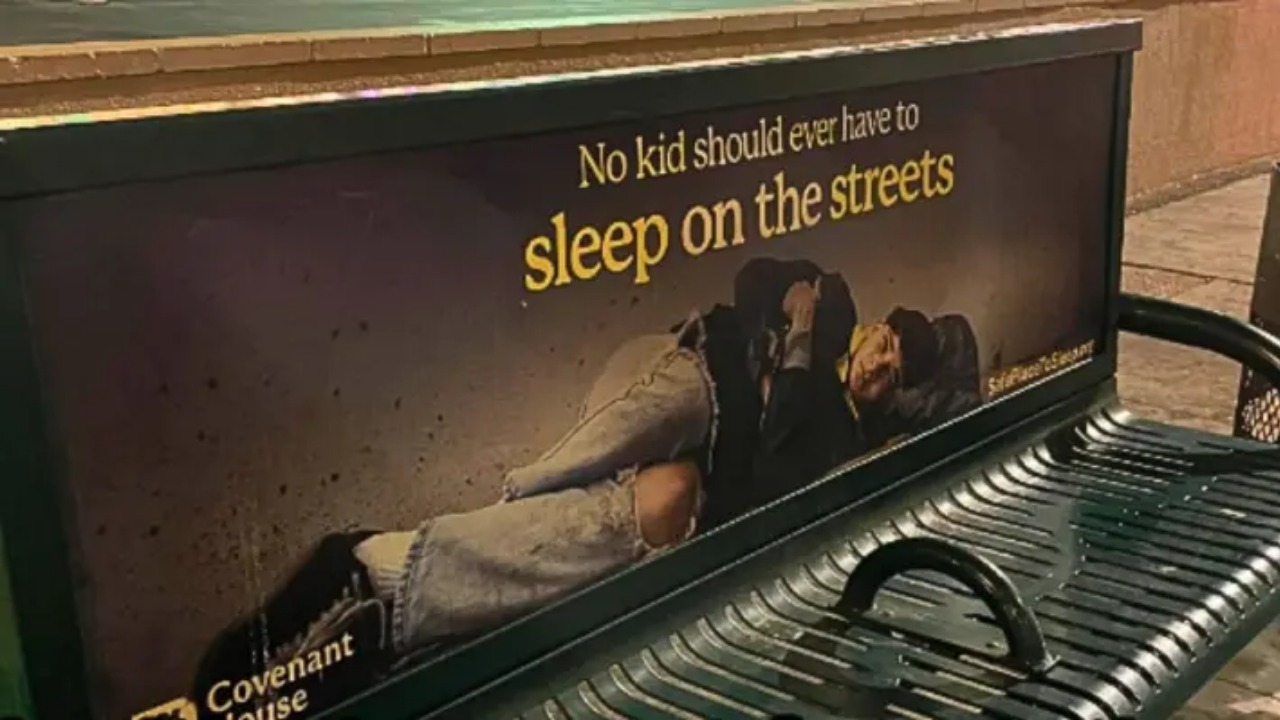
The creator of the post also included a second image that questions the direction of modern urban planning. An overlay on that image asks, “Is this the great future they promised us in the past?” The accompanying caption suggests that contemporary urban design is purposefully used to control how we behave and to limit who gets to access public areas. One commenter even labeled the scene as “absolute ragebait architecture,” and it is easy to see why that sentiment resonates with so many people.
The comment section turned into a space for intense discussion about the reality of the housing crisis. Some users shared their own personal histories, including experiences of transitioning from the child welfare system into homelessness.
Another person pointed to the economic side of the issue by noting, “Not enough wages though to keep us off them; how’s that fair?” This highlights the frustration many feel when they see the cost of living rise while public spaces become increasingly restrictive.
Some of the comparisons people are making are quite bleak. A few users mentioned that the environment feels like a prison cell, while others drew parallels to the gritty aesthetic of the fictional world of Cyberpunk 2077. One person even remarked that it was “genuinely turning into cyberpunk.”
It is important to note that the image does not confirm who installed the bench or if the placement was intentional. We do not know if the bench was specifically designed to target unhoused individuals or if it was just a coincidence of urban planning. Some people have suggested that the advertisement might even be a form of satire meant to highlight how society treats homelessness, and that the bench itself is being misunderstood.







Published: Oct 7, 2026 06:52 pm