


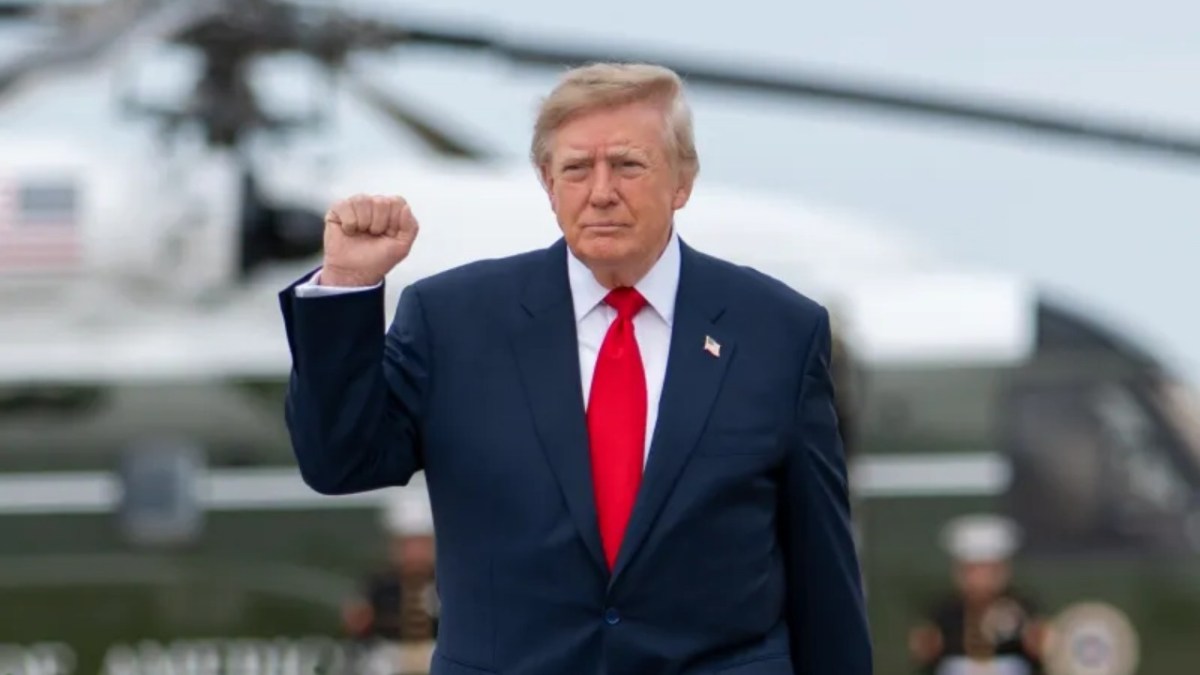

President Donald Trump recently framed the current surge in oil prices as a major financial win for energy-producing states during a rally in Arizona on Wednesday, Common Dreams reports. This statement arrived just hours after new federal data revealed that inflation hit its highest level in months during September.
The President claimed that states like Texas, Oklahoma, and North Dakota are benefiting immensely from the current market environment. “Because of the price of oil, Texas and Oklahoma and North Dakota and all these places, we’re making a fortune,” Trump declared. These regions serve as the base for major fossil fuel companies that have seen windfall profits during the ongoing conflict with Iran.
While the President promotes this perspective, the personal financial stake involved is significant. It turns out that Trump is a major investor in oil and gas companies, and his net worth has increased by as much as $15.5 million since January due to these specific stock holdings.
The current cost of fuel is hitting households hard
Regular gas is averaging at $4.33 per gallon, while diesel is sitting at $6.32 per gallon. According to a tracker from the Watson School of International and Public Affairs, American consumers have paid an extra $135 billion in combined fuel costs since the start of the conflict. That breaks down to roughly $1,030 per household.
The economic data paints a bleak picture for the workforce. Inflation reached an annualized rate of 3.7% last month, and wage growth has completely failed to keep pace. Elise Gould, a senior economist at the Economic Policy Institute, highlighted the struggle on Wednesday. “Workers are losing the race between wages and prices,” Gould wrote. She noted that nominal wage growth is decelerating as workers find themselves with less bargaining power in the current climate.
The lack of progress is becoming impossible to ignore for many families. Gould further explained, “Workers have seen zero progress on affordability compared to January 2025. Real wages are essentially stagnant as workers’ leverage has declined and prices have risen. It’s no wonder workers feel left behind in the current economy.”
The public sentiment reflects this widespread economic anxiety. A Harris poll published on Thursday indicates that three-quarters of US voters are worried about the possibility of a recession. The data also suggests that a vast majority of Americans agree there is a genuine affordability crisis, a sentiment shared by 96% of Republicans.
It’s clear that while the President sees a fortune being made in the energy sector, most Americans are struggling to keep their heads above water as their purchasing power continues to shrink. The gap between the administration’s rhetoric and the daily financial reality for workers is widening, making the current economic environment feel incredibly unstable for millions of people.




Published: Oct 16, 2026 06:30 am