


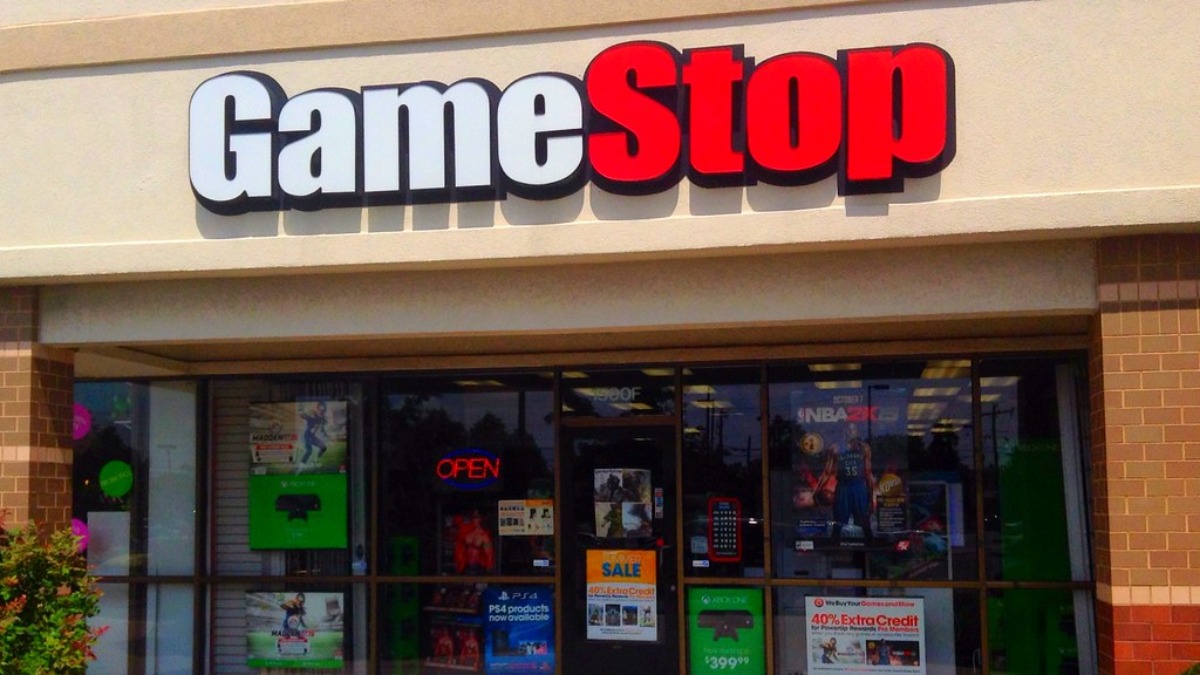

GameStop CEO Ryan Cohen appeared on CNBC to explain how the company planned to fund its surprise $55.5 billion offer to buy eBay, with the interview quickly becoming awkward as Cohen struggled to answer basic questions about how the deal would be financed.
Co-anchor Andrew Ross Sorkin repeatedly asked Cohen how GameStop could afford such a massive bid, but Cohen’s answers only made things more confusing.
Sorkin started by asking Cohen to walk viewers through the numbers. Cohen said GameStop was offering half cash and half stock, but when Sorkin asked him to break down the figures, Cohen responded with a puzzling “Yeah. Which part exactly?” Sorkin patiently went through the math again, pointing to a gap of roughly $16 to $20 billion that Cohen had not accounted for.
Cohen’s answers drew laughter in the studio, and co-anchor Becky Quick stepped in. “That’s a pretty straightforward question. I don’t get it. Where’s the rest of the money coming from? Andrew laid it out for you clearly,” she said. Cohen still could not give a clear answer and kept pointing viewers to GameStop’s website for details, which many saw as an attempt to avoid answering the question directly on air.
GameStop’s financing gap remains unexplained as Cohen deflects tough questions on air
The interview went on for about 16 minutes without Cohen ever clearly explaining how GameStop would fund the acquisition. At one point, he simply said “We’ll see what happens.” Sorkin told Cohen, “We have an audience that I’m hoping is going to want to understand this and hear from you so that you can walk through this,” but Cohen’s responses continued to fall short.
This kind of tense back-and-forth between executives and the media is not new, as seen when a Burger King clapped back at McDonald’s CEO on social media after a similar moment in the spotlight. In a letter posted online on Sunday, Cohen said GameStop is proposing to buy all of eBay’s common stock at $125 per share, with 50% in cash and 50% in GameStop stock.
However, GameStop’s market cap sits at just under $11.9 billion, which has left many people wondering how the company could realistically finance a deal worth more than four times its own value.
When Sorkin pressed Cohen on his leadership and whether he could run a large consumer business, Cohen became defensive. “Didn’t you call for GameStop’s demise multiple times? Like, it should have been bankrupt by now,” he said, adding that GameStop had done “OK” despite those predictions. But the financing question remained unanswered, and deflecting with past wins did little to satisfy the anchors or the viewers watching at home.
Traders on prediction market platforms are also doubtful about the deal going through. On Kalshi, traders give GameStop only a 26% chance of completing the acquisition. On Polymarket, the odds are even lower, with traders giving the company just a 15% chance of pulling off the takeover.
High-profile Senate hearings have similarly put other CEOs on the spot recently, including when the Netflix CEO faced tough questions from Republican senators about the company’s content choices. The uncertainty around the deal has already moved both companies’ stock prices. GameStop shares fell nearly 8% on Monday, while eBay’s stock jumped more than 5.5%.
With no clear explanation from Cohen on how GameStop plans to cover the massive financing gap, investors and analysts are still waiting for answers, and the pressure on the company to provide clarity is only growing.






Published: May 5, 2026 09:31 am