


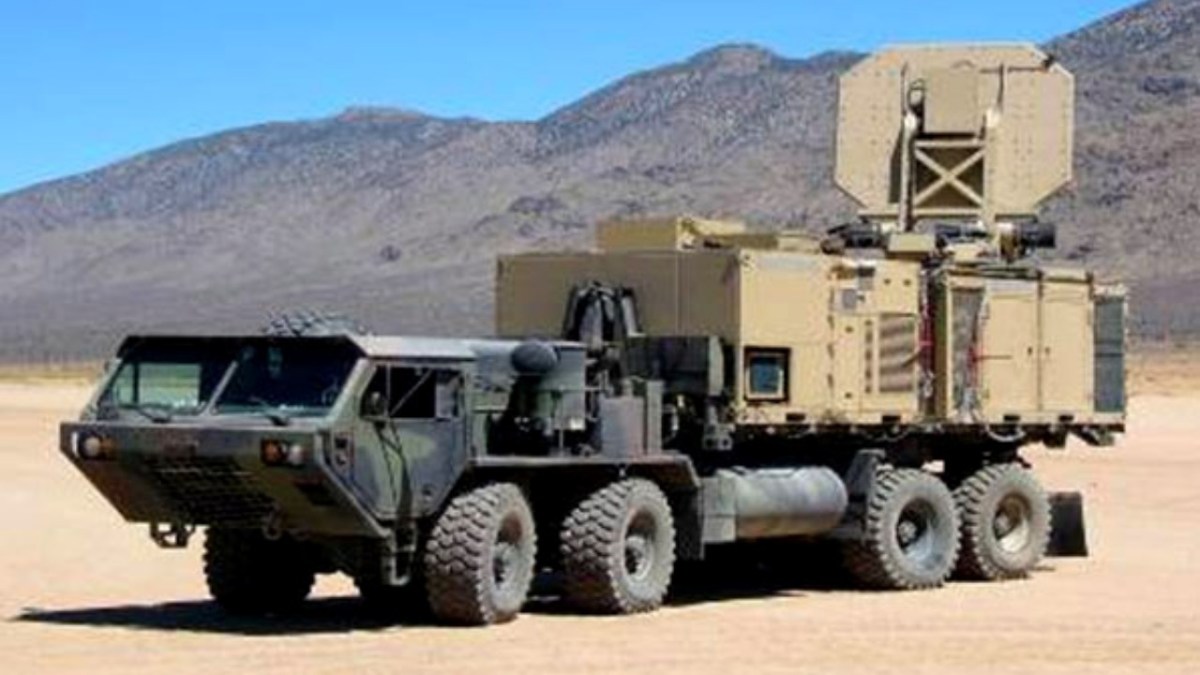

US Customs and Border Protection has confirmed that they have added a “heat ray” to their arsenal. The weapon, officially titled the “Active Denial System” was reportedly loaned to the agency under the direction of Defense Secretary Pete Hegseth.
In an email statement (per Stars and Stripes), the agency explained that “CBP is continually evaluating new technology, especially technology that can save lives while simultaneously enhancing national security effectiveness.”
The heat ray itself is mounted on a truck for portability and shoots an invisible electromagnetic beam with a range of half a mile. There’s no official confirmation on what exactly CBP plans to do with the device, though CNN claims that CBP officials want to deploy it at El Centro, California, where there are many illegal border crossings.
“Exposed to a blast furnace”
So, what’s it like to be hit by the heat ray? Well, first up, this is a non-lethal weapon designed to deter people rather than kill them. Various US military personnel have been subjected to the heat ray in testing and have given their accounts.
Wired quoted one Spencer Ackermen, who said: “Suddenly my chest and neck feel like they’ve been exposed to a blast furnace, with a sting thrown in for good measure… I last maybe two seconds of curiosity before my body takes the controls and yanks me out of the way of the beam. I’m feeling the heat for a good 10 seconds afterward.”
Journalist Philip Sherwell also experienced it, saying: “It felt as if I had opened a furnace with my face too close and been hit by a wall of scorching heat. Or… a searing draft of air from a huge hair-dryer, turned to extra hot—around 130F… It was intolerable after just a couple of seconds and I scurried out of the way, fast.”
And, backing that up, Air Force Research Laboratory spokesman and test volunteer Rich Garcia: “For the first millisecond, it just felt like the skin was warming up. Then it got warmer and warmer and you felt like it was on fire…”
The Air Force insists that while it is painful, the heat ray is safe, saying in 2008: “Researchers performed numerous studies that documented data showing that millimeter waves do not promote cancer or cause reproductive problems. The researchers also defined skin and eye exposure thresholds, as well as levels at which effective repel occurs.” Stars and Stripes explained that during testing, the military exposed 700 people to the ray, and only eight of them were actually burned, and only two of them needed medical attention.









Published: Oct 22, 2026 11:15 am