


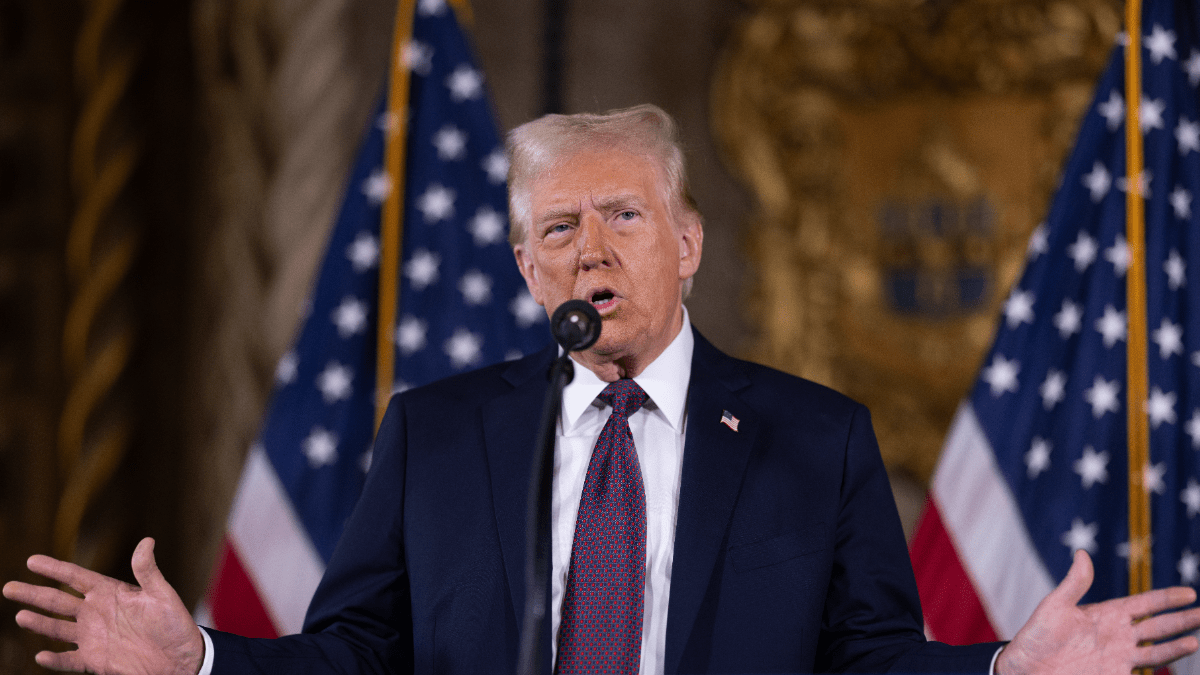

The banking world is already pushing back hard against President Trump’s recent demand to cap credit card interest rates at a mere 10%. JPMorgan Chase is leading the charge, hinting strongly that the entire industry might litigate to block the move, saying that they have to consider “everything’s on the table.”
This whole situation stems from a directive President Trump (known for his bankruptcies) issued late last Friday. He wants credit card companies to slash their interest rates down to 10% for a full year, with a proposed start date of January 20. That is an absolutely radical drop when you consider that the current national average credit card rate is sitting at 19.7% right now.
If you’re a subprime borrower or use a store-specific card, you’re likely paying even more than that average. Jeremy Barnum, the CFO for JPMorgan Chase, spoke about the potential fight after the bank released its fourth-quarter earnings. He made it clear that banks owe it to their shareholders to resist any attempt to radically change their business without justification. “If you wind up with weakly supported directives to radically change our business that aren’t justified, you have to assume that everything’s on the table,” Barnum stated, per CNBC.
The bankruptcy king hasn’t missed a step with bad banking moves
Now, here’s where things get really sticky for consumers. Banks and financial insiders are warning that this kind of rate limit would have the exact opposite effect of what the administration intends. Instead of enjoying lower prices, millions of Americans could see their credit cards canceled or their access to new credit cut off entirely. Companies simply aren’t going to offer credit if they can’t make a profit on it. That’s awful news for people who rely on revolving credit for emergencies or daily life.
Barnum emphasized this point, saying that reducing the supply of credit would be bad for everyone, including consumers and the wider economy. “Our belief is that actions like this will have the exact opposite consequence to what the administration wants for consumers,” he said. “Instead of lowering the price of credit, we’ll simply reduce the supply of credit, and that will be bad for everyone: consumers, the wider economy, and yes, at the margin, for us.”
The banking industry successfully fought similar efforts last year when the Consumer Financial Protection Bureau tried to cap card late fees. Based on that history, it seems highly likely they’ll take the administration to court over this 10% cap. When asked directly if JPMorgan would comply with the president’s mandate, the CFO declined to answer.
It’s not just the banks that are panicking, either. This potential cap would ripple throughout the entire corporate landscape. Just look at airlines and retailers, which rely heavily on massive revenue streams generated through card partnerships. Delta Air Lines, for example, announced that its partnership with American Express brought in a whopping $8.2 billion in revenue just last year.
Delta CEO Ed Bastian weighed in during an earnings call, stating that the proposed cap would completely “upend the whole credit card industry.” He added that he couldn’t even begin to imagine how it would be implemented.
While President Trump told reporters Sunday that banks not following the directive would be “in violation of the law,” it’s still highly unclear how the mandate would actually be enforced. His record with banks isn’t great, and there isn’t a current federal law capping card rates, though a bill was introduced last year that would limit APRs at 10% for five years. That particular legislation is stalled in Congress right now.




Published: Jan 14, 2026 08:07 am