


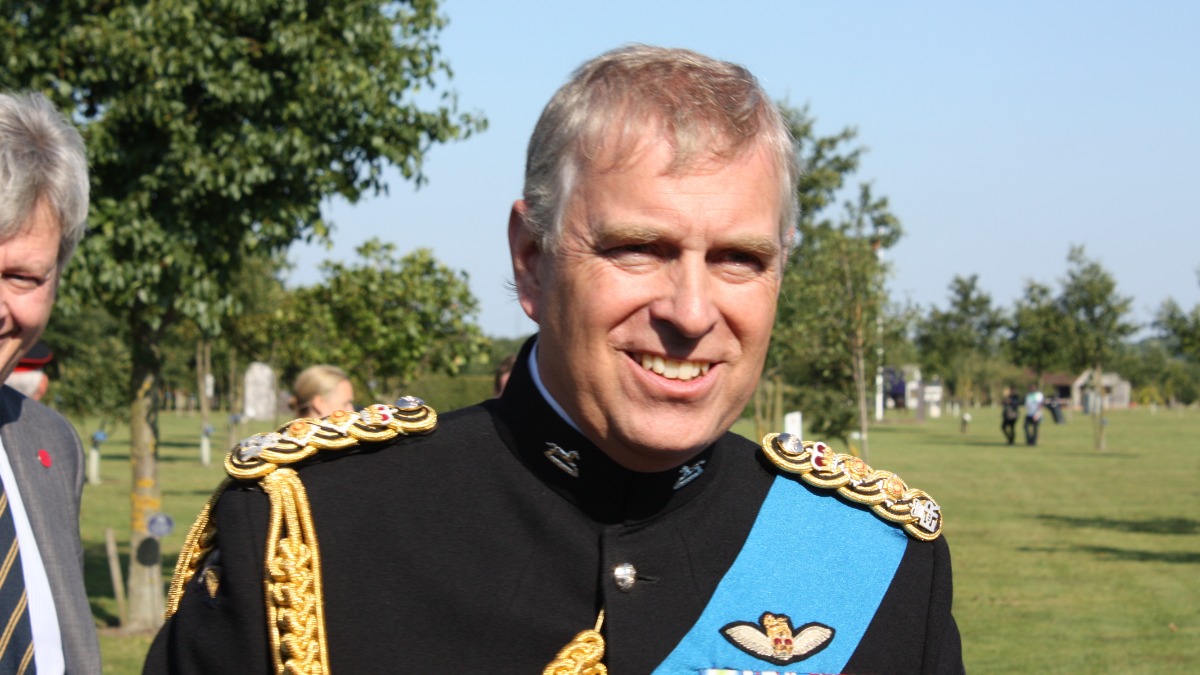

The British government has officially admitted that absolutely no formal vetting or due diligence was conducted before appointing Former Prince Andrew as the United Kingdom’s Trade Envoy in 2001. This embarrassing revelation comes as part of a newly released cache of documents related to his appointment, a result of lawmakers demanding answers as part of a larger investigation into Andrew over his Epstein ties and consequent accusations of corruption.
Trade Minister Chris Bryant provided a written statement alongside the document release, confirming there is “no evidence that a formal due diligence or vetting process was undertaken” and “also no evidence that this was considered.” It’s a staggering admission, but Bryant did provide a reason: this was “understandable since this new appointment was a continuation of the Royal Family’s involvement in trade and investment promotion.”
According to Politico, the 17-page dossier, which contains several partially-redacted sections, suggests that it was the specific “wish” of the late Queen Elizabeth II for her son to take on the trade role. It’s clear from the internal memos that the Palace saw this as a natural transition for Andrew, especially since his Navy career was drawing to a close and the Duke of Kent was stepping back from his own trade duties.
The wonders of a nepotism hire
Per the BBC, the files offer a strange, behind-the-scenes look at how the government prepared for his appointment. One memo from Sir David Wright, the chief executive of British Trade International, dated February 25, 2000, notes that the Queen was “very keen” for Mountbatten-Windsor to take on a “prominent role in the promotion of national interests.” This memo followed a wide-ranging conversation Wright had with the Queen’s Private Secretary.
An earlier letter from British diplomat Kathryn Colvin, dated January 25, 2000, details a meeting with his then-private secretary, Captain Neil Blair. According to the notes, Mountbatten-Windsor was “particularly good on high-tech matters, trade, youth (including primary schools and outward bound projects), cultural events, with a preference for ballet rather than theatre, the Commonwealth and military and foreign affairs.”
The documents also highlight some very specific preferences. Captain Blair reportedly noted that Mountbatten-Windsor “tended to prefer the more sophisticated countries, particularly those in the lead on technology.” Perhaps most bizarrely, the documents make it clear that “The Duke of York should not be offered golfing functions abroad. This was a private activity and if he took his clubs with him he would not play in any public sense.”
There was also a media strategy in place to handle potential questions about his qualifications. One document, a media Q&A, prepared officials to answer the question, “But he is not very experienced. Why not someone better placed?”
The suggested response was: “The importance of the Duke’s involvement lies in the high profile and commitment he is able to give to this work as a Member of the Royal Family. It is a continuation of the Royal Family’s involvement in trade and investment promotion following HRH The Duke of Kent’s decision to relinquish his duties last April. The Duke will bring valuable support and visibility to British Trade International’s activities at home and overseas.”
The files also address the role of Peter Mandelson, who was previously linked to Jeffrey Epstein. While Liberal Democrat leader Ed Davey had hoped to uncover Mandelson’s influence, the currently released documents show no evidence that he played a role in the appointment.
Mountbatten-Windsor was stripped of his Royal title in 2025 due to his association with the American financier and child sex offender Jeffrey Epstein. He was arrested in February on suspicion of misconduct in public office and remains under police investigation, though he has not been charged and has consistently denied any wrongdoing.
Downing Street has confirmed that more documents regarding this appointment will be released at a later date. For now, the public is left with a clear picture of an appointment driven by royal preference rather than standard government procedure.
It’s a stark reminder of how things operated behind closed doors, and it’s certainly raising plenty of questions about the lack of scrutiny applied to such roles. The government maintains that the redactions in these files were kept to the “bare minimum” to protect personal information and international relations.


Published: May 22, 2026 01:49 pm