


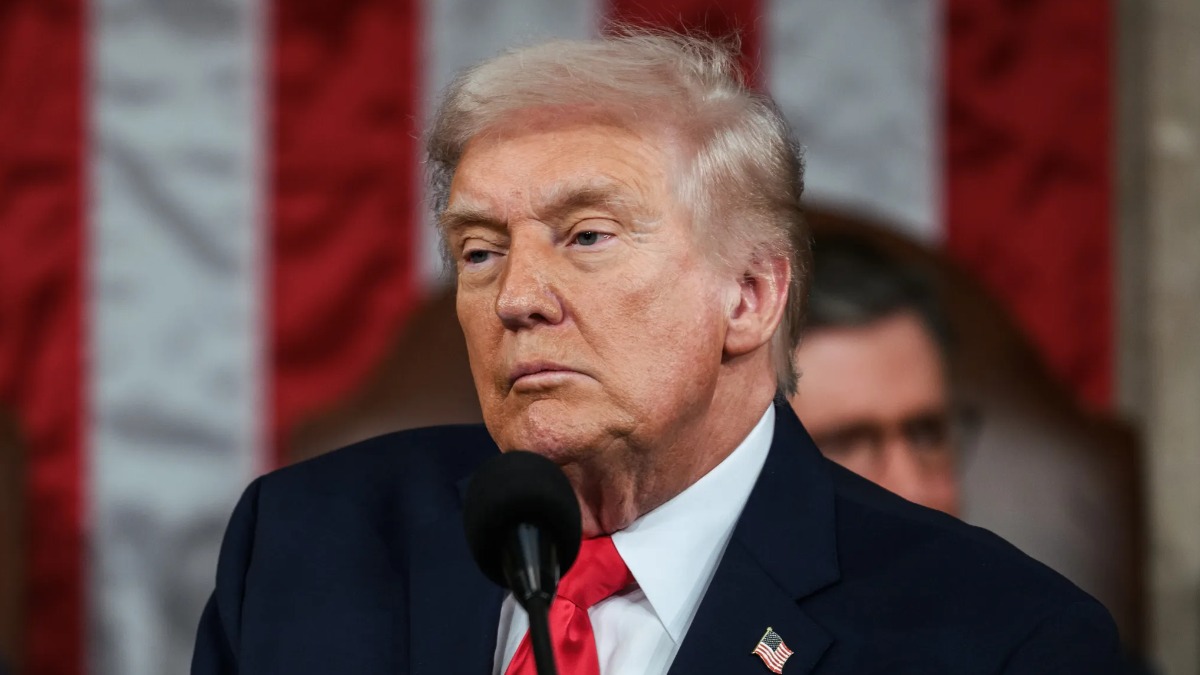

A bipartisan group of lawmakers in the U.S. House has voted to restrict President Donald Trump’s war powers in Iran, handing the White House a significant setback as the military operation continues.
According to Fox News, the measure was pushed by House Democrats but needed seven Republicans to break ranks with the administration before it could pass. The 220-204 vote is another sign of how divided Congress remains over just how much power the president should have when it comes to sending American troops into combat.
The resolution was introduced by Rep. Seth Moulton (D-Mass.), with Reps. Jason Crow (D-Colo.) and Pramila Jayapal (D-Wash.) among its Democratic co-sponsors. The legislation would limit the president’s ability to continue military operations in Iran without getting authorization from Congress.
That 60-day period is at the heart of the dispute
All 213 voting Democrats backed the measure, while seven Republicans crossed the aisle to support it. On the other side, 203 House Republicans and independent Rep. Kevin Kiley (I-Calif.), who caucuses with Republicans, voted against it.
Among the Republicans supporting the resolution was Rep. Tom Barrett (R-Mich.), who has argued that Congress has a constitutional responsibility when it comes to starting and continuing military conflicts. Barrett told Fox News that his position has remained consistent since the War Powers provision expired after 60 days of military engagement.
The War Powers Resolution of 1973 generally requires a president to either get congressional authorization or withdraw U.S. forces within 60 days after notifying Congress that American troops have entered hostilities. There is also a 30-day period intended to give the military time to safely withdraw.
Democrats and the Republicans who supported the House resolution argue that the 60-day window has already expired in relation to the fighting in Iran. The Trump administration disagrees, however, and has previously argued that an earlier ceasefire changes how that clock should be calculated.
The White House has also defended Trump’s authority as Commander-in-Chief. Administration officials argue that restricting the president could make it harder for the military to protect American forces and respond to rapidly changing threats in the region.
The Iran conflict is also becoming a bigger political problem as the country heads toward the November midterm elections. Democrats have used the operation to accuse Trump of dragging the U.S. into another prolonged war, while Republicans who support the president have defended his approach and his stated goal of preventing Iran from obtaining a nuclear weapon.
The economic ramifications are a major aspect of the resolution
Then there is the issue that tends to get voters’ attention much faster than constitutional arguments: money.
Lawmakers have pointed to rising energy prices and the broader economic fallout from the conflict, issues that could become increasingly important as the midterms approach. The Congressional Budget Office recently estimated that the conflict had already cost the United States around $38 billion.
Still, the House vote does not mean Republicans have abandoned Trump on Iran. Most of the GOP conference continues to support the administration. Rep. Marlin Stutzman (R-Ind.), for example, has defended the president’s handling of the conflict, arguing that Trump has successfully contained regional threats while sticking to his promise to prevent Iran from obtaining a nuclear weapon.





Published: Sep 16, 2026 11:57 am