


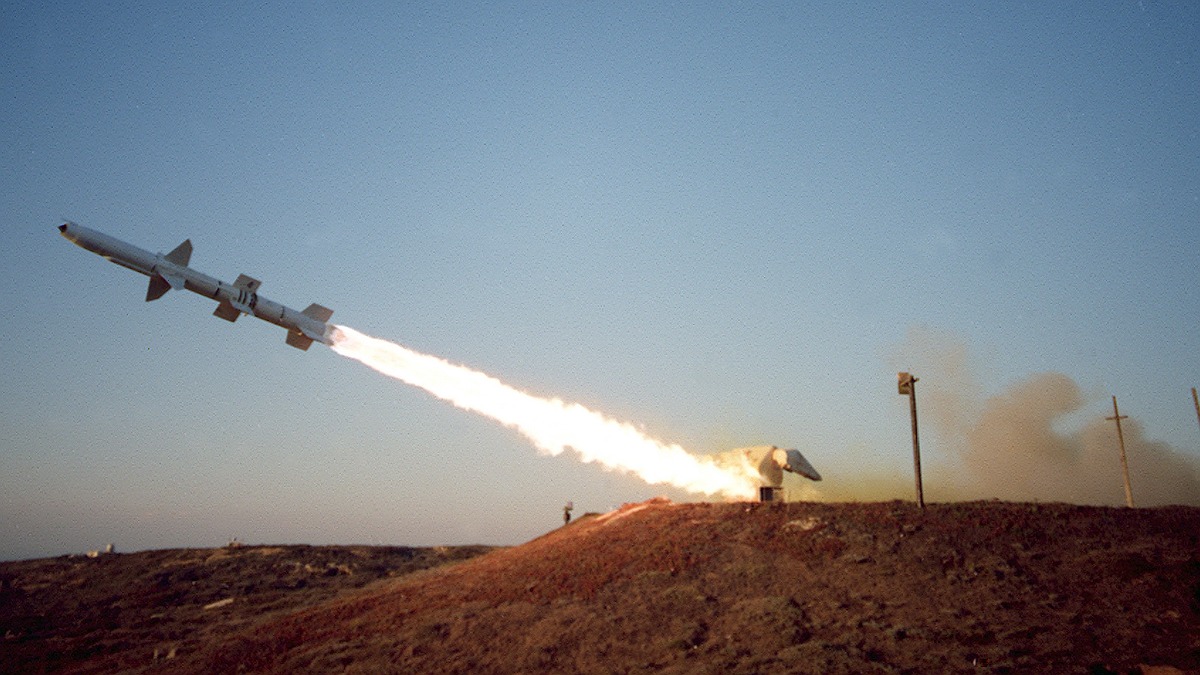

Iran’s Islamic Revolutionary Guard Corps (IRGC) said that it reportedly carried out drone and missile attacks on US military bases in Bahrain, Kuwait, and Jordan. According to a statement carried by Iranian state media, per Al Jazeera, the strikes were launched in retaliation for US military attacks on Iranian ports and islands in the Strait of Hormuz.
The IRGC said it targeted the US Fifth Fleet in Bahrain and the Ali Al Salem airbase in Kuwait with drone strikes, and fired a long-range missile at an airbase in Azraq, Jordan. The IRGC claimed it attacked 21 US targets in total and said it destroyed four of them, including what it described as an F-35 fighter jet hangar at the Jordan base. The IRGC also claimed to have shot down a US MQ-9 drone over the Iranian city of Jam.
The US CENTCOM had earlier confirmed that its forces had hit “Iranian air defense, ground control stations, and surveillance radar sites near the Strait of Hormuz with precision munitions from U.S. Air Force and Navy fighter jets” in response to Iran allegedly downing a US Apache helicopter. The IRGC said those US strikes damaged a telecommunications tower in the town of Sirik and destroyed two water tanks there.
Jordan said it shot down five Iranian missiles, while air raid alarms sounded in Bahrain and Kuwait
Jordan’s military said it intercepted and shot down five missiles launched from Iran toward the Azraq airbase. It said the operation “resulted in the fall of shrapnel without any human injuries or material damage.” Air raid alarms were also reported in Bahrain and Kuwait following the claimed IRGC strikes.
Iran used a drone in the attack on the helicopter, though it was not immediately clear whether the strike was deliberate, an unnamed US official told CBS News. The US strikes on Iran reportedly came after President Donald Trump accused Iran of shooting down the Apache helicopter and said the US “must, of necessity” respond.
According to the BBC, Iran’s semi-official Mehr News Agency reported that Iran had not claimed responsibility for the downed aircraft. The two crew members survived and were rescued by an American sea drone, per the US military.
Iran’s Foreign Minister Abbas Araghchi issued a warning to the US following the renewed American strikes, writing on X: “Despite its defeats on the battlefield, the US opted to test our determination.” He added: “Leave our region if you want to be safe.” Some analysts have warned that escalating US decisions in the Iran conflict could trigger a nuclear arms race across the region.
The IRGC, for its part, warned that its forces remain fully prepared to deliver what it called a “crushing and decisive” response to any further US military actions, and said Washington would bear full responsibility for any further escalation.
Trita Parsi, executive vice president of the Quincy Institute for Responsible Statecraft, said Iran’s swift response suggested a shift in how Tehran was approaching US military action. “They believe they have to respond proportionately, but very harshly and swiftly, against any American attack. Because otherwise, a new normal is established, one in which the United States can strike at Iran with more or less impunity,” he said.
Parsi added that the Iranians were making clear that any attack on them would be met with a response, regardless of its scale. “But at the end of the day, every time these different types of events have occurred, the sense I have gotten from both sides is that their confidence and their trust in the ability of reaching a deal is starting to diminish,” he said.
Iranian foreign ministry spokesman Esmaeil Baqai told reporters that the US was “damaging this diplomatic process through the contradictory messages it sends, its repeated shifts in positions and demands, and, worst of all, through repeated violations of the ceasefire.”
He said Iran needed to reassess the situation and that any diplomatic process required a minimum of stability. This latest exchange of fire also follows a separate front in the conflict, where Iran launched ballistic missiles at Israel and Israel fired back, ignoring Trump’s calls to stand down.
Trump had said on Tuesday that the two sides were in “the final throes” of reaching a deal and that it could take “two or three days,” adding that the Strait of Hormuz would reopen immediately after an agreement. Al Jazeera’s Mohamed Vall, reporting from Tehran, said that despite the latest strikes, neither side appeared to want a return to full-scale war.







Published: Jun 10, 2026 09:15 pm