


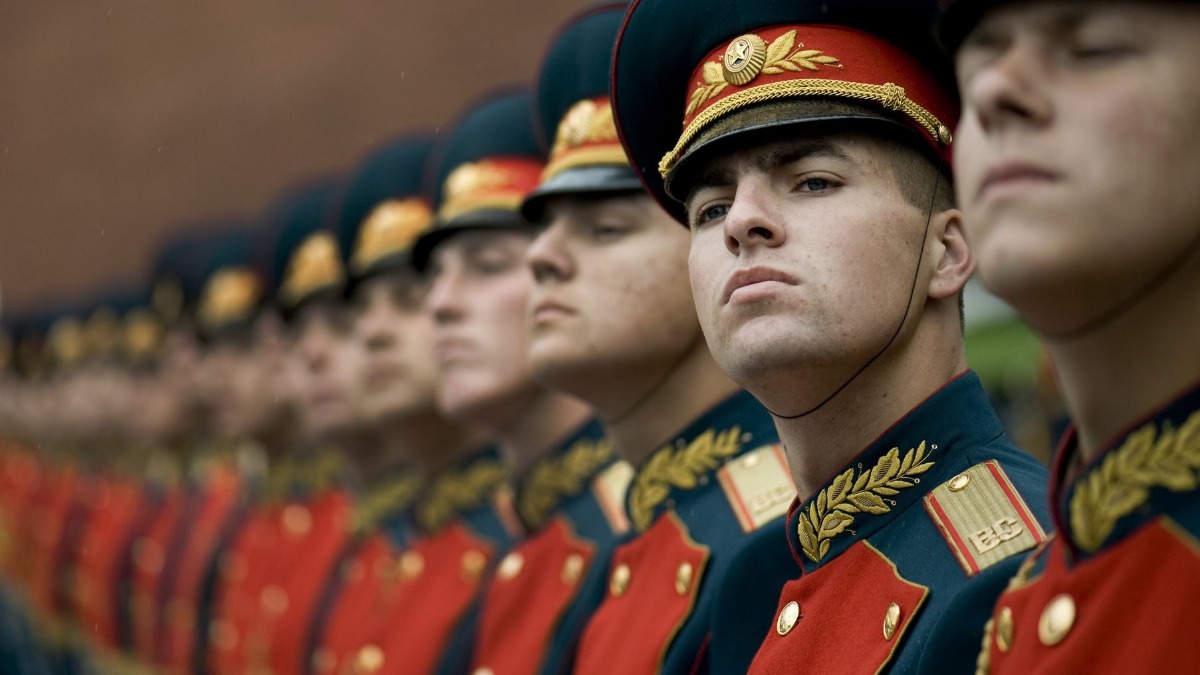

Kremlin’s long-term plan to simply outlast Ukraine in a grinding war of attrition is hitting a major wall. While the Russian government has relied on its massive population and a military industry running at maximum capacity to sustain this conflict, the reality on the ground is shifting. As military recruitment numbers continue to slide, the Russian state is finding that money alone isn’t enough to keep the war machine fueled.
According to CNN, military recruitment was down by 20% in the first quarter of this year compared to 2025, and there are clear signs that the recruitment drive is faltering. Experts are pointing out that while the state is pouring massive financial incentives into the effort, it’s facing a fundamental problem.
“Rubles don’t fight wars,” said Nigel Gould-Davies, a senior fellow for Russia and Eurasia at the International Institute for Strategic Studies. He emphasized that this is the first conflict in Russian history where the state is paying citizens to fight rather than forcing them into service. This shift, he noted, has created significant economic strain and a worsening manpower crisis that the government is struggling to manage.
Ukraine has also been increasing inventives
CNN reported that potential recruits are being tempted with bonuses starting from 6,000,000 rubles, which is roughly $80,000, along with promises of debt relief up to $140,000. These ads are plastered on billboards and embedded directly into the social media feeds of young men.
Despite these eye-watering sums, the recruitment effectiveness is waning. As Gould-Davies noted, there are signs that Russia has begun to lose more troops than it can recruit, forcing the Kremlin to consider increasingly desperate measures to keep its forces at fighting strength.
The economic fallout of this recruitment drive is reportedly hitting the broader Russian economy hard. Factories are already operating around the clock to support the defense industry, leaving no room to increase military output.
This has sparked what experts describe as the most severe labor shortage in the country’s history because labor is a much scarcer input than capital, and the state is finding it nearly impossible to bridge the gap. As Gould-Davies told CNN, “With effort, it is possible to build a new factory or raise money. But the state cannot dictate the birth rate.”
This labor crunch is reportedly forcing the Kremlin to consider foreign nationals from countries like North Korea, India, and various African nations to fill the void. The situation is so dire that analysts warn Putin may soon be forced to choose between escalating his demands on the Russian economy or scaling back his war aims.
CNN noted that a second, forced mobilization remains a possibility. It is a move Putin has been reportedly desperate to avoid due to the intense unpopularity of the previous partial mobilization, which triggered a massive wave of emigration.
It is worth noting that Ukraine is grappling with its own manpower challenges. According to The Guardian, Ukraine is planning to hike military wages and is actively seeking to recruit more fighters from abroad.
The report stated that President Volodymyr Zelenskyy has confirmed that the government is working on a new mechanism to boost personnel numbers, with plans to raise the basic military wage significantly. Infantry soldiers on the front lines are set to receive an average monthly salary of 300,000 hryvnias, or about $7,000, to match rising living costs and attract more volunteers.
A recent assessment from the Center for Strategic and International Studies highlights that Russia is paying an extraordinary price for minimal gains. Since February 2022, Russian forces have suffered a catastrophic 1.2 million casualties, including those who were killed, wounded, or went missing. The study notes that at current rates, combined Russian and Ukrainian casualties could reach 2 million by the spring of 2026.
Despite the Kremlin’s persistent claims that it has the upper hand, the study noted that the data suggest that Russia is increasingly a declining power. Its economy is showing visible signs of strain, with inflation remaining stubbornly high and manufacturing output struggling to keep up with the demands of a long-term war of attrition.
Additionally, adding to the potential stress point, it seems that Ukraine is rallying its power based on the recent “unprecedented” attack in St Petersburg after a rebuffed call for peace. However, for now, per reports, the Kremlin seems committed to doubling down rather than retreating.



Published: Jun 18, 2026 06:23 am