


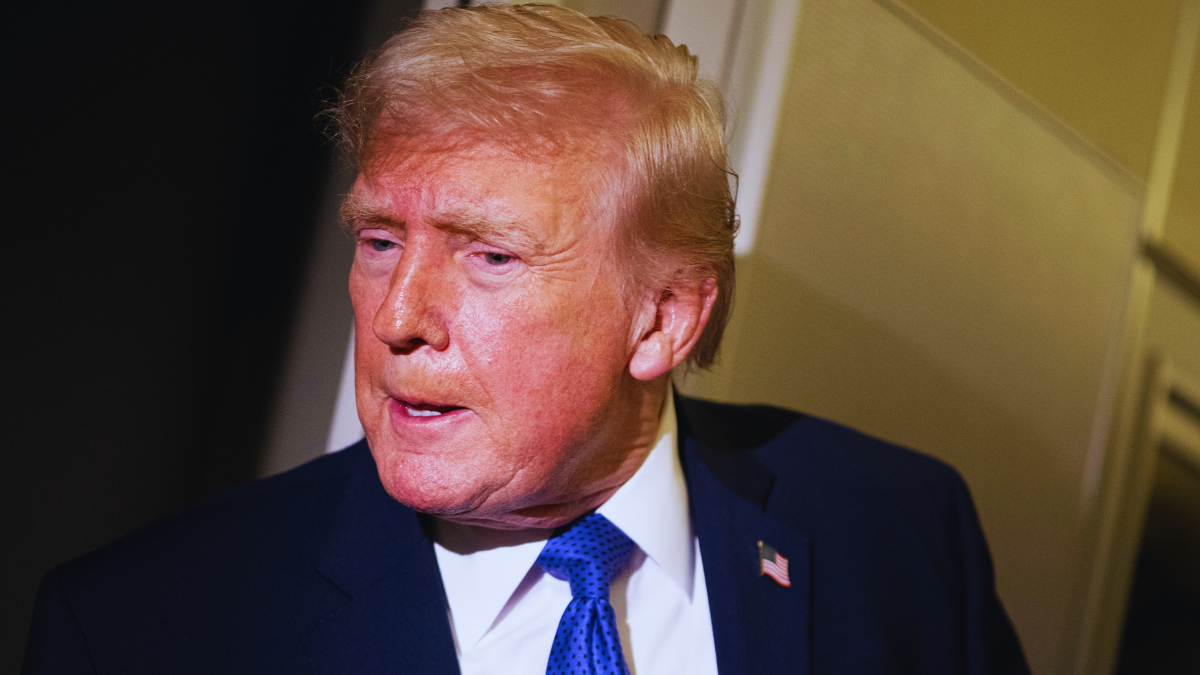

The Supreme Court striking down Donald Trump’s tariffs might have left more questions than answers. The president has guaranteed that he will still find a way to keep the tariffs in place for at least five months. More importantly, the court gave no clarification about whether the $175 billion in tariffs will be refunded.
The tariffs were not an easy pill for most businesses to swallow. When they were first introduced, there were personal stories about how people at different levels of the supply chain were being affected. From port workers complaining about reduced business, to farmers saying China had started ignoring American crops, and even giants like Amazon having to add more transparency about how the tariffs were affecting prices so as not to anger the White House.
It would be an understatement to say a lot of people were not happy about the tariffs. Now that the Supreme Court has eliminated them, there are multiple companies seeking cumulatively billions of dollars in restitution. To make matters worse, the Supreme Court has not given specific direction on how the government will pay people back. Top aides in the administration are reportedly describing this as nothing short of a “mess.”
Trump has decided not to comment on paying back the money any time soon, which is quite rare, given that his Truth Social account addresses pretty much everything else in the news cycle. From Barack Obama’s opinion on aliens to reviewing Trevor Noah’s performance as the host of the Grammys. The president had previously suggested that his administration was looking into sending Americans a $2,000 “tariff dividend.”
Axios reports that the administration has three readily available options on how it could best deal with the tariff refunds. Patrick Childress, a US trade representation expert who has worked in both Trump administrations, suggested that the first option would be proactively refunding IEEPA-related tariffs to all affected companies. Another viable option would be using existing Customs and Border Protection mechanisms to have companies apply for any refunds due. The final option, which is what Trump has ultimately opted for, was yet another legal fight.
This is once again causing the administration to become even more unpopular as the midterm election nears. A recent report alleged that United States Secretary of Commerce Howard Lutnick bought the rights to a tariff on the supposed “Liberation Day.” At that point, they were only 20–30 cents on the dollar. He therefore stands to profit immensely when the tariffs start flowing in. This would suggest that even though he did not see it as legal, he was willing to play along as long as there was personal gain involved.
At one point, Trump supporter Andrew Schulz took to X to brand the administration as “the Epstein class” — people who profiteer no matter which way the country goes. He wrote: “Fund both sides of the war/policy. Disgraceful. They have no love or loyalty to America. We are simply a vessel for them to exploit for their own enrichment.”
The Epstein Class playbook 101. Fund both sides of the war/policy. Disgraceful. They have no love or loyalty to America. We are simply a vessel for them to exploit for their own enrichment. if we want Americans to have faith in our institutions The Epstein Class must receive the… https://t.co/9CCANAfAOW
— Andrew Schulz 👑HEZI (@andrewschulz) February 20, 2026
As the cases head to court, the first refunds are expected to be handed out in 12 to 18 months. The money will be refunded directly to the importers. Regular Americans can only expect price relief from companies that will now have an easier time importing goods.




Published: Feb 21, 2026 11:46 am