


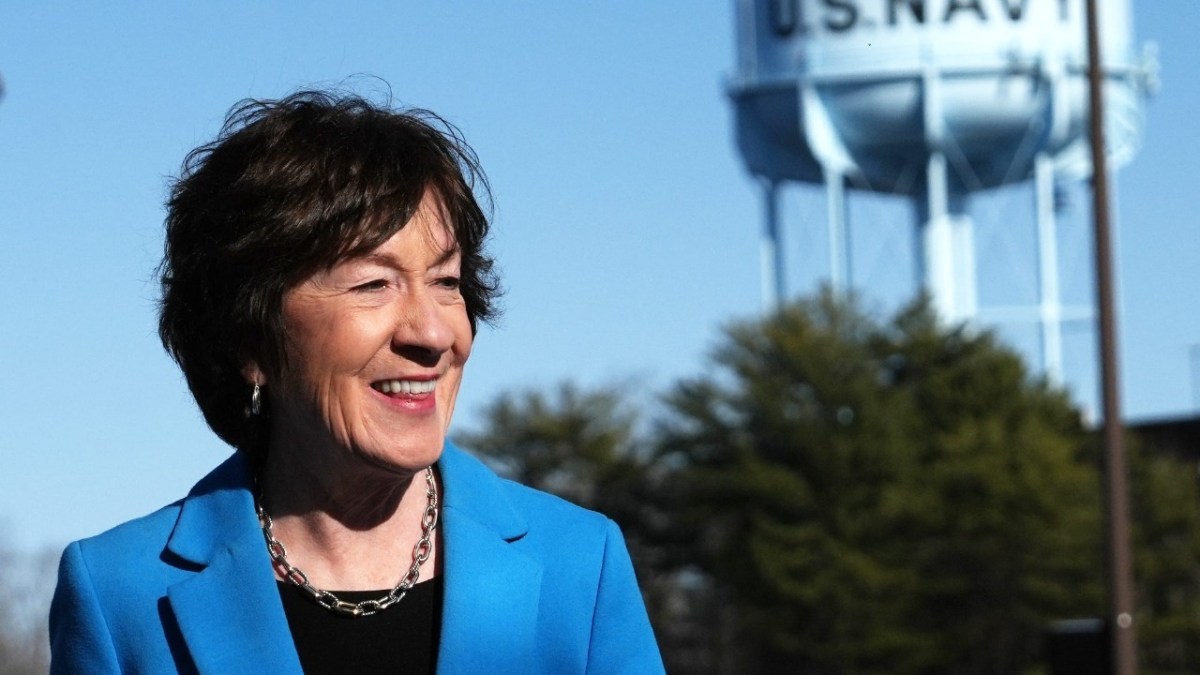

Tuesday’s Maine Senate debate was the first time Sen. Susan Collins and Democratic candidate Troy Jackson shared a stage. A large part of the exchange was about tariffs on goods from Canada, and about items Collins said she had gotten off that list.
Collins, the Republican incumbent, said she has opposed the Canada tariffs in votes and has also pressed the issue away from the floor. She said that work led President Donald Trump to drop tariffs on concrete, pulp, and road salt. Jackson’s reply was that those exemptions left most other goods untouched.
“We can’t eat road salt,” Jackson said, according to Mediaite. He argued that an exemption on a winter road product did not answer the cost problem for households that still pay more on a long list of other imports.
Collins and Jackson clashed over tariffs on Canada
Collins said Jackson had treated the exemption as a small win. “I have been strongly voting against the tariffs with Canada,” she said. “I’ve also been working behind the scenes. Troy mocked it, but I was successful in getting concrete, pulp, and road salt removed from the tariff list.”
Jackson said that reading of his remarks was wrong. “I didn’t mock the fact that she got road salt back,” he said. “I mocked the fact that – what about everything else? I mean, we can’t eat road salt. And the thing about it is that everything that she is doing with the Iran war and stuff like that, there’s gonna be so many less people that are gonna be able to afford to drive that I’m not even sure the road salt is gonna be worth anything either.”
The tariff fight began in August, when the United States placed tariffs on billions of dollars’ worth of Canadian goods. The trade war has continued to escalate, as Canada and the U.S. teeter on the brink with talks collapsed and beer and cheese facing 50% tariffs. Canada answered the next month with tariffs of its own on U.S. products. Collins has since called escalating the trade war a “mistake.”
Jackson also brought up Collins’ job as chair of the Senate Appropriations Committee. “I’m not gonna give her credit for getting one thing back when we have thousands of things that people are having to pay more money for because she won’t talk back at Donald Trump,” he said. The fight over Senate power extends beyond this race, as Senate Democrats are fighting to get back the majority.
Canada is Maine’s largest export market. In 2025, 41% of the state’s exports went there, according to Newscenter Maine, a larger share than in any other state, which is why the tariff list has drawn so much attention in the race.
Jackson is on the ballot because Maine Democrats picked him in July to take the place of Graham Platner. The switch came after a sexual assault allegation. Platner has denied the allegation.
Polling in the contest has stayed close. Recent surveys have shown a tie or a narrow lead for one candidate or the other. The latest Marist survey has Jackson ahead 51% to 47%.









Published: Oct 7, 2026 09:00 am