


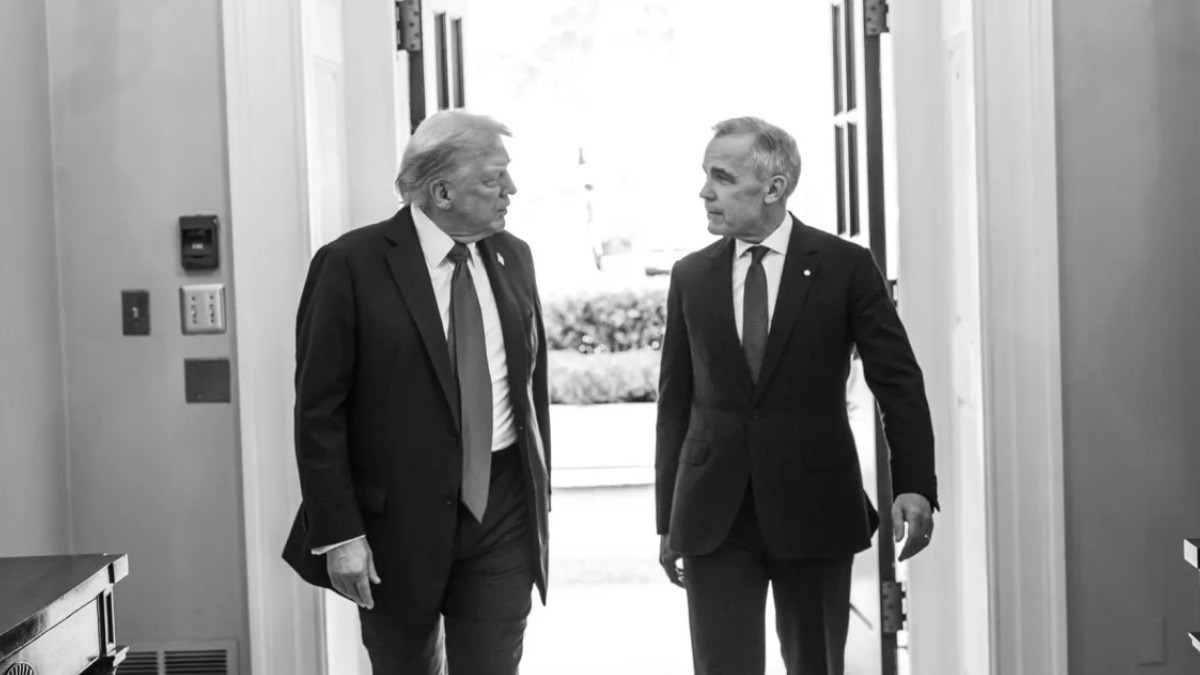

U.S. tariffs on a wide range of Canadian goods officially took effect early Saturday, after trade negotiations failed between the two nations. Now, a new 50% tariff was implemented on a long list of Canadian imports, including beer and cheese at the stroke of midnight after officials from both countries failed to secure a compromise during intense, last-minute discussions. With Canada promising retaliation, this collapse in negotiations could escalate into a trade war.
According to The Washington Post, negotiators had been working for weeks to avoid these levies, initially announced by President Donald Trump last month. While there was a brief window of optimism earlier in the week when the implementation was paused, the deal ultimately fell apart, leaving both governments blaming each other for the breakdown.
NBC News noted that the tariffs impact about $20 billion worth of United States imports from Canada. It is just 5% of the $382 billion in Canadian goods imported last year. Economists reportedly say this alone is unlikely to have a significant effect on American consumers. Outside of liquor and consumables, it primarily affects items like hockey sticks, building materials, and certain types of clothing. However, it has larger implications
Countries that once worked together
Per the outlet, U.S. Trade Representative Jamieson Greer stated early Saturday that Canada had declined to finalize the trade deal under terms that had been agreed upon earlier in the week. “This is a missed opportunity for Canada to partner with the United States,” Greer said in a statement, noting that the offer would have given Canada “the best treatment of any major exporter to our market.”
He reportedly explained that new demands and walkbacks of commitments by Canada had upended the balance the two sides had been working toward. However, Canada disagreed. Canadian Prime Minister Mark Carney reportedly announced he had suspended trade negotiations and directed his team to return to Ottawa. In an emailed statement, he noted that while progress had been made, “that progress has not been enough to meet our objectives for Canadians.”
Per the Washington Post, Carney was particularly critical of the U.S. approach during the final hours of the talks. “Last-minute changes in the U.S. proposed terms were unfair, uneconomic, and called into question the reliability of any deal,” he said. The outlet reported that Carney made it clear that Canada intends to retaliate against these measures.
“Canada will match those tariffs dollar for dollar to protect our workers and businesses,” he said. It is something Carney has threatened in the past, levying tariffs against steel and aluminum imports. Per NBC News, this sentiment was echoed by provincial leaders, including Ontario Premier Doug Ford, who wrote on X that the prime minister had his full support for a strong, “tariff for tariff, dollar for dollar” response.
Joseph Steinberg, an economics professor at the University of Toronto, told the Washington Post that the pressure on the Canadian government to retaliate is immense. “The danger is really retaliation,” Steinberg noted, adding that the consequences of the tariffs could be devastating for specific sectors like the alcohol industry, which relies heavily on the U.S. market.
Experts are reportedly worried about the broader impact on the North American economy. The U.S. and Canadian industries are so deeply intertwined, especially in the automotive sector. Thus, trade barriers often act as a form of self-sabotage.
“Tariffs may look tough politically, but in an integrated North American economy, they amount to economic self-harm,” said Andreas Schotter, an international business professor at Ivey Business School, in an email to The Post. “Canada and the United States do not merely sell products to one another. They make products together.” Interestingly, some republican lawmakers also floated the idea of sanctioning Canada for wildfire smoke recently.
NBC reported that the new 50% tariffs were imposed under Section 338 of the Tariff Act of 1930, a legal authority that has never been deployed before. This provision allows the White House to hit foreign partners with duties if they are found to be discriminating against U.S. commerce. For now, there are no scheduled meetings to restart negotiations, leaving the two neighbors in a precarious and increasingly hostile economic standoff.
As the Canadian Chamber of Commerce put it, the situation is a “body blow to North American competitiveness in this self-defeating trade saga.” With both sides digging in, the future of the unified North American trade bloc appears more uncertain than ever.








Published: Aug 22, 2026 01:00 pm