



United Kingdom MPs are pushing the government to officially acknowledge the security concerns tied to the country’s heavy reliance on foreign technology companies. This group of lawmakers, which includes Labour backbenchers and opposition representatives, sent a letter to Cabinet Office Minister Darren Jones to demand immediate action.
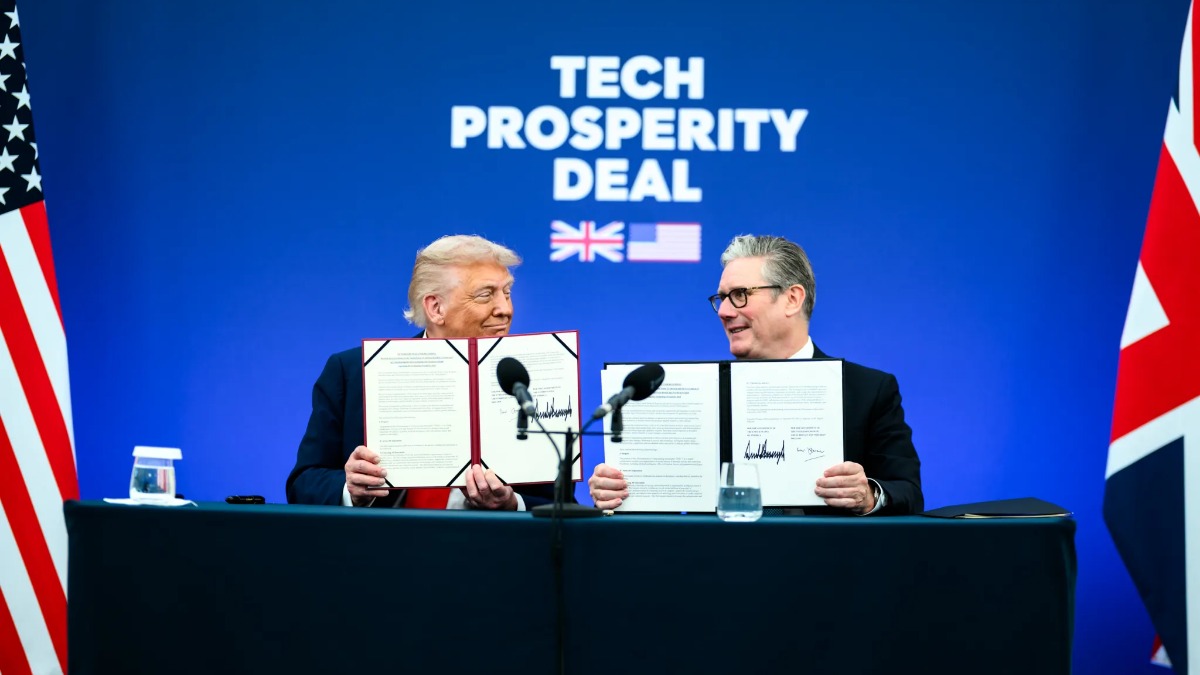
Per Politico, this move stems from growing friction in the relationship with the Trump administration. Tensions are rising as Trump and British Prime Minister Keir Starmer continue to trade blows regarding the war in Iran. Many officials now fear that the current U.S. administration could leverage the dependence of other nations on American tech providers to exert geopolitical pressure.
The signatories of the letter include Green Party MP Sian Berry, Liberal Democrat MP Victoria Collins, Plaid Cymru MP Ben Lake, and Labour MP Clive Lewis. They point out that while the National Risk Register identifies issues like cyberattacks and outages, it “does not address risks related to service discontinuation, interference, or attacks that may result from foreign states using legal powers to compel service providers and manufacturers,” to act against UK interests.
Considering the way some of the negotiations have been playing out, I don’t fault them for their concerns
The letter notes that while other European nations have started to have “open discussions and analysis” of these risks and are taking steps to reduce reliance on U.S. providers, the U.K. has not disclosed the risks of its own approach. There is currently no clear strategy for digital sovereignty.
The MPs find it particularly concerning that “the UK is contracting Palantir to deliver core components of the Ministry of Defence’s data systems.” This follows earlier criticism regarding a £240 million contract awarded to the firm, alongside calls to review a separate £330 million contract with the NHS due to privacy and dependency fears.
Sian Berry stated that she and her colleagues are “sounding the alarm” over “glaring risks to our citizens from the choices made for our critical digital infrastructure.” She added, “Our over-reliance on foreign tech giants for the digital systems that keep the country running, combined with temperamental Trump in the White House, leaves us open to the very real possibility of foreign interference or even service withdrawal.”
The scale of this issue is significant. Data from the House of Commons Library, shared by the Liberal Democrats, shows the U.K. government holds nearly £8 billion in active contracts with U.S. tech giants. The Liberal Democrats are now calling for a new strategy that prioritises local procurement and keeps strategic data and infrastructure within the country.
Victoria Collins, the party’s tech spokesperson, said, “For too long, the U.K. has been content to be a digital colony of Silicon Valley.” She noted that the country is giving up both economic value and strategic autonomy because it lacks a plan to stand on its own.
A report from the Tony Blair Institute suggests that while total self-sufficiency might not be practical, the U.K. needs an “urgent review” of its vulnerability to economic coercion. Meanwhile, various parliamentary committees have also pressed the government to provide a more consistent approach to these pressing issues of national resilience.
Interestingly, they aren’t the only allies looking for sovereignty as Trump proves himself to be an unreliable partner. Canada has recently put together a plan to boost its defence capabilities, as well as shift manufacturing goals to cut off any economic reliance on the US, because “We can’t control the disruption coming from our neighbors.”









Published: Apr 24, 2026 08:56 am