


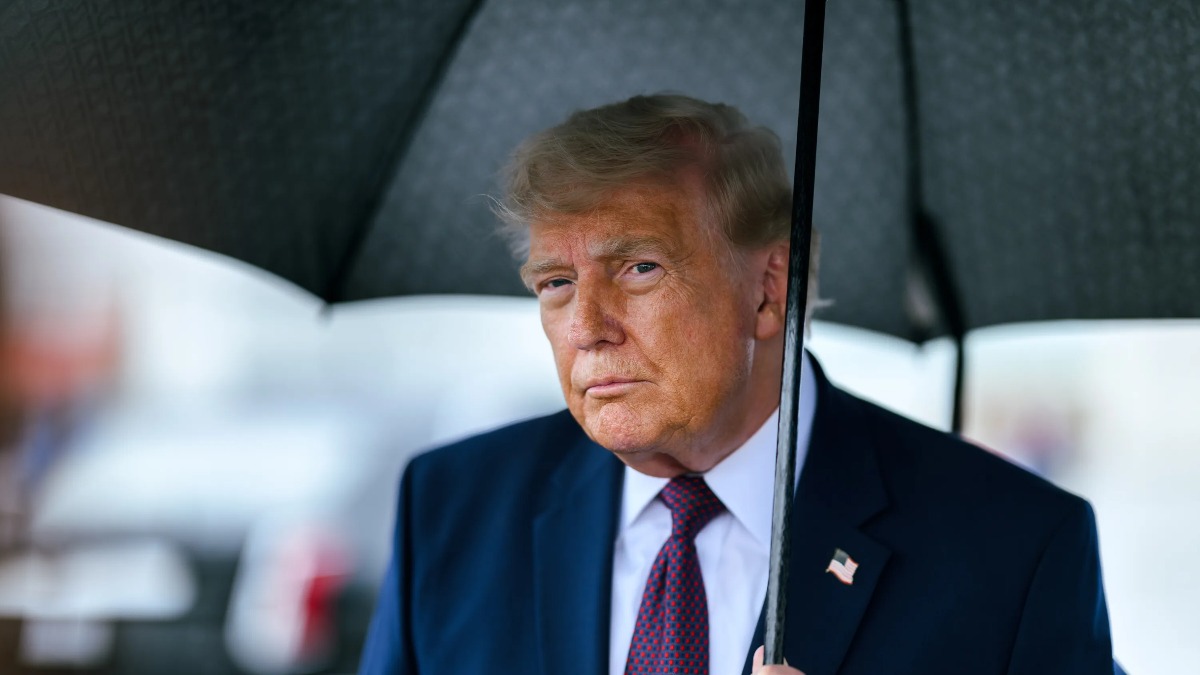

The geopolitical landscape of the Middle East underwent a profound transformation when the Donald Trump administration pivoted away from traditional warfare and toward an economic blockade that would not directly threaten an already fragile ceasefire. White House insiders gave the campaign a simple banner: “Maximum Pressure.” However, recent reports suggest that the economic offensive did not pacify Iran. Instead, it pushed Tehran into what a senior Iranian official described as a “fully offensive” posture.
The pivot began in earnest with the unilateral U.S. withdrawal from the Joint Comprehensive Plan of Action (JCPOA) during Trump’s first term. From that point, the primary objective was clear: reduce Iran’s crude oil exports to zero. And in the absence of cross-border airstrikes against Iran’s nuclear infrastructure, the administration decided to weaponize the global financial system against Tehran, betting on the U.S. dollar’s dominance of international markets.
For Iran, the situation quickly escalated beyond a diplomatic dispute and became an economic strangulation. Oil exports plummeted, inflation soared, the local currency cratered and the Iranian central treasury faced a severe liquidity crisis. From Washington’s perspective, the financial pressure appeared to be working exactly as intended.
Tehran has more military leverage now
According to Fortune, Majidreza Hariri, head of the Iran-China Joint Chamber of Commerce, recently admitted that the U.S. blockade is causing more damage to Iran’s economy than kinetic warfare. However, Hariri also warned that the U.S. should not expect Iran to simply stand by while its economy is being decimated, particularly now that Tehran has more military leverage it can exploit.
“We must also eliminate the perception in the U.S. that it can resort to such an action whenever it wants, and make it understand that the consequences of such a move could be severe,” Hariri said.
As it turns out, the administration’s calculations may have underestimated the asymmetric resilience of the Iranian regime. Rather than capitulating under the weight of the financial blockade, Tehran shifted its military posture. Through unflagged mines in the Strait of Hormuz and missiles targeting U.S. allies such as Saudi Arabia’s infrastructure, Iran appeared to be sending a message to the international community that it was prepared to threaten the global economy in response.
Furthermore, Iran reportedly shot down a sophisticated U.S. Global Hawk surveillance drone over the Gulf. The incident caused considerable international controversy because of the drone’s cost and its role in monitoring the region and strategic chokepoints in the Middle East. For the U.S. government, losing such an important surveillance asset represented a considerable setback.
There have been multiple last-minute reversals
These calculated responses drew the attention of countries around the world, at least economically, while adding to fears that a return to kinetic warfare could become inevitable. The Trump administration has repeatedly suggested that it could return to airstrikes, only for last-minute cancellations to follow. And so far, the situation has not truly moved beyond that dangerous cycle of threats and reversals.
The policy of shifting from kinetic warfare to economic warfare may have succeeded in keeping American ground troops out of direct combat. But it failed to achieve the administration’s stated objective from the very beginning: getting Iran to renegotiate the terms of its nuclear agreement.
The situation remains dangerous and unpredictable, leaving Trump with another major foreign policy headache as the country heads toward a crucial midterm election.


Published: Aug 18, 2026 10:45 am