


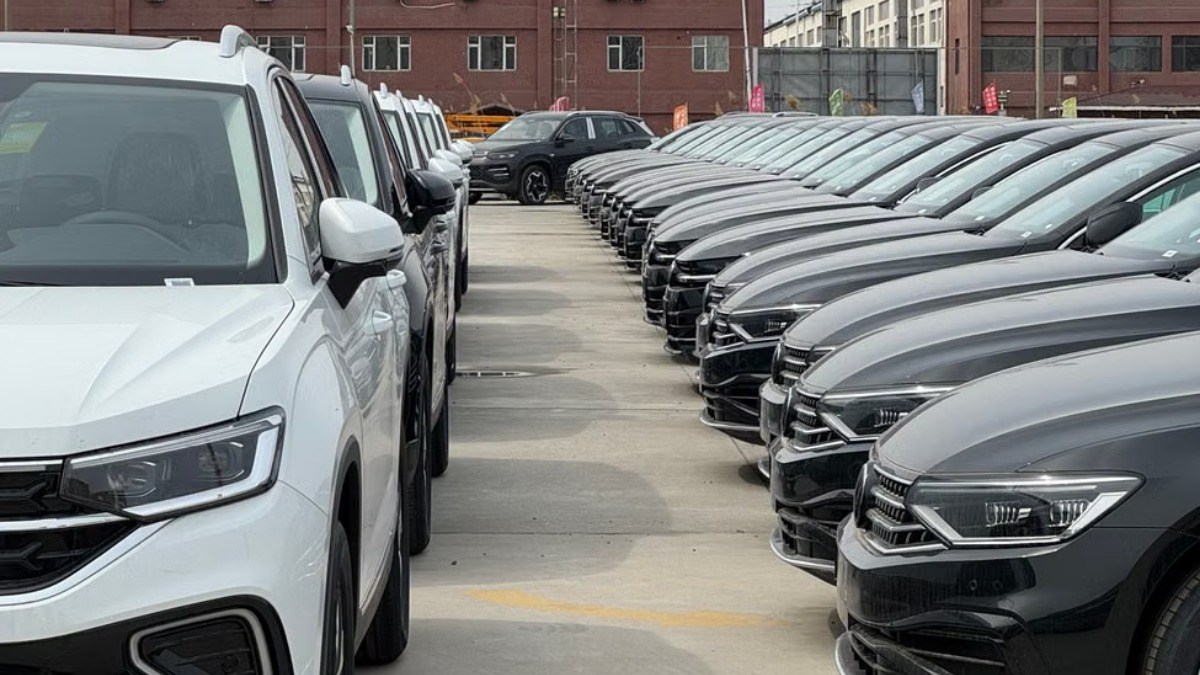

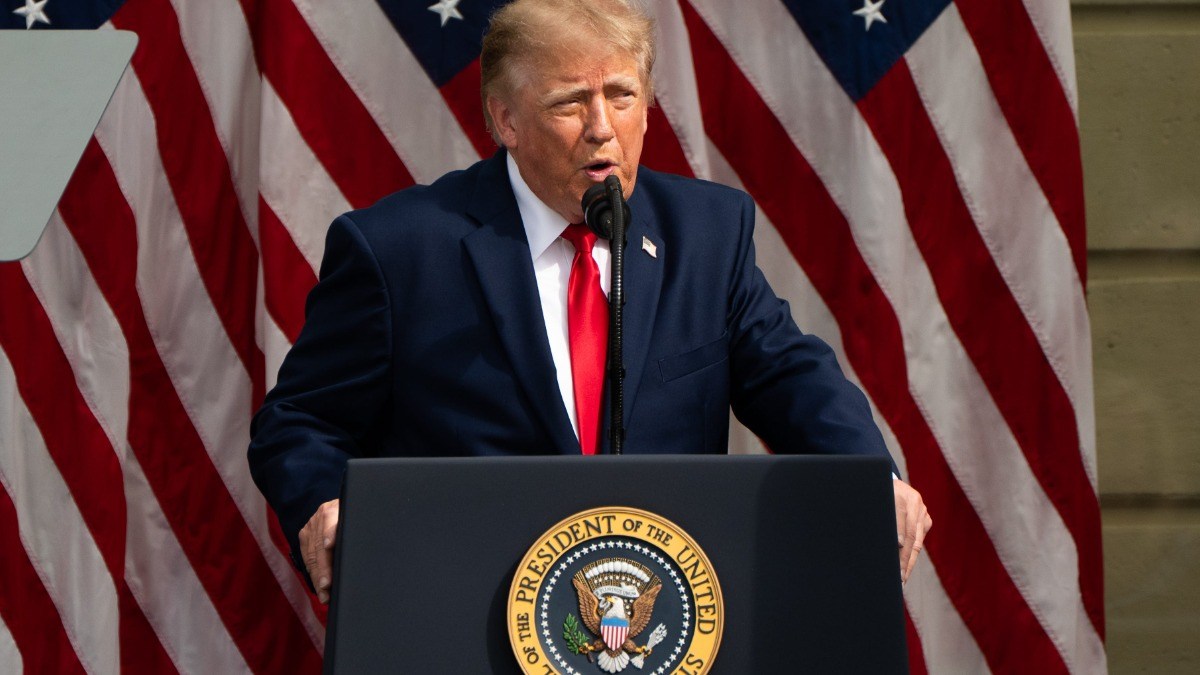
President Donald Trump recently signaled that he would not oppose Chinese automakers building vehicles within the United States. Per Reuters, his stance conflicts with growing calls for a permanent ban from major industry players. The outlet noted that while on Fox News’ The Ingraham Angle, the President said, “If China wanted to come in and open a plant to build their cars here, I’d be okay with that.”
Trump went on to clarify the specific conditions he believes are necessary for such a scenario to work for the American economy. “Japan does it, but they hire our people. The big thing is they hire our people,” he said. Trump explicitly stated that he does not want Chinese automakers to build cars in Mexico and subsequently ship them into the United States. Regarding the broader competitive landscape, Trump told Laura Ingraham, “I’m not knocking Chinese cars.”
Interestingly, according to The Hill, the Alliance for Automotive Innovation just sent a letter to congressional leaders urging them to pass a “permanent ban” on Chinese-made vehicles, software, and hardware before the 119th Congress concludes in January. The group, which represents nearly every major automaker from General Motors to Honda, argued China’s manufacturing industry is “rooted in a well-documented pattern of unfair trade, subsidies, intellectual property theft and surveillance.”
A flagging industry
Historical data indicates that the US auto industry has been in decline globally. Per Fortune, the U.S. share of global auto production dropped from 46% in 1965 to just 14.7% today. Experts from the Information Technology and Innovation Foundation emphasize that the industry is an “enabling industry” that underpins national security and defense capabilities.
“The United States must act, and act now,” Stephen Ezell of the ITIF told Fortune. “The United States can still rebuild auto competitiveness if it treats the sector as what it is: a strategic industry tied directly to national power.”
According to The Hill, the industry’s push for a ban is centered on the competitive threat posed by state-subsidized Chinese firms. As the Alliance for Automotive Innovation’s CEO, John Bozzella, wrote to congressional leaders, “Right now, Chinese automakers are dumping subsidized vehicles with connected software and hardware around the world.”
He reportedly added that China “is capturing market share” across Europe, Australia, Southeast Asia, Mexico, and South America. The Alliance is pushing for lawmakers to send a clear message that China’s strategy to dominate global manufacturing will be met with a firm national security response.
It should be noted that current legislative efforts are already moving in this direction. Reuters reported that the Senate Commerce Committee approved legislation in July that would toughen the government’s stance on Chinese automakers. The bill aims to ban companies with more than 15 percent ownership by Chinese entities from selling vehicles in the U.S. market.
This provision has sparked debate, as it could inadvertently impact companies like Mercedes-Benz, which has nearly 20% passive Chinese investment. However, per the outlet, Senator Bernie Moreno, an Ohio Republican, noted the ban has a larger goal. He said, “We’re preventing an absolute, total, and complete destruction of our industrial base.”
U.S. Senator Elissa Slotkin, a Michigan Democrat, had suggested that rumors of a deal to allow Chinese cars into the U.S. would be a “strategic mistake.” When confronted with this statement, Trump dismissed the concern. The Hill reported that he labeled the statement a “total phony rumor” and maintained that he has successfully kept Chinese vehicles out of the United States. Interestingly, earlier this year he warned Canada that an automotive deal would be a disaster.
This interview with Laura Ingraham was pretty explosive. In the same interview, he talked about how he did not intend to campaign hard for the GOP, choosing instead to block Democratic efforts.
As it stands, a regulation imposed by the Biden administration in early 2025 already serves as a barrier, effectively banning Chinese automakers from selling or building passenger vehicles in the U.S. Additionally, the government maintains tariffs exceeding 100% on Chinese electric vehicles. Whether the government moves toward a permanent, codified ban or maintains the current regulatory framework remains a point of high-stakes negotiation.





Published: Sep 13, 2026 11:00 am