


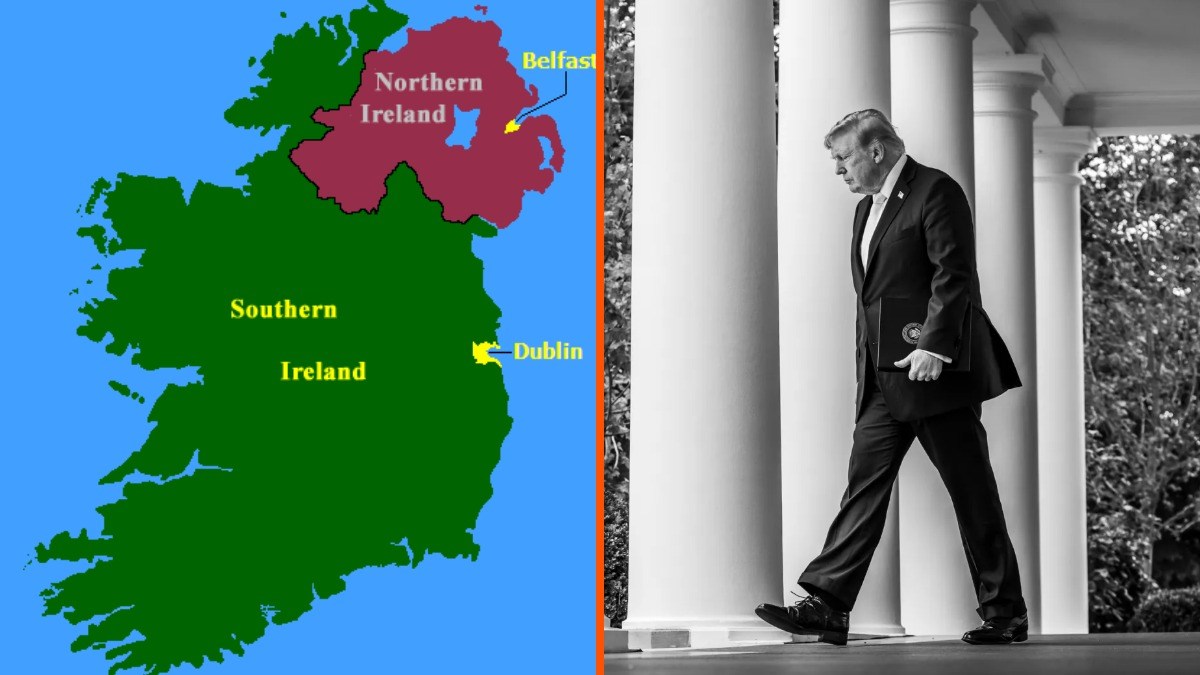

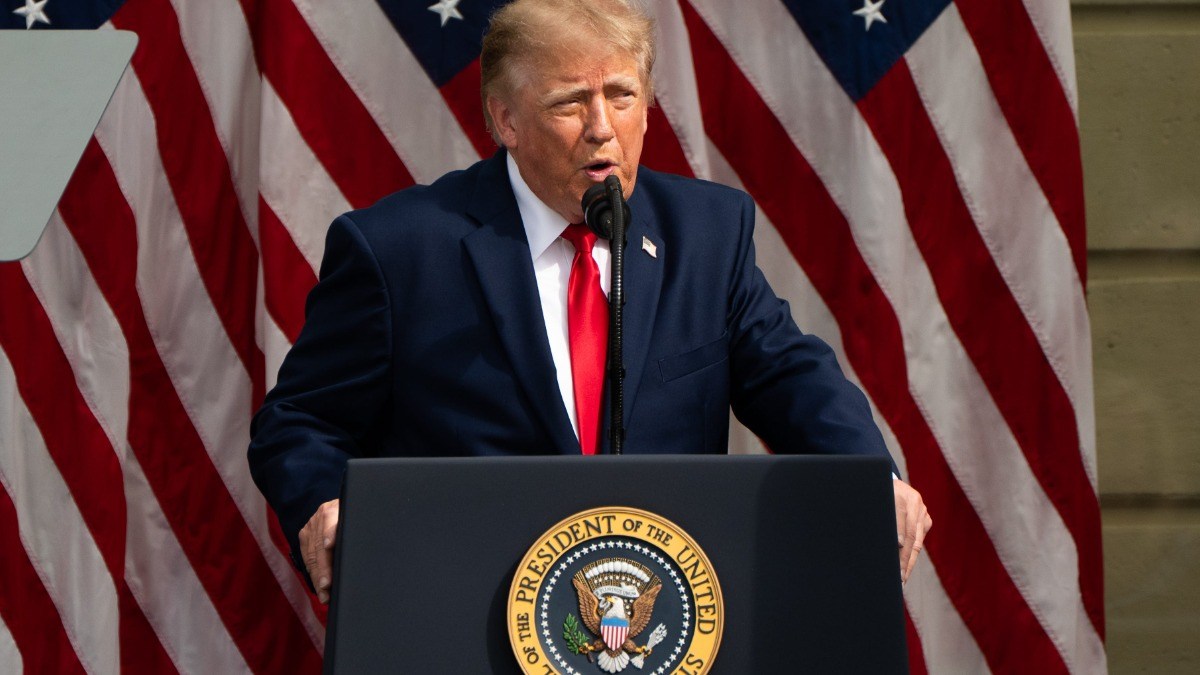
President Donald Trump sparked an international debate while visiting Dublin, where he openly suggested that he would love to see Ireland reunified. During a bilateral meeting with Taoiseach Micheál Martin, the President suggested that the joining of the Republic of Ireland and Northern Ireland is something that will happen eventually.
Per CNN, Trump said, “Well, I don’t want to cause any trouble, but I will tell you, I’d love to see it unified.” The Hill noted that he continued by stating, “I think that’d be a great feather in everybody’s cap if that happened. It’s going to happen eventually.” The President then pointed to Martin and suggested, “You’ve got the right man over here to get it moving.” However, he did note that the United Kingdom would have something to say about the matter.
Per the outlets, this issue has long been a source of deep division. It separates the Unionists, typically from strict Protestant backgrounds who favor remaining part of the United Kingdom, from Republicans, those of Catholic backgrounds who support reunification. For nearly 30 years, this tension manifested as significant sectarian violence and disorder during a period known as the Troubles.
A peace brokered by the US
The Good Friday Agreement was reportedly brokered by the United States in 1998. It helped bring peace to the region by establishing that a majority of voters in both the north and south would need to favor reunification for it to occur. The agreement gave the Secretary of State for Northern Ireland the power to call for a border poll if they felt there was enough support for it. Since this is a sensitive topic, previous American presidents have avoided commenting on the topic.
UK lawmakers and unionists immediately pushed back against Trump’s comments. Downing Street pointed CNN to comments made last month by Prime Minister Andy Burnham, in which he indicated that a border poll is “off the table,” but that he would respect the Good Friday Agreement. The Hill noted that Burnham recently told members of the British Parliament that he was not aware of majority support for another referendum, adding, “Until that changes, there will not be one.”
Per The Hill, Kemi Badenoch, the leader of the Conservative Party, took to X to respond to Trump’s comments. She wrote, “President Trump is shooting from the hip as usual, just like he did with Greenland and Canada becoming the 51st state.”
She further noted, “This sort of loose talk about the future of democratic countries is deeply unhelpful and creates unnecessary tension. Northern Ireland is part of the United Kingdom. At a time when separatists are in power in Scotland, Wales and NI, we need a Government that will defend the Union clearly and confidently.”
Gavin Robinson, the leader of the Democratic Unionist Party, also reportedly weighed in, stating, “President Trump knows better than most that elections matter. Northern Ireland’s constitutional future will be decided by the people of Northern Ireland, not by commentary in London, Dublin or Washington.” He expressed his firm belief that the people of Northern Ireland will continue to choose the security offered by the United Kingdom.
The Hill noted that Nigel Farage, the leader of the Reform U.K. party, also responded on X. He stated, “The people of Northern Ireland neither want a referendum, nor unification. I disagree with President Trump.” He had also noted that “Northern Ireland is a proud and integral part of the United Kingdom.”
CNN reported that the President’s visit to Ireland also included an arrival ceremony at Áras an Uachtaráin, where he met with Irish President Catherine Connolly. Despite the controversy surrounding his comments on reunification, the President praised the Irish people during his remarks at the embassy. He described them as having a unique combination of friendliness and toughness.
“People love coming to Ireland. You know why? Because they love you. They love the people. There’s a friendliness. There’s, uh, there’s also a vicious and a toughness,” the President said. “Let me tell you, you are some of the most vicious bastards I’ve ever (seen). But when you want to be nice, there’s nobody nicer.”
CNN also noted that while the President focused on his meetings and an upcoming golf tournament in Doonbeg, his presence drew protests in Dublin, Shannon, and at his golf course. Demonstrators gathered to express their opposition to his visit, with some waving Palestinian flags and others protesting the United States military’s use of Shannon Airport. In fact, one TikToker who visited recently found herself interrogated about who she voted for.
When asked about these demonstrations, the President reportedly claimed he was unaware of them, suggesting they could not be very large.


Published: Sep 13, 2026 10:30 am