


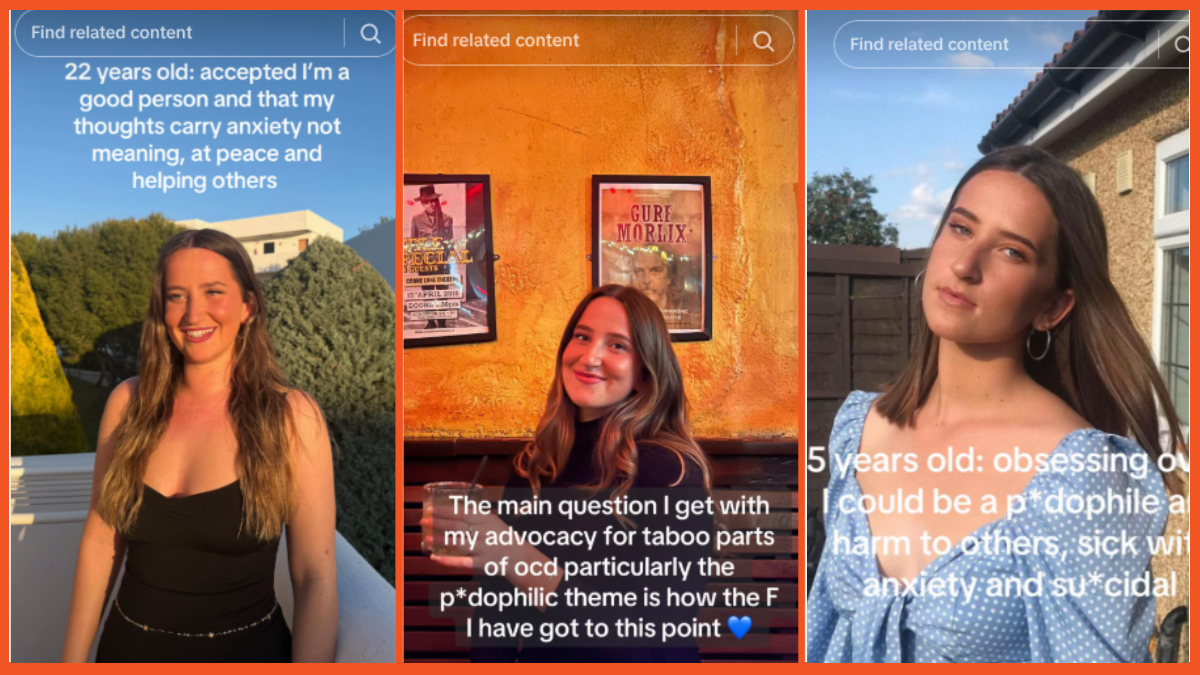

Mental illnesses come in various forms, often in ways that can overwhelm patients with guilt and shame. Such was the case with British woman Molly Lambert, 22, who came across a TikTok that potentially explained why she had been experiencing “intrusive” thoughts about harming children. Lambert was eventually diagnosed with P-OCD.
P-OCD is a rare pedophilia-themed obsessive-compulsive disorder, which came as a surprise to Lambert. She told People, “I thought OCD — like loads of people do — was cleaning and organizing. That can be a part of it, but that’s one theme out of all of these other themes that you can experience.”
For years before the diagnosis, Lambert had been struggling with sexual thoughts about children. She explained that, as a young woman in Manchester, she had secretly been navigating her life with the fear that she might actually be a pedophile. For seven years, she experienced anxiety and panic attacks, carrying the immense weight of this secret alone.
By age 15, Lambert’s thoughts about children had even begun to turn violent. She now conceded, “I was starting to have thoughts that I was a pedophile, that I was a rapist, that I was a predator, that I could harm somebody else.” Everything changed when she turned 19 and came across a TikTok about P-OCD, realizing she might not be alone.
These are times when pedophilia is often no longer taken seriously by Western governments, so whenever Lambert posts about awareness on her TikTok, the comments can be understandably contentious. But some viewers are encouraging, reminding her that thoughts are not actions.
“Dark thoughts”
Ultimately, mental illness awareness will always remain a hot-button issue. Symptoms don’t always present themselves in palatable ways, like in The Accountant, where Ben Affleck’s character’s autism effectively becomes a superpower. Real life is far more complex. According to Mayo Clinic, “Obsessive-compulsive disorder (OCD) features a pattern of unwanted thoughts and fears that lead you to do repetitive behaviors (compulsions).”
With P-OCD, instead of performing physical compulsions such as scrubbing the soles of one’s shoes until they fall apart, the patient experiences ruminating thoughts or continual overthinking about a particular subject. Medical experts note that what makes the condition unbearable is the seeming endlessness of these thoughts.
Lambert said that, at first, she attempted therapy but was never fully honest, referring to her condition only as “dark thoughts.” Once she learned more about what she might be experiencing, she was finally able to open up and begin her journey toward recovery.
Lambert now credits people being open about the condition on TikTok for removing stigma and providing support for others in similar situations. She said, “People say they’ve been crying, that they’ve felt like this for years and never told anyone. Parents have reached out, saying they have obsessions about harming their children. Some people said they ended up in psychiatric wards or tried to take their own lives.” Thankfully, that conversation is still possible, as the app has never been banned in any Western nation.
The role TikTok plays in regular people’s lives is truly insurmountable.





Published: Apr 7, 2026 05:38 am