


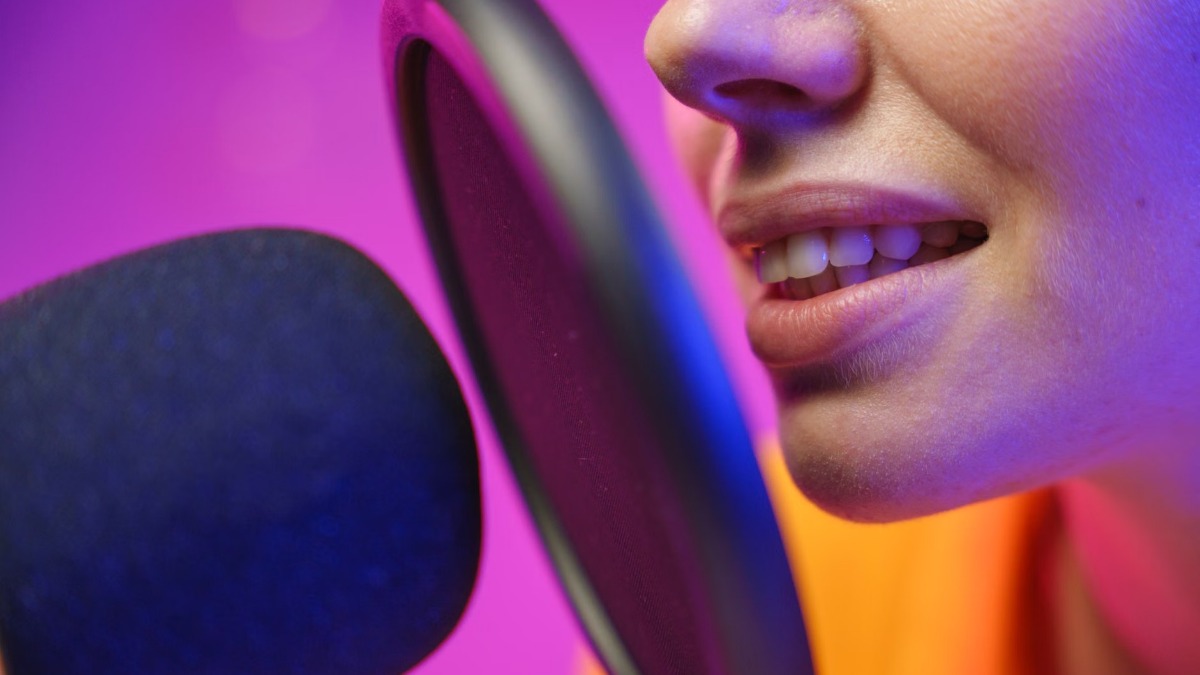

A recent post on Reddit has stirred up a massive conversation after a Reddit User confessed to allegedly using artificial intelligence to generate voice clips of his manager. Then-Education1261, posted to the kitchencels subreddit with his meal, an innocuous Burger King meal with two drinks. However, it is the title of the post that made the community pause.
He wrote, “I work at mcdonalds, and have the means to get a better job, but my manager is so fucking hot that I don’t wanna quit. Ive started AI generating voice clips of him telling me he loves me and that I’m the cutest boy ever.” His simple statement kicked off a wave of criticism in the comments sections. One that summarized most thoughts stated, “I hope this isn’t actually real. If it is, gross, please seek therapy.”
Some made suggestions on how he could move on. A Redditor suggested, “Generate AI voice clips of him telling you that you can do better and to search for a new job.” Another pointed out, staying will mean developing “a weird AI driven psychosis that creates some f**ked up alternate reality within your own mind about a relationship with your boss.” Others were concerned, “this dude is going to end up on the news holy sh-t,” and one just wrote, “….brother.”
Whether the admission is true or just posted to rile up chaos (mission well accomplished in that case, it does underline a worrying trend.
AI is being increasingly used to mimic or clone people
This post highlights the increasingly blurred lines regarding privacy and consent in the age of AI. Technology has advanced to a point where voice cloning is incredibly accessible and dangerously realistic. According to Tech Times, AI voice cloning uses machine learning and neural networks to replicate a person’s tone, pitch, and speaking style.
The outlet noted that only a few seconds of audio are requiredto produce a convincing synthetic voice. The tech has helpful applications, such as assisting those who have lost their ability to speak. However, it also raises significant ethical concerns about identity and unauthorized use.
The ability to clone voices is becoming a major security issue. Spectrum News reported that scammers are now often using these tools to impersonate family members and friends to pressure victims into sending money. Kimberly Hyun, an assistant professor of marketing at the University of Cincinnati, noted that people are naturally inclined to trust voices. She noted, “It’s actually more creepy and scary than faces.”
Hyun added that “faces you immediately know, but voices are so subtle. It actually influences you in very subconscious ways.” This was scarily evident when a Houston girl recently got a FaceTime call from her father to open the door, all while he was in the next room. Experts recommend creating a “safe code” with family members to verify identities during urgent requests. They note that the technology is becoming difficult to distinguish from real human speech.
Governments are beginning to take note of these risks and are working to establish legal frameworks to protect individuals. According to France 24, in May, President Donald Trump signed the Take It Down Act, which passed with bipartisan support. It requires tech platforms to remove sexual deepfakes and other non-consensual imagery, and criminalizes the distribution of such content.
Under this law, tech companies must establish a process to remove reported content within 48 hours or face penalties. FTC Chairman Andrew Ferguson stated, “We stand ready to monitor compliance, investigate violations, and enforce the Take It Down Act.”
However, the effectiveness of such laws is reportedly still a subject of debate. Riana Pfefferkorn, a policy fellow at the Stanford Institute for Human-Centered Artificial Intelligence, warned that the law could create a “shoot first, ask questions never” dynamic, potentially leading to over-censorship.
Meanwhile, other countries are taking different approaches. Per The Guardian, the Danish government is planning to change its copyright law. Now, individuals will have the right to their own body, facial features, and voice.
Danish culture minister Jakob Engel-Schmidt emphasized that people should be protected against digital imitations of their identities. He noted, “Human beings can be run through the digital copy machine and be misused for all sorts of purposes and I’m not willing to accept that.”
Regardless of the intent behind the Reddit post, it’s a reminder of how AI tools intersect with personal lives. As the technology continues to evolve, the conversation around consent, privacy, and the ethical use of synthetic media will undoubtedly become even more critical for everyone involved.






Published: Jul 18, 2026 04:47 pm