


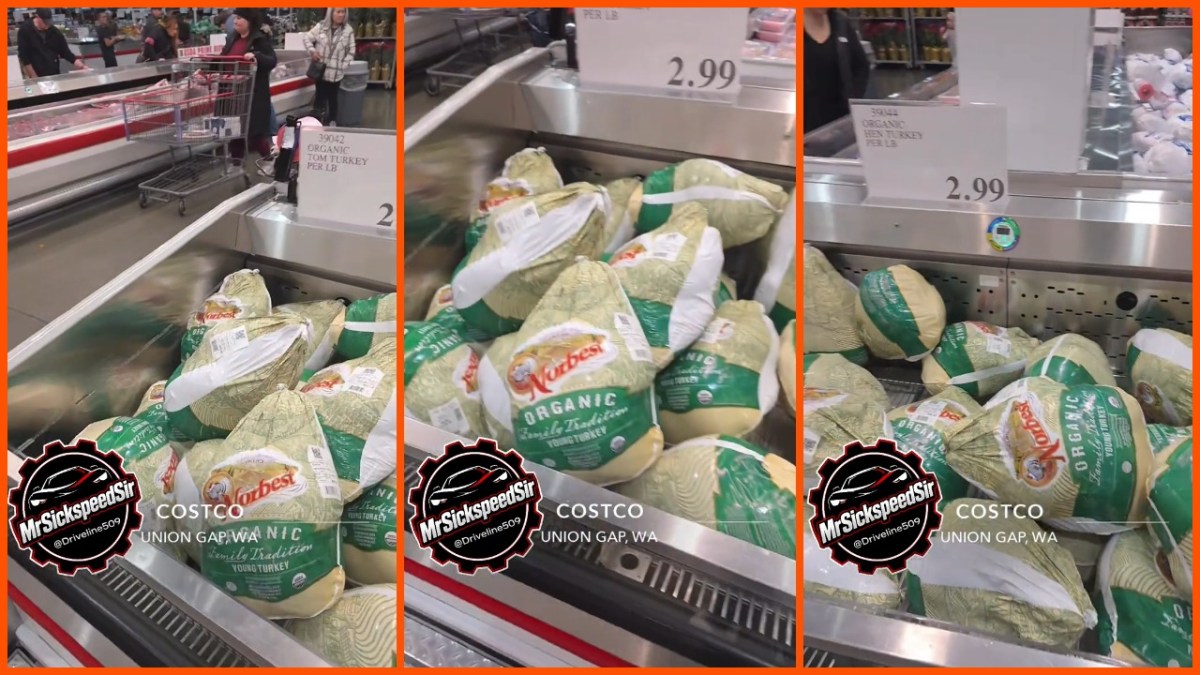

Costco shoppers are seeing Thanksgiving turkeys labeled by sex this year, with signs marking the birds as either “tom” or “hen.” A TikTok user named Jason Jordan filmed the signs at a Costco warehouse and asked, “Why would you want to choose your turkey’s gender?” The video was first highlighted by BroBible.
Both options in the TikTok video were priced at $2.99 per pound. “Does this matter?” Jordan asked. “I’ve never seen this before.”
The label mostly tells shoppers how big the bird will be. Male turkeys, called toms, usually weigh more than 16 pounds, while hens usually weigh less than 16 pounds, according to the University of Illinois Extension.
It mostly comes down to size
Since both birds cost the same per pound, size is the main difference for anyone comparing Costco’s meat options at the warehouse. The extension also notes that toms have larger bones and less edible meat, and it says most experts agree a hen is the better buy.
Federal data points the same way. A 2019 US Department of Agriculture post reported that toms were raised to an average live weight of 41 pounds, compared with 17 pounds for hens. At the store, a turkey weighing 16 to 24 pounds was likely a tom, while one weighing eight to 16 pounds was likely a hen.
About 57% of federally inspected turkeys harvested were toms, and about 43% were hens. November had the lowest average live weight of the year, mainly because toms were lighter and a larger share of hens was produced that month.
On tenderness, the extension says the bird’s age, not its sex, is the deciding factor. A 2019 study in the journal Foods said that standard commercial turkeys are slaughtered young, often at 14 to 16 weeks for hens and 18 to 22 weeks for toms outside France. The researchers put most of the meat differences down to slaughter age and body size, although tasters rated breast meat from standard males as less tender than meat from females.
Commenters under the video had their own takes. One claimed that “toms have more breast meat in proportion to their body, hens have more leg meat in proportion to their body.” Another commenter, surprised by the unfamiliar label, said they just pick “the biggest and fattest one I can find.”
For anyone deciding how big a bird to buy, the extension recommends about one pound of turkey per person. It suggests about a pound and a half per person for hearty eaters or anyone who wants leftovers.









Published: Nov 27, 2026 05:00 am