


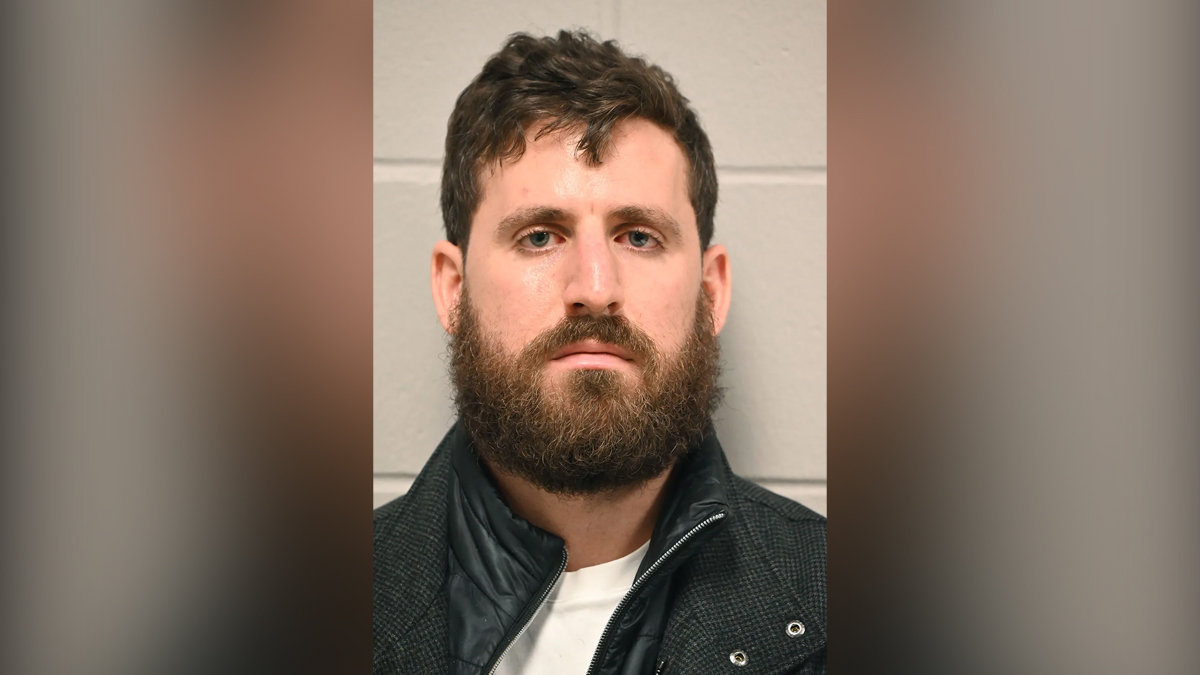

Matthew Hertgen, the New Jersey man accused of murdering his younger brother and a cat in a brutal attack last year, has died in custody. The 32-year-old was found dead in his cell at the Mercer County Jail on May 8 in an apparent suicide.
His death comes just weeks after a judge ruled he was not legally responsible for the February 22, 2025, killing of his brother, Joseph Hertgen, due to severe mental illness.
An official autopsy of Hertgen’s death is still pending. However, this isn’t the first time he has attempted to take his own life. He had tried to kill himself just a week after his arrest. This March, his case took a dramatic turn when a judge accepted that he was legally insane at the time of the crime, pushing back a custody hearing to May. That hearing will no longer happen.
The details of the crime are horrifying. Hertgen was accused of using a knife and a golf club to attack his brother before ripping out his eye and setting fire to the family cat. Investigators found a plate and utensils smeared with blood at the scene, along with a small cup that appeared to contain blood. According to PEOPLE, Hertgen also ate his brother’s eyeball.
You have to wonder how things would have turned out if he had help
The night of the murder, Hertgen called 911 to report a “fire and a dead body” at his Princeton apartment. When officers arrived around 11:15 PM, they found Joseph’s body on the dining room floor, surrounded by a large pool of blood.
The cat’s body was nearby, partially burned and showing signs of blunt force injuries. Hertgen, who had cuts on his hands, told police he had experienced a “fit of madness” about 40 minutes earlier.
Dr. Gianni Pirelli, a forensic psychologist, testified that Hertgen suffered from escalating psychotic behavior, including “prophetic and divine visions” of a religious and apocalyptic nature. At times, Hertgen believed he was God or the anti-Christ, or that a “sacrificial murder” was necessary to save the world.
Pirelli described how Hertgen would see “tremendous visions” anytime he closed his eyes. The severity of his condition was evident to his family, who had been aware of his struggles for years.
Hertgen’s older brother, David, told investigators that Matthew had been dealing with severe mental illness for five years and was “extremely distressed, despondent, and experiencing terrifying visions” on the day of the murder. That night, David texted Joseph to warn him about Matthew’s state, urging him to reach out if he needed help. Joseph responded with a simple, “Will do.” It wasn’t enough to stop the tragedy.
The Hertgen brothers came from an accomplished family. Matthew was a former college soccer player at Wesleyan University, where he earned a degree in microbiology and biochemistry. He later worked as a vice president in a senior finance role at a telecom company.
Joseph was equally impressive. A three-time Academic All-Big Ten soccer player at the University of Michigan, he graduated from the Stephen M. Ross School of Business and built a career in asset management. He was a two-time MVP and offensive player of the year in high school, according to the Detroit News.
Despite his later struggles, Hertgen’s obituary painted a picture of a man who was deeply loved. It described him as a caring and loving person who enjoyed spending time with his large, extended family.
“During his later years, Matthew struggled with severe and profound mental health issues,” the obituary read. “Yet he expressed sorrow, remorse, and repentance in many ways. He departed with the love, friendship, and forgiveness of his family and the eternal hope of salvation. May he rest in peace.”
This case, just like a murder in Ohio, brings up important questions about mental health and how the system can account for that. Hopefully, it is something we can figure out, so that fewer tragedies like this take place. I can’t even imagine how guilty Matthew felt in his lucid moments.
If you or someone you know is struggling with suicidal thoughts, please seek help. You can contact the National Suicide Prevention Lifeline at 1-800-273-8255 or visit their website for support and resources.








Published: May 26, 2026 06:49 am