


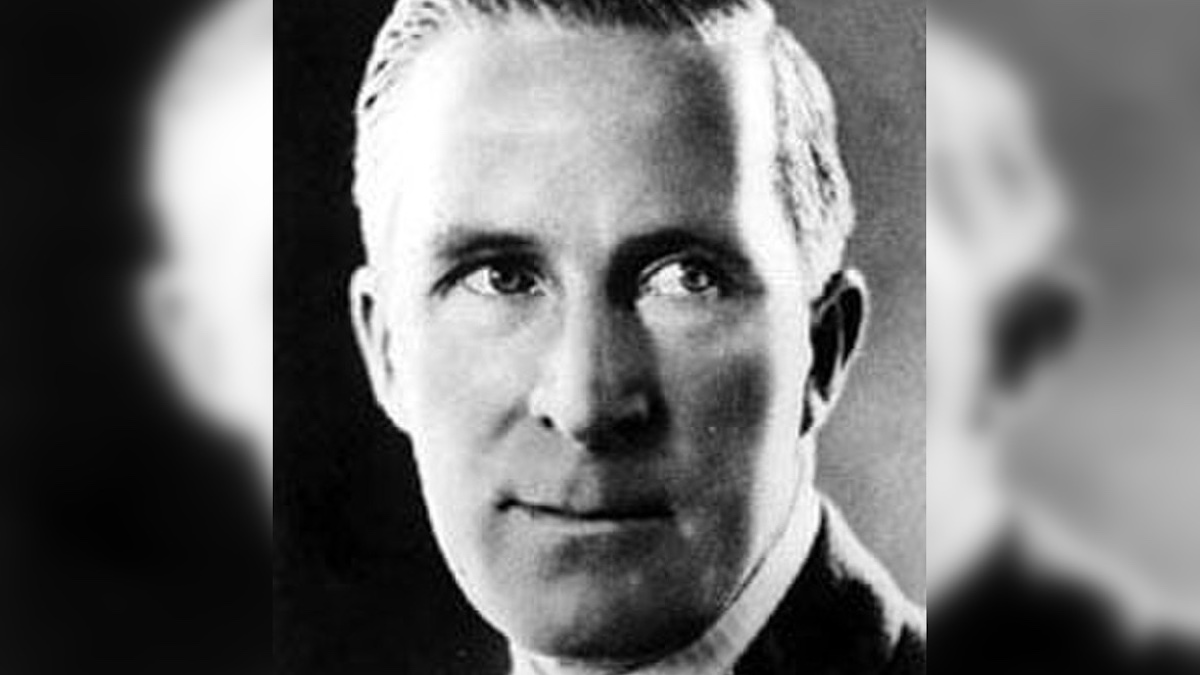

On the morning of February 2, 1922, William Desmond Taylor‘s valet, Henry Peavey, discovered the celebrated silent-film director dead, shot once in the back, at the age of 49, at his Los Angeles home. Taylor’s unsolved murder is widely regarded as one of the most sensational scandals in early Hollywood history.
The murder scene
Adding to the mystery, what would be determined to be the scene of Taylor’s murder didn’t make sense from the start. Peavey found Taylor’s Westlake, Los Angeles, bungalow unlocked and undisturbed at around 7:30 a.m. Initially, a doctor called the death a stomach hemorrhage, but further investigation revealed the fatal bullet wound. Investigators found no murder weapon, the crime scene was compromised, and within days, the case became the topic of scandalous headlines at a time when Hollywood was combating its reputation as a place of sin and vice.
Hollywood’s “dirty laundry”
A few months earlier, the high-profile Roscoe “Fatty” Arbuckle scandal had shaken public faith in Hollywood. Authorities charged Arbuckle, one of the highest-paid comedians in the world, with manslaughter after Virginia Rappe died at a Labor Day weekend party in San Francisco (Arbuckle was later acquitted).
Moreover, Taylor himself had a complicated personal life: he had abandoned his first family, worked under a pseudonym (born William Cunningham Deane-Tanner in Ireland), and had associations with young starlets and studio insiders.
Among the suspects: a former valet and suspected embezzler, Edward F. Sands, who disappeared after the murder; the young actress Mary Miles Minter, with whom Taylor allegedly had an affair, or even Minter’s mother, alarmed at the age gap between Taylor and her daughter; and, though more speculatively, figures linked to drug-trafficking or blackmail.
How Hollywood changed afterwards
After the murder, studios feared governmental regulation and public backlash, leading to a self-regulation effort in Hollywood. For example, the formation of the Motion Picture Producers and Distributors of America (MPPDA) and the hiring of Will H. Hays to head a morality committee were direct responses to the mounting scandals, including Taylor’s death.
The case also changed how the media covered celebrity crime. The press frenzy around Taylor’s murder turned the investigation into tabloid fodder, complete with love letters leaked and rumors of affairs as headline-chasing reporters turned Hollywood itself into the crime scene.
Legacy — one of Hollywood’s great enduring mysteries
Decades later, film historians and true-crime buffs study the case. Because of Taylor’s death, the film industry began to understand that its fortunes depended on not just box-office success, but also on moral respectability, or at least the appearance of it. In short, the unsolved murder of William Desmond Taylor became more than a crime; it became a catalyst for at least an attempt at transforming Tinseltown’s bad reputation.



Published: Oct 25, 2025 09:35 am