



We’re in the final third of the first season of The Last of Us, and the occasion has been kicked off with a captivating backstory episode for Ellie, complete with escalator euphoria, Mortal Kombat II shenanigans, the where and how of the Infected bite she received, and a rather unorthodox sexual awakening (but then, what sexual awakening isn’t?).
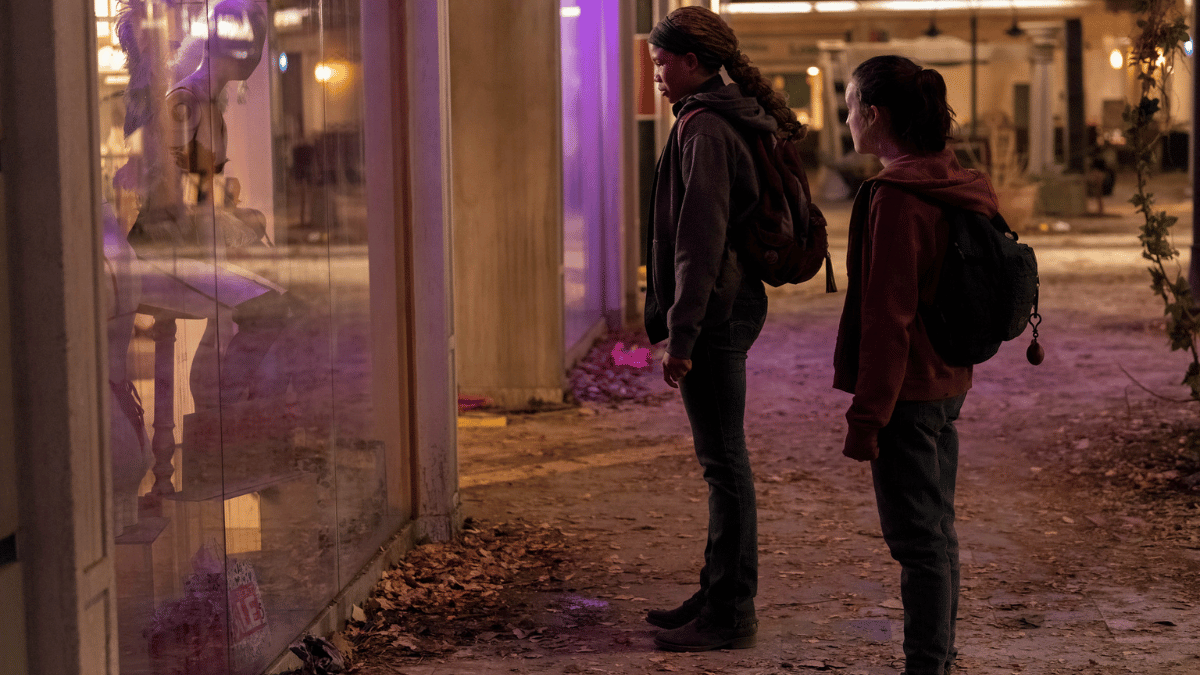
As present-day Ellie scrambles to fix up a wounded Joel, we’re treated to a time before the duo’s excursion when she was still training under FEDRA, until her best friend and crush, Riley (played by Storm Reid), whisks her away for a life-changing adventure in an abandoned shopping mall.
We imagine that you miss out on quite a few things when you grow up in a post-apocalyptic quarantine zone, and Ellie’s energetic, delighted reactions to the mall’s many wonders more-or-less confirmed this. But there was one aspect in particular that had a quieter, more intimidating effect on the duo; the Victoria’s Secret window display.
When the girls take a glance at the display, it quickly led to some ineffective fielding of the feelings that the girls have for each other, which may reflect common levels of such incompetency for any teenager. However, as showrunners Neil Druckmann and Craig Mazin pointed out on episode seven of The Last of Us‘ official podcast, the show’s lack of a more marked sexual revolution that exists in our world complicates things for Ellie and Riley exponentially.
“They’re both gay, and their sexuality is confusing to them and scary to them. Our show stops in 2003; the revolution that we’ve gone through as a culture, to become accepting of homosexuality and whatever we would call non-heteronormative sexualities, hasn’t occurred, which means if the world stops in 2003, it just doesn’t happen. In this world, that stuff is still problematic, as they say. So, you have these two girls who are uncomfortable with and afraid of their own sexuality, and they’re looking at the most heteronormative presentation of female sexuality there can be. “
Such nuances make for an infinitely though-provoking scene; what other now-normal cultural shifts may have The Last of Us‘ world missed out on, and how might those absences manifest in different generations of people, such as Joel, who had an adult life before the cordyceps virus, versus Ellie, who was born and grew up in a post-cordyceps world? Either way, such a penchant for evocative storytelling continues its limitless climb.
The Last of Us is available to stream on HBO Max, with new episodes releasing every Sunday until the season finale on March 12. A second season has been announced.




Published: Feb 27, 2023 05:07 am