


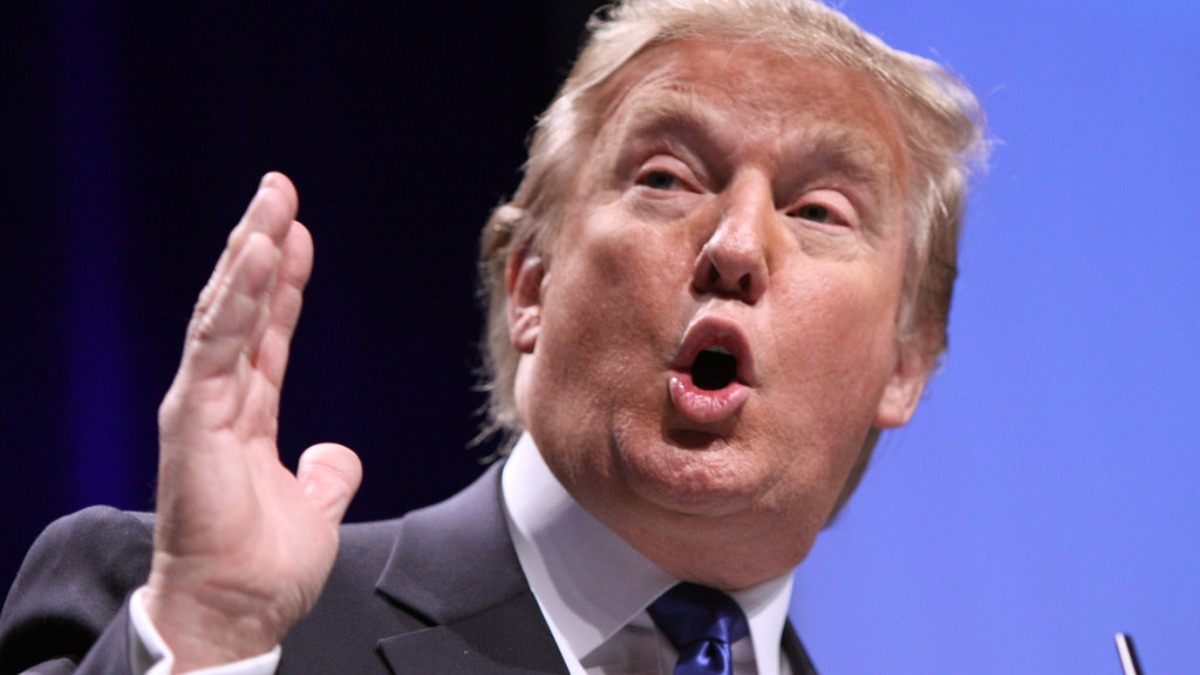

Oil prices fell sharply on Tuesday after President Donald Trump suggested that the ongoing conflict in the Middle East could be ending soon. This helped ease fears in the market about major disruptions to global oil supplies.
According to Brent futures, a key international benchmark, dropped by $4.17, or about 4.2%, settling at $94.79 a barrel. In the U.S., West Texas Intermediate (WTI) crude fell $3.81, or 4%, to $90.96 a barrel. Both contracts had fallen by as much as 11% earlier in the day before recovering some of those losses.
The day before, on Monday, oil prices had surged past $100 a barrel, hitting their highest point since mid-2022. Reuters says that the rise was driven by fears of major supply disruptions, especially with Saudi Arabia and other producers cutting supply during the expanding U.S.-Israeli war with Iran.
Trump’s comments on a short-lived war were enough to move the market
President Trump then spoke out. In an interview on Monday, he said he believes the war against Iran is “very complete” and that Washington was “very far ahead” of his initial four- to five-week estimated timeline. These statements appeared to calm the market almost instantly. Trump has also been vocal about pressuring allies to join the Iran conflict, adding further diplomatic pressure on multiple fronts.
Adding to that, Russian President Vladimir Putin reportedly held a call with President Trump, during which Putin shared proposals for a quick settlement to the Iran war, according to a Kremlin aide. This further eased concerns about a prolonged disruption to oil supply.
Suvro Sarkar, an energy sector team lead at DBS Bank, noted that Trump’s comments about a short-lived war clearly calmed markets. He described it as an “overreaction to the upside yesterday” and an “overreaction to the downside today,” suggesting markets may be underappreciating current risks.
Sarkar also pointed out that benchmark Middle Eastern oil grades like Murban and Dubai are still trading well above $100 per barrel, meaning “practically nothing much has changed in terms of ground realities.” There is also talk of Trump considering easing oil sanctions on Russia and releasing emergency crude stockpiles as part of a broader effort to bring down global oil prices.
Meanwhile, Trump has already downplayed rising fuel costs for Americans, calling them a minor inconvenience. Phillip Nova analyst Priyanka Sachdeva noted that discussions around sanctions relief, de-escalation hints, and the possibility of G7 countries tapping strategic reserves all sent the same message: “oil barrels will somehow continue to reach the market.”
Sachdeva explained that once traders picked up on the idea that supply routes could still be maintained, the initial “panic premium” that had pushed prices past $100 started to fade. On Monday, G7 nations had indicated they were ready to implement “necessary measures” in response to surging oil prices, but had not yet committed to releasing emergency reserves.
Not everyone agrees with Trump’s assessment, however. Iran’s Islamic Revolutionary Guards Corps (IRGC) responded by stating they would “determine the end of the war.” State media reported on Tuesday, citing an IRGC spokesperson, that Tehran would not allow “one litre of oil” to be exported from the region if U.S. and Israeli attacks continued. While markets have calmed for now, the situation remains fluid and could shift again quickly.








Published: Mar 10, 2026 12:23 pm