


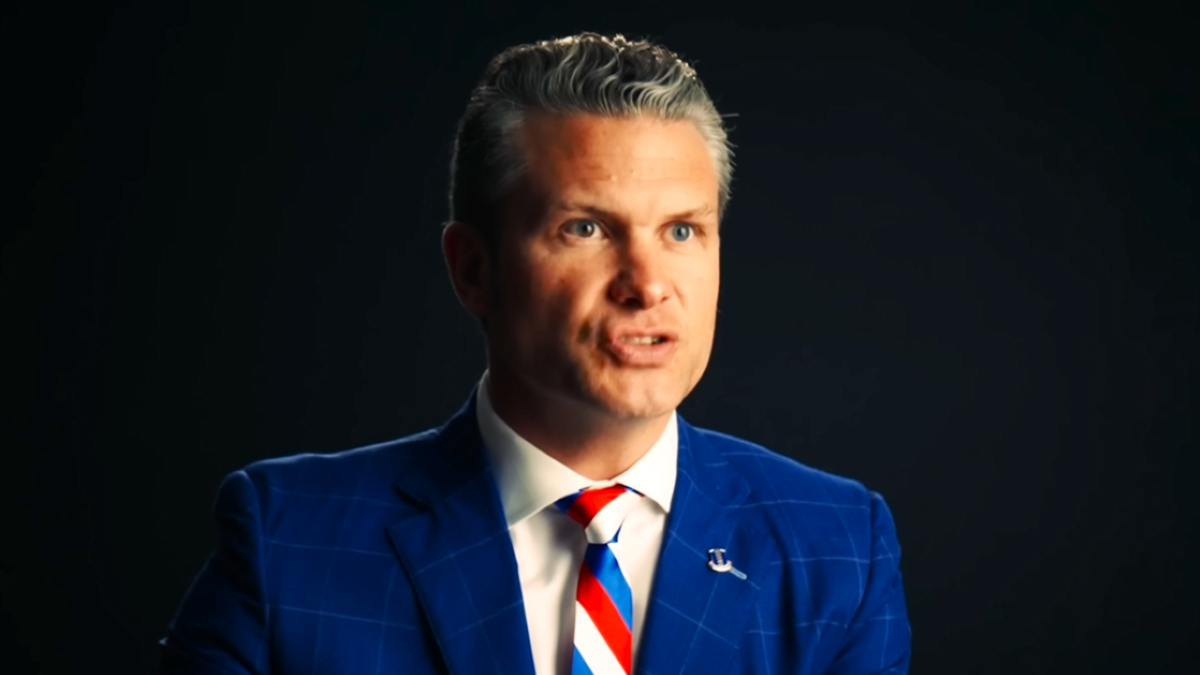

In the escalating Iran war, Pete Hegseth has repeatedly invoked religious imagery to describe military operations, a move that has drawn rare public pushback from senior military figures and even Pope Leo XIV, as Hegseth’s strategic rhetoric now sparks debate over the role of faith in war.
Among other examples, on April 6, 2026, during a press briefing alongside Donald Trump, Hegseth framed the rescue of a downed U.S. airman in overtly Christian terms, drawing a symbolic line to the Easter story. He said the pilot’s ordeal (shot down on Friday, hiding through Saturday, and rescued on Easter Sunday) evoked the narrative of Christ’s death and resurrection. “Shot down on a Friday, Good Friday. Hidden in a cave all Saturday. And rescued on Sunday… a pilot reborn,” Hegseth said. “God is good.”
He continued tying this religious arc to the wider conflict, framing battlefield success as almost divine vindication of U.S. resolve. This approach, which has included calls for Americans to “pray in the name of Jesus Christ” for victory, blends theology with combat in ways unseen in recent U.S. military history.
Military brass react
Not all senior officers have embraced this messianic framing. Several retired generals and active commanders have privately and publicly expressed concern about what they see as a dilution of professional military norms. Critics argue that invoking religious narratives in official military statements risks alienating service members of diverse faiths and weakening the constitutional separation between church and state.
One retired officer told Reuters that war messaging should “focus on strategy and security, not theology,” underscoring unease among traditionalists who view Hegseth’s approach as inappropriate for a pluralistic force. Analysts also warn that such rhetoric could embolden extremists and complicate diplomacy in the Middle East.
Hegseth’s religious framing hasn’t just drawn military criticism, as lawmakers from across the political spectrum have condemned it as “unconstitutional” and “dangerous.” Many Republicans and Democrats alike have said national defense discourse should avoid conflating American policy with divine favor, especially when war has cost thousands of lives on all sides.
The Pope’s critique
Perhaps most strikingly of all, Pope Leo XIV, the first U.S.-born pontiff, has publicly rejected the use of Christianity to justify violence or war. During his Palm Sunday homily at St. Peter’s Square, he declared that “God rejects war, whom no one can use to justify war” and said God “does not listen to the prayers of those who wage war, but rejects them.”
The Pope’s message was clear and direct: invoking Jesus as a warrant for military conquest is theologically unsound and morally dangerous. He urged world leaders to pursue peace and reconciliation instead of casting conflict as a holy mission. On Easter Sunday itself, Leo again called for dialogue and an end to hostilities, lamenting that violence “causes so much suffering and death” and urging leaders to seek negotiated peace.







Published: Apr 7, 2026 02:47 am