


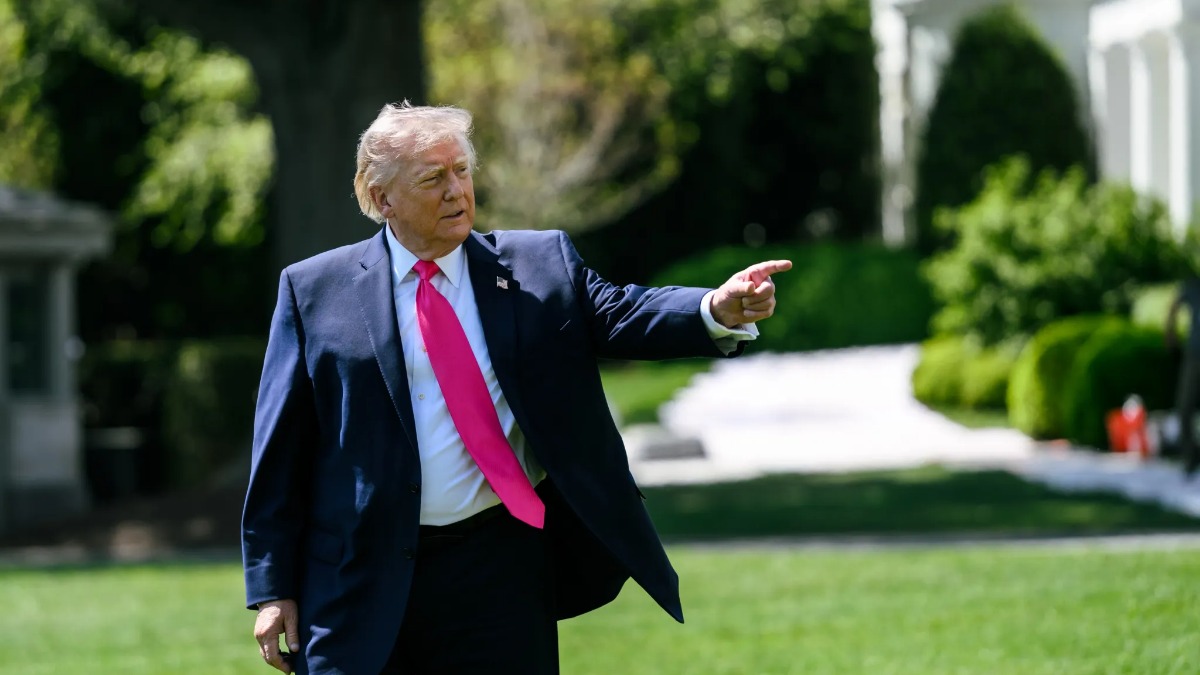

Donald Trump signed an executive order on Saturday to accelerate research for specific psychedelic drugs, a move aimed at helping veterans who are struggling with mental health disorders like anxiety and depression.
The signing took place in the Oval Office, where podcaster Joe Rogan joined the president after his direct involvement in making this bill happen.
“Today’s order will ensure that people suffering from debilitating symptoms might finally have a chance to reclaim their lives and lead a happier life,” Trump said. The directive instructs the Food and Drug Administration to speed up its review process for new treatments, specifically focusing on drugs already in the advanced stages of clinical trials.
Rogan explained that he had learned about these potential treatments during a taping of his podcast and decided to share the information with Trump. Rogan described the interaction as incredibly fast, noting, “I sent him that information. The text message that came back: ‘Sounds great. Do you want FDA approval? Let’s do it.’ Literally that quick.” It’s rare to see such a swift response to a policy idea, especially with one that has struggled in the past.
Now, if only Trump or his administration listened to experts
A major focus of the announcement was Ibogaine, a psychedelic drug that has been used in other countries to treat the effects of PTSD. Trump stated that his administration would be opening the pathway for this drug to be included under the Right to Try Act, which he signed into law back in 2018. That law is a vital tool, as it allows terminally ill patients to participate in clinical trials for treatments that are still under review by the FDA.
The presence of key officials, including FDA Commissioner Martin Makary, Health and Human Services Secretary Robert F. Kennedy Jr., and Centers for Medicare and Medicaid Services administrator Mehmet Oz, highlighted the priority placed on this initiative. Makary noted that under this new program, drugs could potentially be approved in weeks rather than taking a year or more, provided they align with national priorities.
Makary added, “This is an unmet public health need, and there are potentially promising treatments. That’s why there’s a sense of urgency around this. That’s why we’re doing it now.”
This urgency is backed by some sobering statistics. According to a Pentagon report released earlier this month, there were 471 suicides among U.S. service members in 2024, along with 1,515 reported attempts. While the rate for active-duty members saw a decrease, there was an uptick in suicides among reserve units and the National Guard.
The medical context for this shift is quite deep. According to information provided by the American Psychological Association, many researchers are specifically targeting individuals who haven’t seen success with traditional treatments. For instance, an estimated 40% to 60% of people with PTSD do not respond to first-line medications like SSRIs.
Additionally, about a third of those diagnosed with major depressive disorder deal with treatment-resistant depression. While the research is promising, experts often emphasize that these drugs are not a magic fix and are typically studied in conjunction with guided psychotherapy.
Scientists are making real progress in understanding how these compounds work. Research suggests that drugs like psilocybin and MDMA may help repair damaged circuitry in the brain rather than just rewiring it. As David Olson, director of the Institute for Psychedelics and Neurotherapeutics at the University of California, Davis, noted, these drugs can promote structural neuroplasticity, potentially acting much faster than current antidepressants.
Beyond the focus on psychedelics, Trump also took the opportunity to tout his administration’s efforts to lower drug costs through the Most Favored Nation initiative and the TrumpRX.com platform. He also briefly touched on foreign policy, specifically addressing Iran’s announcement regarding the Strait of Hormuz.
This is perhaps the most interesting bit of Joe Rogan being in the room. Irrespective of his influence on this bill, he has been really critical of the president lately. On his podcast, Rogan has not only criticized Trump’s policies, but he has also been critical of his age. So it is interesting that Trump, who is normally very petty, invited Rogan to be present.






Published: Apr 20, 2026 05:42 am