


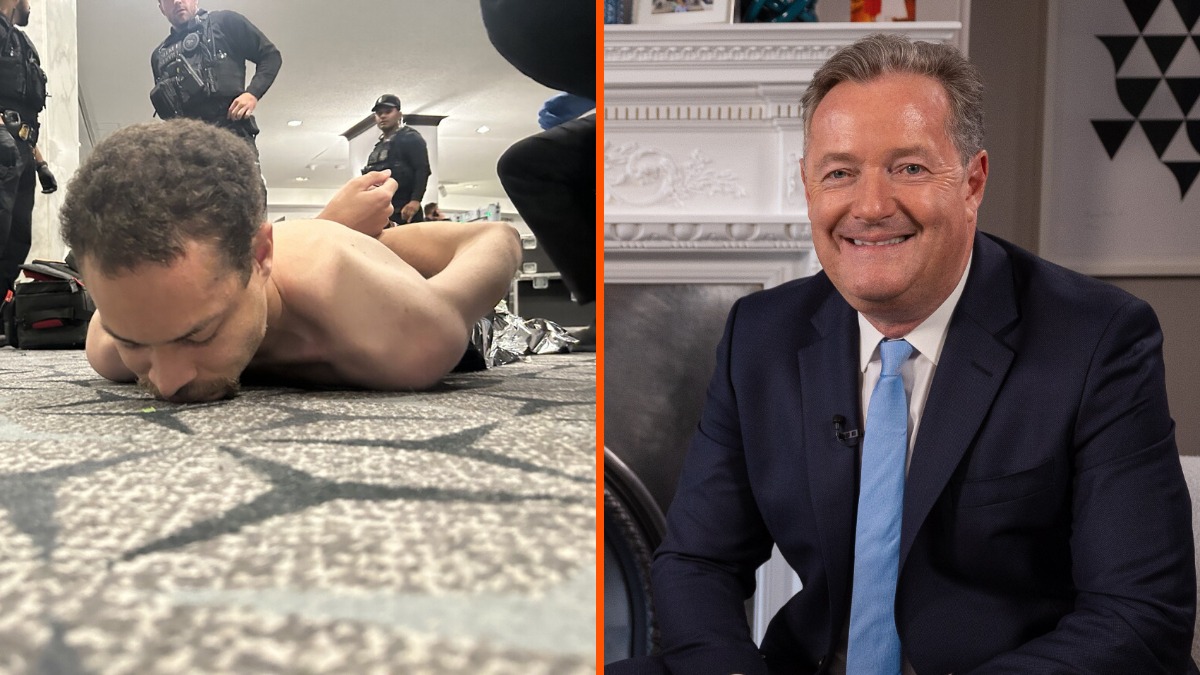

The investigation into the security breach at the White House Correspondents’ Dinner is intensifying following a shooting incident that placed the president and many of the nation’s most prominent figures in immediate danger. The event, held at the Washington Hilton, has sparked a wave of urgent questions regarding how a gunman managed to get so close to the main ballroom where the festivities were taking place.
Among the most vocal critics of the current security protocols is Piers Morgan, who took to X to call out the situation. “Appalling… but how the hell did he get so close on such a high-profile night with so many of America’s most powerful people in one room? This was a massive security failure.” His sentiment echoes a broader concern shared by many who attended the dinner, especially regarding the screening process at the venue.
The suspect, identified as 31-year-old Cole Tomas Allen, reportedly charged through a checkpoint before being stopped by Secret Service agents. According to a report by Peter Doocy on Fox and Friends, the president said that the suspect was trying to “essentially break down the door, shoot his way through the door and then go right up that center aisle and shoot as many people as possible.”
This could have easily been a catastrophe
Concerns about the effectiveness of the security measures were not limited to high-profile commentators or critics of the administration. Kari Lake also shared her experience on X, noting, “I can’t believe how lax the security was at the White House correspondents dinner tonight. Upon entering nobody asked to visibly INSPECT my ticket nor asked for my photo identification.”
She further explained that simply flashing a ticket seemed sufficient for entry, which raises serious questions about the depth of the background checks and identity verification for those entering a room filled with high-level officials.
The venue itself has come under heavy scrutiny. A report by the BBC noted that while roads were closed around the Washington Hilton, the security at the venue itself was described by some as not particularly heavy.
Gary O’Donoghue, the BBC’s Chief North America correspondent, shared that the man at the door only took a cursory look at his ticket from several feet away. Furthermore, tickets for the event did not contain guest names, only table numbers, and identification was not checked at any point for those entering the hotel.
Despite these concerns, law enforcement experts have defended the Secret Service resposne. Former FBI special agent Jeff Kroeger told the BBC that the fact the gunman never reached the ballroom suggested that the security arrangements worked as intended.
He noted that the agents converged on the president to create a body barrier as soon as the shots were heard, which is exactly what they are trained to do. Former Secret Service agent Barry Donadio also remarked that there appeared to be no lack of agents, officers, and police at the event.
The president himself weighed in on venue security following the incident. He stated that the Washington Hilton was not a particularly secure building and emphasized the need for a new White House ballroom that is currently under construction. In fact, his comments were enough to kick off speculation that the shooting was a setup by him
He described the proposed facility as drone-proof and equipped with bulletproof glass, arguing that such a space is necessary for high-profile gatherings. He also praised the bravery of the Secret Service, noting that they did a great job in moving him and JD Vance off the stage safely.
The incident at the Washington Hilton is the latest in a series of security challenges involving the president. These include an assassination attempt in Butler, Pennsylvania, and a separate incident at his Florida golf course earlier this year.
Acting US Attorney General Todd Blanche told NBC News that it appeared the suspect was targeting administration officials, likely including the president. While the motive remains under investigation, the event serves as a stark reminder of the security risks involved in high-profile political gatherings.
As authorities continue their work, the conversation surrounding the adequacy of current protection protocols is likely to remain a central focus for those involved in planning future events.

Published: Apr 28, 2026 05:36 am