


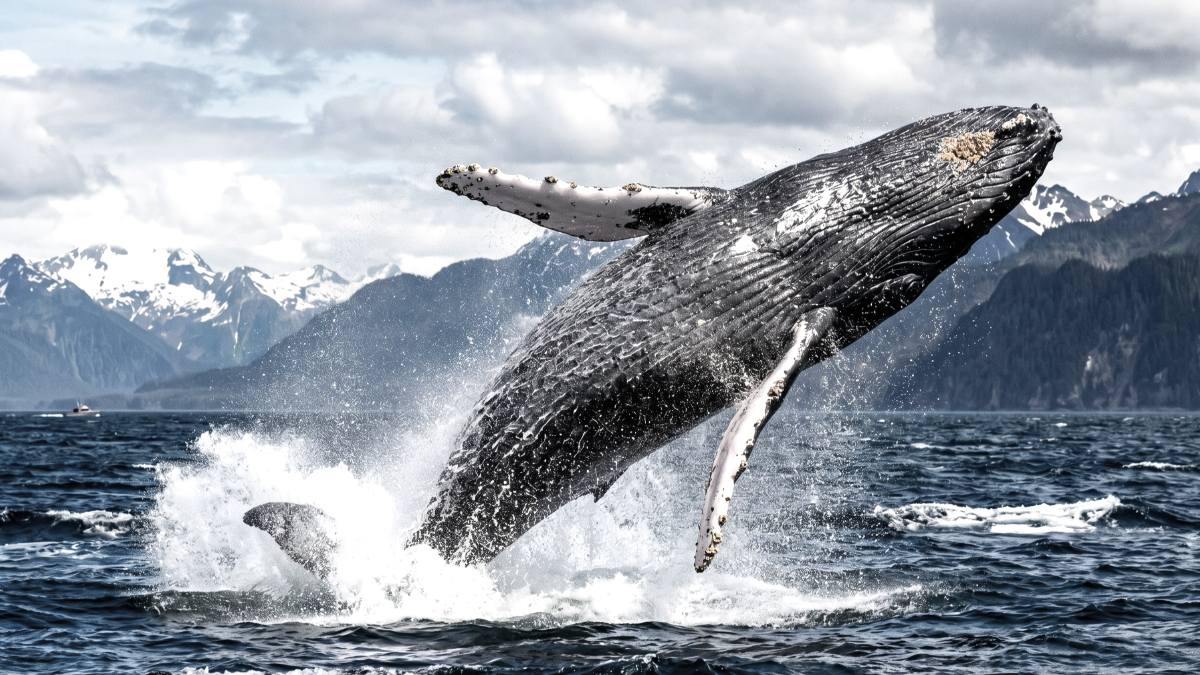

The saga of Timmy the whale hasn’t ended with his tragic death. Timmy, a humpback whale, attracted international media attention when he became beached on a sandbank on Timmendorfer Beach in Germany.
Marine biologists said that sadly Timmy was beyond saving and that it’d be best for nature to take its course. But two millionaires stepped in with an extravagant $1.5 million plan that involved floating Timmy off the sandbank and into a water-filled barge, which was then transported to the open ocean.
Timmy lethargically swam away, and the world hoped the scientists who insisted he was doomed to die were being pessimistic. Sadly, they weren’t. Days later, Timmy washed up dead near the Danish island of Anholt. Oh well.
But there’s one more twist in the tail. The intense media attention around Timmy has meant his beached and rotting carcass has attracted curious visitors eager for a piece of the action (possibly also out for a piece of Timmy).
But Danish authorities have issued an urgent warning to the public that they must stay away, as Timmy has now become a ticking time bomb that could explode at any minute!
When a large marine mammal dies, a natural biological process begins that turns the carcass into a massive, fleshy pressure cooker. Bacteria inside the whale’s stomach and digestive tract continue to break down organic matter, producing colossal amounts of methane, hydrogen sulfide, and ammonia gases.
This pressurized gas is trapped inside the whale by its thick and tough blubber… until even that finally gives way. Kaboom. If you’re desperate to witness the explosive force that a dead whale can generate, then be my guest, but maybe don’t watch while you’re eating lunch.
Time to break out the dynamite?
Authorities have long pondered what to do with a dead whale. Perhaps the most notorious disposal method was in 1970 in Florence, Oregon, where they chose to use dynamite to blow up a dead whale. They went slightly overboard on the explosives, with the blast raining colossal car-destroying chunks of blubber across a large radius:
In November, 1970, in Florence, Oregon, the carcass of an 8-ton whale was exploded using half a ton of dynamite.
— Time Capsule Tales (@timecaptales) December 9, 2023
The deceased whale had washed ashore a few days prior, and the local authorities believed that the blast would propel its remains out into the ocean.
However, the… pic.twitter.com/thtfQXhRZD
Danish authorities are used to dealing with dead whales and have a “Let Nature Take Its Course” Policy in place, so no dynamite will be used. Officials have stated they currently have no plans to move Timmy or perform a necropsy and will let seagulls, crabs, and other assorted scavengers do their work for them.
But, either way, Timmy is probably going to explode soon, marking the end of a long, painful, and generally depressing marine saga.




Published: May 19, 2026 06:58 am