


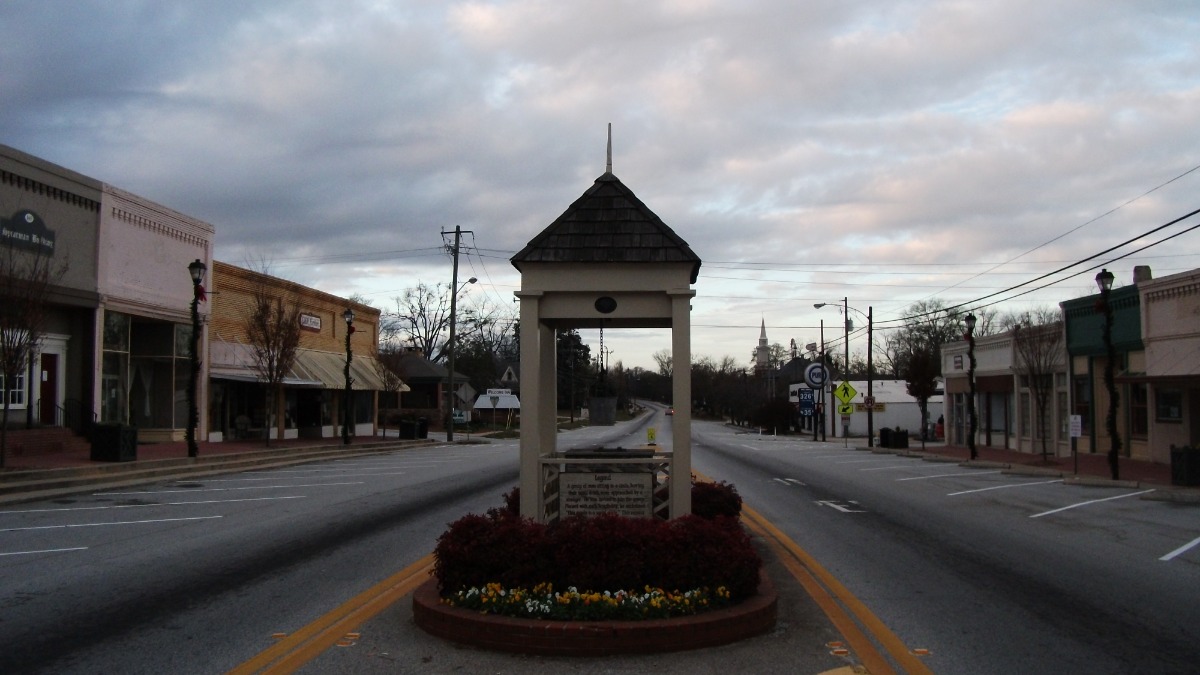

The small town of Social Circle, Georgia, is taking a stand against a massive federal project that could fundamentally change the face of its community. In filing a federal lawsuit to block the construction of a sprawling ICE detention center, local officials are now employing a sophisticated legal strategy that could influence how similar projects are handled across the country.
This legal battle is being closely watched by experts, according to The Guardian. While many previous lawsuits against these types of facilities have relied solely on the National Environmental Policy Act to argue that the government failed to conduct proper environmental assessments, Social Circle is casting a wider net. The town’s complaint argues that Department of Homeland Security and ICE have violated the federal Administrative Procedures Act.
According to the complaint, this act “requires reasoned decision-making by federal agencies, including consideration of adversely affected interests and any reasonable alternatives”. By bringing this into the fold, the town is pushing back against the idea that the federal government can simply move forward without a transparent and logical process. Beyond federal statutes, the town is also invoking Georgia’s state public nuisance law.
According to experts, this tactic accounts for the human element
The core argument here is that placing a massive detention center in a town of about 5,000 residents would “harm their health, safety, and wellbeing”. Samantha Hamilton, a senior staff attorney at Asian Americans Advancing Justice, Atlanta, believes this approach is particularly effective.
“Other claims are focusing on Nepa – ‘They skipped a step and need to do an environmental review,’” she said. Hamilton notes that invoking state public nuisance law “reminds the court that communities are part of this discussion. It reminds of the humanity of the people behind this, and is more in step with what the public is saying.”
The Guardian reported that the situation in Social Circle began unfolding in early February when Eric Taylor, the city manager, was contacted by an ICE staffer who asked him to turn on the water at a massive 1 million square foot warehouse. The federal government had purchased the property for $128 million.
It was a price tag that Taylor noted was nearly five times its assessed value of $29 million the previous year. Taylor’s response was firm, as he told them, “I told them I’m not going to do it. Not until they come and talk to me.”
With a population of only 5,000, the arrival of a facility intended to hold as many as 10,000 detainees could triple the local population. The town’s infrastructure, including a sewage system built in 1962 that is already at capacity, simply cannot handle the load.
Taylor has been vocal about the potential for disaster, noting that without major upgrades, “you’ll have poop on the ground over there”. Furthermore, the town’s water system is already stretched thin, and the loss of property tax revenue from the warehouse, about $300,000 annually, adds to the financial strain.
Adam Lauridsen, one of the plaintiff’s attorneys, emphasized the importance of this resistance. “It’s pretty rare for a 5,000-person town to go up against the federal government in such a high-profile matter,” he said. He higklighted how “it shows that towns have the power to resist ICE and DHS coming in and building detention centers that will hurt the town and its people.”
Taylor reported that he has only spoken with federal officials once by phone for less than an hour, despite numerous attempts to get answers. Even when a meeting was scheduled with a representative from ICE, the representative failed to show up.
As the town waits for the court to hear their case, the community remains united. Despite being in a county where nearly 75% of voters supported Donald Trump, the town has seen a rare alignment of residents across the political spectrum.
Timothy D Lytton, a law professor at Georgia State University, believes the lawsuit serves a purpose beyond just the legal outcome. “It’s significant that this is not just an environmental claim, but also raises the two other types of claims,” he said. “This can frame placing these facilities in these towns in a different way.”
Even if the case takes time to resolve, this unique legal strategy could help other communities facing similar challenges. As Taylor noted, “We’re all in the same boat … and we need to be learning from each other. If we’re successful, I hope it helps other communities down the line.”
As a part of the reengineering efforts for ICE detention centers, the government has been pulling in untested vendors to build and run the detention centers on an unprecedented timeline, which could increase the chances for errors. It makes the concerns of the locals that much more relevant.









Published: Jun 3, 2026 05:35 am