


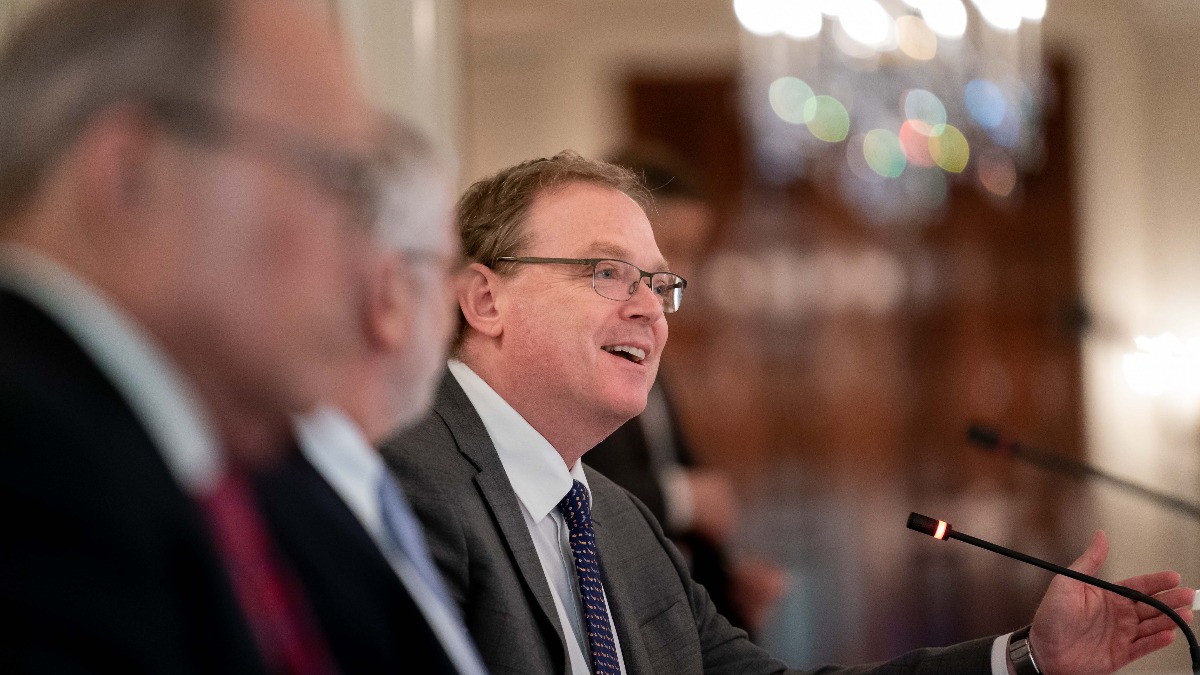

Kevin Hassett, President Donald Trump‘s chief economic adviser, recently appeared on Fox News Sunday to explain why he thinks Americans are spending more at the pump and the grocery store. Rather than seeing it as a sign of financial pressure, Hassett argued that the increased spending reflects a population that feels confident about the future. His comments came amid growing public concern over the rising cost of everyday goods.
According to Mediaite, the exchange began when Fox News anchor Shannon Bream pointed out that consumer confidence surveys are telling a different story. Bream noted that both the University of Michigan survey and other indicators suggest Americans are feeling pessimistic about the current economic climate.
She also mentioned that polling shows many people feel their personal finances are struggling, and that they are blaming the policies of President Trump for that. Hassett pushed back strongly on those sentiment surveys. He claimed that the University of Michigan survey no longer reflects economic reality,
Hassett points to low unemployment and rising incomes while credit card delinquencies hit a 15-year high
He said: “First of all the Michigan survey no longer has anything to do with the economy or economic sentiment, it’s just a place where Democrats get to register how angry they are at President Trump.” He dismissed the survey’s findings by labeling them as input from, in his words, “a bunch of liberals at the University of Michigan.”
Hassett argued that when people head into a midterm election cycle, they focus on more concrete measures like job security and income levels rather than sentiment surveys. According to Hassett, unemployment insurance claims are currently at their lowest levels since the 1960s, and real incomes are on the rise.
He presented these figures as evidence that the underlying economy remains strong, even as other Trump administration officials have also faced pushback for explaining away economic concerns with unusual comparisons.
Bream then shifted the conversation to household debt, pointing out that credit card delinquencies of 90 days or more jumped 13.12 percent in the first quarter of the year. She noted this is the highest level seen in 15 years, reaching a point not recorded since the aftermath of the 2008 financial crisis. Bream also highlighted that many Americans report using credit cards to cover basic necessities because they cannot afford the current cost of living.
Hassett acknowledged that there is increased stress on credit card balances, but he drew a distinction between delinquency and default. He argued that credit card companies do not view the current situation as a major financial threat or as a sign that households are heading toward default. In his view, people are simply taking a little longer to pay off their balances, which he did not consider a serious warning sign.
On the question of higher spending at gas stations and restaurants, Hassett held firm in his interpretation that it signals consumer confidence rather than financial strain. He noted that people are spending more across multiple categories, including dining out, and framed this as a positive indicator. “I think that’s a sign you would see when people are optimistic about the future,” Hassett said during the interview.
Hassett’s position is that the data points he is focused on, particularly low unemployment and rising real incomes, paint a healthier picture of the economy than the sentiment surveys suggest.
His comments also come after Trump himself faced scrutiny over claiming victory on falling food costs, only for government data released shortly after to contradict those claims. Bream’s questions reflected the concerns that many Americans are raising about the gap between official economic indicators and the financial pressure they are experiencing in their daily lives.





Published: Jun 2, 2026 06:33 am