


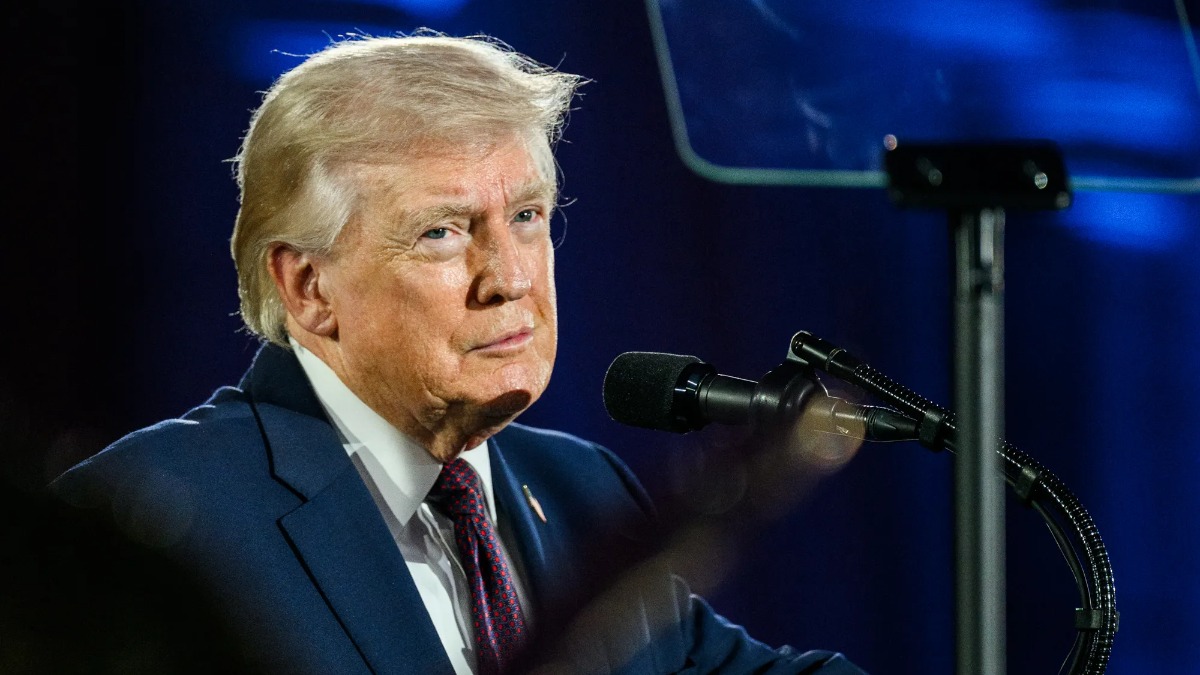

The Donald Trump administration signaled that it is stepping back from its disputed $1.8 billion fund. The Justice Department had previously announced the fund to support people it described as victims of lawfare and weaponization, a move that drew criticism almost immediately after it was made public.
In a statement, the Justice Department said that while it strongly disagrees with the decision, it will follow the Court’s ruling that temporarily blocked the fund last Friday. The department made clear it was complying with the order rather than agreeing with it.
This came after a rare and strong pushback from inside the Republican party. According to NBC News, Senate Republicans had threatened to work with Democrats to limit or end the fund completely, an unusual split between the party and the administration.
Republican senators raised concerns the fund resembled self-dealing
Sen. Ted Cruz, R-Texas, said last week that about half of the Republican conference seemed ready to vote with Democrats against the proposal. During a private meeting on May 21, acting Attorney General Todd Blanche faced sharp criticism from Republican senators who worried the fund felt like self-dealing.
Cruz said there was a jailbreak of Republicans leaving the plan, which led to senators openly blasting the attorney general. President Donald Trump spoke about the matter during a phone call on Monday, saying, “We are subject to the courts. At this moment, that’s what it is.” When asked if the administration was giving up on the project, he added, “If a court doesn’t allow it, and right now a court has it held up, what can you do?”
The administration’s move appears aimed at restarting stalled legislation meant to fund ICE and the Border Patrol through the end of Trump’s term. That reconciliation bill had stalled before the Memorial Day recess specifically because of the resistance to the anti-weaponization fund. Some critics have gone further, with a former vice president calling the fund a bad idea from the start.
The Justice Department’s statement may not be enough for lawmakers. Sen. Chuck Grassley, R-Iowa, the chair of the Judiciary Committee, said the only way to fix the funding problem is for the president to get rid of the fund entirely. When asked if the recent statement was enough, Grassley replied, “The answer is no.”
Democrats remain doubtful about the administration’s shift and want stronger guarantees. Senate Minority Leader Chuck Schumer, D-N.Y., claimed on X that if the administration is truly dropping the plan, they should have no problem banning it in law. He said Senate Democrats plan to push legislation so that no president can set up such a fund again.
Schumer warned that the fund could send taxpayer money to MAGA billionaires, cop-beating Jan. 6 insurrectionists, and the president’s own family. Legal challenges also continue to hang over the matter. Skye Perryman, president and CEO of Democracy Forward, said that while it would be a major win if the administration is abandoning what she called an illegal slush fund, her group would keep up its legal efforts.
Other Democrats have raised similar objections, with Jamie Raskin explaining how the DOJ cash became a slush fund. She stressed that until the administration fully drops the plan and makes sure it will not return, the plaintiffs will stay in court.
The temporary block on the fund will stay in place until the court reviews the arguments from both sides further. A hearing had been scheduled for June 12. Senate Majority Leader John Thune, R-S.D., said that while the best outcome would be for the administration to shut the fund down itself, he was unsure about their future plans. For now, the political future of the reconciliation bill remains tied to this ongoing dispute.








Published: Jun 3, 2026 01:00 pm